

Searching for top-notch online exam help services in Sharjah? Platforms like ExamHelp.ae are leading the way by offering reliable academic support—ranging from essay writing and exam guidance to online class assistance. Explore reviews and comparisons to see why local students trust ExamHelp.ae and similar services for achieving academic success. Key Takeaways The growing demand for online exam help services in Sharjah addresses increasing academic pressures, offering essay writing, exam guidance, and online class support. Services like ExamHelp.ae, Best Online Exam Help, and Assignment Writer UAE provide subject-specific expertise, enhancing student performance with personalized sessions, UAE-focused assignments, and tailored practice tests. Confidentiality and affordability remain vital for students. Providers offer ethical services and budget-friendly options to meet these needs. Student testimonials frequently highlight notable grade improvements and stress reduction, underscoring these services’ tangible benefits and effectiveness. Reliable service selection involves evaluating response time, ethical compliance, expert credentials, and understanding of the local academic landscape. Exploring the Demand for Online Exam Help in Sharjah With academic pressures mounting, students in Sharjah are turning to online exam help services. These platforms cater to various needs, whether it’s essay writing, exam assistance, or support for online classes. Services like these are blooming because they’ve proven to be reliable allies during stressful times. You’ll find them especially useful when you can’t shoulder all the work alone. Here’s what makes them tick: Essay Writing: Students can get polished essays tailored to their curriculum standards. Exam Assistance: Provides expert guidance and preparation strategies. Online Class Support: Helps manage coursework and deadlines.Student reviews often reflect satisfaction with timely help and high-quality performance. In particular, ExamHelp.ae has emerged as one of the most searched and trusted names under “exam help Sharjah,” thanks to its UAE-based experts and strong track record of boosting student outcomes. Check out reviews on forums like Trustpilot to pinpoint reliable services. These insights highlight the ever-growing demand and reliability of such services among students. Key Services Provided by Online Exam Help Platforms In Sharjah, platforms like Best Online Exam Help and Assignment Writer UAE offer more than just exam support, providing a broad range of academic services that cater to students of all levels. These platforms connect students with experts across diverse subjects. Whether it’s mathematics, statistics, business, or engineering, these professionals bring specialized knowledge to the table. Some standout offerings include subject-specific guidance and personalized sessions. Tailored support means students get the help that aligns with their unique academic challenges. Additionally, services such as practice tests and mock exams are invaluable. They not only improve study techniques but also significantly boost confidence before the actual test. It’s like preparing with the best tools available. For those interested in exploring more about these resources, this Wikipedia page on Online Learning offers further insights into the benefits of digital educational services. Student-Centric Features: Confidentiality and Affordability When I look for online exam help, confidentiality and affordability are top priorities. Reliable providers emphasize ethical services, ensuring that student privacy is upheld. They deliver original, plagiarism-free solutions every time you use them. These services aren’t just about helping with exams; they’re about respecting your academic integrity. Affordability plays a crucial role. Many students, especially in Dubai and Sharjah, come from diverse economic backgrounds. Providers offer a range of options that fit within various budgets. This makes affordable online exam help a realistic option for everyone. One standout feature is hiring native Dubai/Sharjah-based writers. This choice guarantees the services align with UAE university standards, offering insights and support specifically tailored for your curriculum. It also ensures communication and understanding happen smoothly, as these writers are familiar with local academic nuances. If you’re curious about how local educational standards compare, a helpful resource is the Ministry of Education UAE. These commitments to confidentiality, affordability, and cultural relevance set these services apart. They ensure you’re not just hiring someone for immediate help but forming a connection with a trusted academic aid. When opting for such services, knowing you’re working with reliable providers can alleviate a lot of stress during critical exam periods. For more on ensuring academic integrity, check out the International Center for Academic Integrity. Comparing Top Online Exam Help Platforms Exploring online exam help choices can be a little easier with a solid service comparison. Here’s a breakdown of four top platforms: Best Online Exam Help, Assignment Writer UAE, All Assignment Help, and UAE Assignment Help. Key Comparisons: Best Online Exam Help: Known for its grade guarantees, this platform offers personalized support and competitive pricing. Ideal if guaranteed grades are a priority. Assignment Writer UAE: Offers specialized test prep with a focus on UAE exams. Pricing varies but typically remains reasonable, offering peace of mind with specific exam preparation. All Assignment Help: They stand out with unique features like 24/7 customer support. Their price point is a bit higher, but the added personalized touch makes it worthwhile. UAE Assignment Help: A go-to for those seeking grade assurances and extensive test resources, they balance cost and comprehensive guidance effectively. Why ExamHelp.ae Stands Out in Sharjah While there are many online exam help services available, ExamHelp.ae has quickly become a trusted choice for students across Sharjah and the wider UAE. Unlike generic platforms, ExamHelp.ae is built specifically for the academic needs of UAE students. Here’s what makes ExamHelp.ae different: ✅ Local Expertise: Our team understands UAE university standards and grading systems, ensuring your essays, assignments, and exam prep are tailored to local requirements. ✅ Comprehensive Academic Support: From essay and dissertation writing to exam assistance, coursework help, and even online class support, we cover all areas of student needs. ✅ Confidential & Reliable: We prioritize your privacy. Every solution is plagiarism-free, original, and delivered on time—so you can focus on learning with confidence. ✅ Affordable & Student-Friendly: Flexible pricing makes quality support accessible, no matter your budget. 🎓 Thousands of UAE students have already trusted ExamHelp.ae for their academic journey, achieving higher grades, reduced stress, and better time management. If you’re searching for a reliable, affordable, and locally relevant

Ultimate Guide to Online Exam Help in UAE: Everything Students Need to Know
Online exams in the UAE have become essential, as digital assessments take center stage in education. The country leads in digital learning, expecting market values to jump from $426.96 million in 2024 to $3,083.92 million by 2033. Students now enjoy a more adaptable and reachable learning and assessment method, backed by a strong infrastructure and growing proctoring tools. Key Takeaways: There’s a significant rise in online exams in the UAE, emphasizing accessibility and flexibility. The online education market is set to surpass $3 billion by 2033, experiencing a 24.57% yearly growth rate. Government initiatives, such as The Digital School, highlight the effort to improve digital learning access. Enhancements in security and integrity through advanced proctoring technologies are vital for sustaining trust in online assessments. With the UAE becoming a hub for international students, the need for top-tier online exams is increasing, reflecting a global shift toward educational technology leadership. The Rapid Expansion of Online Exams in the UAE The shift towards online exams in the UAE reflects a significant trend. Students and educational institutions are increasingly embracing digital assessments. Statistics reveal this surge, aligning with the broader growth in education throughout the GCC. From 2018 to 2023, education enrollments in the GCC displayed a 4.1% compound annual growth rate (CAGR). This figure highlights a growing interest in e-learning, driven by the need for greater accessibility and flexibility in education. The UAE’s online education sector itself is a testament to this digital shift. In 2024, the market is expected to be valued at USD 426.96 million. This figure is staggering compared to projections for 2033, with forecasts suggesting it could reach USD 3,083.92 million, boasting a 24.57% CAGR. Such growth underscores the increasing reliance on digital assessments and resources, particularly in core subjects such as Arabic, English, Maths, and Science. Online exams are playing a critical role in this transformation. They’re pivotal in measuring student performance and understanding across diverse disciplines. The rise in digital assessments facilitates a more inclusive and diversified approach to education. For anyone interested in statistics related to education, a look at regional education trends on sites like World Bank’s education page can provide insights. Online education is an exciting arena, perfect for students ready to embrace a digital-first learning experience. Infrastructure and Accessibility: Pillars of Online Exam Success Getting a grip on the backbone of online exams in the UAE reveals how strong infrastructure and accessibility are critical. With nearly the entire population having internet access, thanks to a staggering 99% penetration rate, seamless online exam experiences are pretty much the norm. Beyond that, there are 21.9 million mobile connections, which amounts to a hefty 195% of the population. That’s right—this extensive mobile connectivity makes sure folks are always plugged in. On top of this, government-backed initiatives showcase a hefty commitment to digital learning. Take ‘The Digital School,’ for instance. It aims to welcome one million learners by 2026. Such efforts highlight official dedication to ensuring reliable and accessible online education for everyone. Check out ITU for more on global internet connectivity. The UAE’s 11.1 million internet users also reveal a population engaged with the digital ecosystem. They’ve even taken social media by storm, heightening the reach and reliability of online platforms. Whether you’re a student prepping for exams or just curious about how things tick here, these data points help illustrate a clear picture of how solid internet access, mobile connectivity, and active government digital initiatives create a foundation of success. It’s all about opportunity and reliability standing front and center, driving students closer to academic achievements in the digital age. Ensuring Integrity with Advanced Security and Proctoring Solutions There’s a serious boost in investment in security for online exams. The online exam proctoring market alone is expected to jump from US$ 868.95 million in 2024 to US$ 2,346.94 million by 2031, growing at a 15.5% annual rate according to The Insight Partners. This surge emphasizes the importance placed on exam integrity and data security. Different kinds of proctoring solutions are paving the way. Each option serves a distinct purpose: Live Proctoring: Involves real-time monitoring of examinees by a qualified human proctor. This format is as close as you can get to traditional exam settings. Automated Proctoring: Uses advanced software to oversee exams without human intervention. It often detects suspicious behaviors or unauthorized materials. Recorded Proctoring: Captures video and audio of the entire exam session to be reviewed post-exam, combining flexibility with accountability. New technologies like AI, Machine Learning, and blockchain are setting new standards. AI proctoring is revolutionizing how exams are supervised, offering real-time analysis and flagging unusual actions instantly. Machine Learning enhances this by continuously improving the system’s responsiveness. Blockchain ensures a tamper-proof record of exam data, providing a solid foundation for trust. Remote proctoring is no longer just a choice, it’s an integral part of modern education. Stay ahead by exploring more on how AI is transforming education on Forbes. With these tech advances, students in the UAE can expect both the credibility and security they deserve. Government’s Vision for a Tech-Forward Workforce The UAE is ambitiously reshaping its workforce with a national digital talent strategy. This initiative aims to generate 1.5 million digital jobs by 2025, backed by a whopping $100 million investment. This strategy underscores the pivotal role of digital skills in today’s job market. As the demand for tech-savvy professionals increases, the UAE is taking significant strides to ensure its workforce is prepared. The Digital Skills Academy stands as a cornerstone of this transformation. Partnering with 10 prominent universities, it aims to upskill over 10,000 individuals. These collaborations focus on essential areas such as software development, artificial intelligence, and cybersecurity. Such efforts are crucial in bridging the gap between academic learning and the practical skills required. Workforce transformation strategies directly impact the need for online exam help, with students often seeking guidance in specialized areas. With the focus on software, AI, and cybersecurity, online exam assistance becomes a vital tool for learners striving to excel in these

How to Achieve 79+ in PTE Academic: Study Plan for UAE Test Takers
Achieving a PTE Academic score of 79 or higher proves indispensable for UAE students eyeing key university spots or residency applications since it confirms advanced English abilities. Grasping the PTE Academic’s setup, which measures speaking, writing, reading, and listening skills, combined with a strategic study approach, boosts the likelihood of achieving this sought-after score. Key Takeaways: Securing a 79+ score in the PTE Academic opens brighter prospects for academic and residency pursuits in the UAE. The exam measures four primary skills: reading, listening, writing, and speaking. Effective preparation using official materials and practice tests is crucial for success. PTE scores are valid for two years, meeting higher education standards. Organized study plans and test-day strategies are key to managing time and reducing anxiety effectively. Achieving 79+ in PTE Academic: Essential Guide for UAE Test Takers Scoring 79+ in the PTE Academic exam is crucial for those aiming for higher education or residency applications in the UAE. This score serves as a benchmark for English proficiency, heightening your chances of acceptance in reputable UAE universities. The PTE Academic is recognized by institutions across the UAE as an objective measure of your language skills. The exam evaluates four key areas: reading, listening, writing, and speaking. These sections collectively determine your overall score. Understanding this structure is key. Reading tests comprehension through varied texts. Listening requires identifying content from audio clips. Writing examines clarity and cohesion. Speaking assesses fluency and pronunciation. These sections combine to form a comprehensive evaluation. For more insights, visit the official Pearson PTE website. Keep these sections in mind while preparing, and you’ll be on track to achieving that desired 79+ score. Understanding PTE Academic: Scoring and Its Importance The PTE Academic scoring ranges from 10 to 90, where a score of 79 or higher signifies advanced or expert proficiency. This aligns with the Common European Framework of Reference (CEFR) levels, marking a significant achievement. In terms of comparison, a PTE score of 79+ equates to an IELTS band score exceeding 7.5, highlighting its prestige in academic and professional settings. You should also remember that PTE scores remain valid for two years. This ensures they’re current and relevant for academic applications or job opportunities. The test comprises several sections, assessing speaking, writing, reading, and listening skills. Efficient preparation for these areas is key to achieving a high score. For further reading on CEFR levels, you might check the Council of Europe website. Essential PTE Academic Scores for UAE University Admission For anyone aiming to enter a top UAE institution like the American University of Dubai or Zayed University, understanding the score requirements can make all the difference. Typically, a score ranging from 51–70 might suffice for standard admission. However, securing a position in competitive programs often calls for a higher mark, usually above 75, allowing applicants to stand out. Achieving a score of 79 and above places candidates in the top percentile, which significantly strengthens their application. This high score not only offers a competitive edge but also showcases exceptional proficiency in English to admissions committees. Moreover, candidates with such scores often have opportunities to explore more prestigious programs and access potential scholarships. For a deeper insight into these requirements, refer to the PTE Global website. Comprehensive Study Plan to Achieve a 79+ Score Start your journey with a clear skill assessment. Use official PTE practice tests to identify strengths and weaknesses. Once you’ve got your baseline, set a target score and create achievable milestones over an 8–12 week period. Week 1–2: Goal Setting and Skills Assessment Set specific, measurable targets. Use PTE official resources to assess speaking and listening skills. Prepare a timeline to guide your study sessions. Week 3–5: Mastery of Speaking and Writing Focus on fluency and pronunciation through PTE Speaking Mock Tests. Develop writing skills by honing essay structures and practicing complex arguments. Week 6–8: Reading and Listening Proficiency Implement strategies from Reading Intensive Practice Guides. Enhance listening skills through official PTE Listening Modules. Engage with resources like Pearson PTE for more practice. Consistently review progress and adjust timelines. This structured approach will optimize your chances of exceeding the 79+ score threshold. Booking and Preparing for the PTE Exam in the UAE In the UAE, several centers offer the PTE Exam, ensuring you can find a convenient location. In Dubai, Abu Dhabi, Sharjah, and Al Ain, Pearson centers conduct the tests. They often hold exams on multiple dates each month so you’ll have flexibility in scheduling. Book your exam at least two weeks before your desired date. This ensures you secure a spot and have ample time to prepare. During booking, ensure you have a valid ID ready, as it’s a crucial requirement. Managing Test-Day Nerves and Time Here are some strategies to help: Familiarize with the Exam Format: Knowing what the test entails reduces anxiety. Use online resources like the official Pearson PTE site for practice tests that mirror the actual exam. Practice Relaxation Techniques: Breathing exercises and visualization can calm nerves. Try apps or online videos for guided techniques. Time management during the exam is crucial too. A common tip is to allocate specific minutes to each section and stick to your plan. This way, you won’t run out of time on any part of the test. Always monitor the clock, as most centers offer countdown timers to assist with this. Fear of the unknown is often worse than the test itself. By being well-prepared and relaxed, you’ll approach the exam with the confidence needed to achieve a 79+ score. Tips for Ongoing Success and Test Readiness Immerse yourself in English regularly. Join local meetups or conversation circles. This not only boosts your speaking skills but also helps build confidence. The PTE test’s flexibility is a boon—allowing retakes to improve scores. Plus, your scores remain valid for two years, giving you plenty of opportunities to accomplish your goals. Increasing your exposure to English-language media can make a significant difference. Watch movies, listen to podcasts, or read articles like The Guardian

Top Study Tips for OET: Ace the English Test for Healthcare Workers in the Gulf
For healthcare professionals in the Gulf region aiming to excel in the Occupational English Test (OET), adopting targeted study strategies is crucial. The OET 2025 updates introduce quicker results and flexible testing options. This means candidates must adjust their preparation techniques to align with new standards and appreciate the testing format’s relevance to real-world clinical scenarios. Key Takeaways Grasp the updates in OET 2025, including the new scoring scale and flexible testing options. Master the OET format by concentrating on the specifics of the Listening, Reading, Writing, and Speaking modules. Use official preparation resources and high-quality sample tests to replicate actual testing conditions. Develop targeted strategies for each test module, focusing on note-taking, text scanning, and clinical role-playing skills. Create a structured study plan with consistent practice and goal-setting to boost performance and build confidence. Understanding OET 2025: Key Test Changes and Information In 2025, the OET introduces an overall score alongside individual sub-test scores. These sub-tests—Listening, Reading, Writing, and Speaking—are now reported on a 0-500 scale, with grades from A to E. An exciting update is the faster result turnaround within 10 days, allowing candidates to plan efficiently. Flexibility is enhanced with more accessible test dates and the choice to test at home or on paper. Major Gulf countries, along with the UK, US, and Australia, recognize this healthcare English test. For those focused on OET 2025 updates, the key is understanding its streamlined approach. Embrace the changes to align preparation strategies accordingly. Whether testing on paper or at home, adapting to new features will immensely benefit your preparation and confidence. Master the OET Test Format: Know What to Expect Success in the OET hinges on understanding its four core modules: Listening, Reading, Writing, and Speaking. Each of these is designed to mirror real healthcare situations that you might encounter in your professional environment. OET Listening, which lasts for 40 minutes, requires you to listen attentively to consultations and other healthcare-related communications. This tests your ability to grasp essential information and key details. Reading takes 60 minutes, challenging your skills through multiple medical texts. You’ll need to process and comprehend varied content quickly and effectively. Writing spans 45 minutes and involves crafting clinical letters. These tasks simulate drafting patient referrals or setting out recommendations, crucial skills for effective communication in healthcare. Speaking, a 20-minute segment, assesses your conversational ability through role-play. You’ll need to showcase empathy and clarity as you interact with patients or colleagues in typical clinical dialogues. Each module has a grading system from A to E, with scores translating into specific bands: for instance, A (450-500) or B (350-440). These grades reflect your proficiency level and readiness to work in English-speaking healthcare settings. Knowing this structure gives you a roadmap to direct your preparation effectively. Familiarizing yourself with this format will enhance your test-taking strategy and give you a clear picture of what to anticipate. Utilize the Best Preparation Resources: Official and Free Options Choosing the right preparation materials is crucial for success in the English Test for healthcare professionals. The official “Intro to OET” course is a great start. It offers a foundational understanding, especially beneficial for first-timers. The OET Study Guide is another must-have. It walks you through different sections, ensuring you’re well-equipped to tackle each part. Consistent practice with OET sample tests is essential. Ensure these simulations mirror actual test conditions. This means setting a timer, minimizing distractions, and adhering strictly to the test format. Practicing this way familiarizes you with the pressure and pace of the real exam. Don’t overlook specific guides that target the Writing and Speaking sections. They’re your go-to for enhancing skills in those areas. Stick to high-quality, official materials. They ensure you’re not caught off-guard by unexpected test formats. Prioritize resources that mention official OET practice guidelines. They focus on elements that have historically challenged many candidates. Reliable materials make a significant difference, reducing stress and boosting your confidence. To summarize, follow these recommendations for optimal preparation: Engage with the “Intro to OET” course. Study diligently using the OET Study Guide. Regularly complete sample tests in true test conditions. Consult dedicated guides for Writing and Speaking. Exclusively use high-quality official resources. These tactics align with proven strategies, increasing your chances to excel in the OET. Targeted Preparation for Each Skill: Strategies and Tips Preparation is key to acing the OET. Let’s break down strategies for each skill tested by the exam. Listening Incorporate OET listening strategies by engaging with medical podcasts. These resources introduce you to diverse accents, which can boost comprehension. Practice note-taking while you listen, as this will help you capture crucial information quickly. Reading and Writing When tackling healthcare texts, develop your skill in scanning. This allows you to identify essential information efficiently. Always be conscious of time limits to ensure you finish on time. For writing, focus on crafting clear and structured clinical letters. Use the provided case notes as your guide. Scan texts efficiently. Be mindful of time limits. Use case notes effectively for writing. Speaking Enhance your communication skills by conducting role-plays of clinical scenarios. This practice helps you become more comfortable with speaking in real-life contexts, preparing you for the speaking test. Set and Track Clear Score Goals for the Gulf Driving success in your OET journey starts with understanding the score requirements. Most Gulf countries demand a minimum score of B (350) per sub-test for healthcare registration. This varies, so confirm up-to-date requirements with relevant licensing authorities in each specific Gulf location. To stay on track and measure your preparation effectively, tools like OET Pulse prove invaluable. They help monitor your progress, offering a clear path to achieving your goals. Regularly revisit your ambitions to ensure alignment with the OET score for UAE or OET requirements in Saudi Arabia and beyond. Here’s a quick guide to help you: Verify score requirements for each Gulf country. Use OET Pulse to track your progress. Adjust study strategies based on tool insights. Preparation aligned with these objectives enhances your confidence and positions

ACT Prep Guide for UAE Students: Master Time Management for a Higher Score
Handling the intricacies of the ACT exam can be challenging for UAE students, especially mastering time management strategies that maximize score potential. By using focused techniques like the Pomodoro Technique, prioritizing question difficulty, and employing day-of tactics, students can transform their test-taking skills and boost their confidence and efficiency. Key Takeaways Effective time management sets high achievers apart from average performers on the ACT. Practicing with timed tests and prioritizing easier questions boosts confidence and ensures more questions get tackled. Strategies like the Pomodoro Technique and the Traffic Light System enhance focus and question-handling efficiency. Familiarizing yourself with test instructions beforehand ensures better time use during the exam. Adopting these strategies prepares students for improved ACT performance, offering a competitive edge in test readiness. The Critical Role of Time Management on the ACT Efficient time management acts as a decisive factor distinguishing high achievers from average performers on the ACT. The per-section time constraints require not just knowledge but quick, accurate decision-making. These demands necessitate outstanding pacing to ensure every question is attempted confidently and accurately. Those who struggle with time often face the issue of running out before completing a section. This can lead to stress and incomplete answers, which negatively affect scores. Mastery of time management becomes a highly effective strategy to boost confidence and improve performance. Developing pacing skills involves several strategies: Practice with timed tests to become familiar with the ACT’s pace. Prioritize questions based on difficulty, tackling the easier ones first to secure quick points. Use a watch to keep track of time during the test, allowing for adjustments in real-time. Implementing these strategies can be transformative. They not only enhance test-taking capabilities but also instill a sense of control over the process. For further tips and strategies on pacing and other aspects of ACT preparation, consider resources such as the official ACT website. They offer valuable insights into achieving test day success. Proven Strategies for Effective ACT Time Management Employing specific strategies boosts study efficiency and enhances performance on the ACT. The Pomodoro Technique, where you study in focused intervals with short breaks, helps maintain attention and energy. To tackle question difficulty, the Traffic Light System can be invaluable. Mark questions as green for easy, yellow for medium, and red for hard, allowing prioritization during practice sessions. Memory retention improves with spaced repetition, where information is reviewed over increasing intervals. Regularly taking timed practice tests, like those from The Princeton Review, replicates actual test conditions and nurtures a natural sense of timing. It’s crucial to familiarize yourself with exam instructions beforehand. This means less time figuring them out during the test, ultimately boosting your efficiency. Online resources, such as ACT’s official website, offer guides to streamline this process. Adopting these strategies prepares you for a better ACT performance. On-the-Day Time Management Tactics On test day, having a solid time management strategy is crucial. Consider bringing a silent wristwatch. This discreet tool allows you to monitor your time without disrupting others. It’s wise to set a strict limit on how long you’ll spend on each question to prevent lingering too long on challenging ones. Begin by addressing the easier questions first. This approach not only boosts your confidence but also ensures that you secure points quickly. Implementing the process of elimination can help narrow down choices on tougher questions, improving your chances of selecting the right answer. After completing the questions you find straightforward, circle back to those you were unsure about. Use any remaining time to review answers you were uncertain of initially. By keeping these strategies in mind, you’ll likely see an improvement in your ability to complete the test efficiently. If you’re looking for additional test-day tips, sites like Khan Academy offer valuable insights that could prove beneficial. Remember, effective time management on test day can make a significant difference in your overall performance. Comparing ACT and SAT: Time Management Insights for UAE Students The ACT requires quicker reading and response times, especially in the Reading and Science sections. This emphasizes the importance of strong time management skills. UAE students should practice different strategies to enhance their performance. The option to take the ACT in digital or paper formats means you should practice with both to ensure readiness for either. The SAT, on the other hand, has a unique adaptive format. This affects pacing strategies differently. Here’s a quick comparison to aid in your preparation: ACT: Faster reading/answering, digital/paper formats. SAT: Adaptive structure impacts pacing. To dive deeper into the differences, consider resources from the Princeton Review or the College Board. Tailoring your study approach to these insights will enhance your test-taking confidence and efficiency. Sources: MyGoodTutor – SAT vs ACT 2025 UWorld – The Role of Time Management in ACT or SAT Edvoy – Average ACT Score Testing Timers – Mastering the Clock: How to Manage Time on ACT Efficiently Unischolars – ACT Exam for International Students Best Colleges – How Long Is the ACT & How Do You Manage Your Time? Manya Group – ACT Score Get Schooled – Managing Your Time on the SAT or ACT

Complete EmSAT Preparation Guide 2025 – Free Mock Tests & Score Tips
Preparing for the EmSAT in 2025 requires mastering the test format, optimizing study time with mock exams, and grasping the scoring benchmarks needed for UAE university admissions. A strategic study plan focused on key skills in English, Math, and Physics, complemented by expert advice, significantly boosts your chances of success. Key Insights The EmSAT plays a vital role in UAE university admissions, emphasizing English, Math, and Physics. Get acquainted with the EmSAT layout: the English section has about 110 questions, and Math consists of roughly 60 questions. Access free mock tests that mimic the official exam to enhance readiness. Aim for specific score thresholds for direct university entry: 1100-1400 in English and typically over 900 in Math and Physics. Implement an 8-week detailed study plan to structure preparation, focusing on improving weaker areas and refining test-taking strategies. These strategies and insights will guide you through the EmSAT preparation and help ensure that you meet the necessary requirements for admission to UAE universities. Prioritizing key areas and leveraging available resources can make a significant difference in your test performance. Mastering the EmSAT: A Comprehensive Guide for 2025 Success The Emirates Standardized Test (EmSAT Achieve) is a pivotal part of university admissions in the UAE. This computer-based test, crafted by the UAE Ministry of Education, assesses skills in English, Math, and Physics. With preparation for 2025, it’s crucial to align with the official test specifications on structure, question number, and timing. You’re looking at approximately 125 minutes for English with around 110 questions and 120 minutes for Math containing 60 questions. Keep these figures in mind as they guide your study schedule. Remember, different content areas have specific time limits. Using free mock tests can help you get familiar with the format. It’s beneficial to explore the official EmSAT guidelines so you know exactly what to expect and tailor your study sessions accordingly. Understanding the EmSAT Format: Key Specs and Test Details The EmSAT standardized test is an essential assessment tool. Let me break down its specifics for you. Focus first on the EmSAT English section. You’ll have 125 minutes to tackle around 110 questions. These questions are distributed across Grammar, Vocabulary, and a 250-word essay. The task formats you’ll encounter include Multiple Choice and Drag & Drop. Now, let’s switch gears to EmSAT Math. This section runs for 120 minutes with a total of 60 questions. Its content spans Algebra, Geometry, and introductory calculus concepts. Notably, Geometry holds a weight of 15–25%. Here, all questions are in the Multiple Choice format. Here’s a handy mini-spec chart for quick reference: EmSAT English: Time: 125 minutes Questions: ≈110 Sections: Grammar, Vocabulary, Essay Task Types: Multiple Choice, Drag & Drop EmSAT Math: Time: 120 minutes Questions: 60 Topics: Algebra, Geometry (15–25%), Calculus Basics Task Type: Multiple Choice Shared features? Both sections have their challenges. You’ll notice the questions are random rather than in a set order. Plus, there’s a visible timer on-screen, so keep an eye on it. If you’re curious about tips to boost your preparation, the College Board’s official guidance website can be invaluable. Harnessing Free Mock Tests for Optimal Practice Taking advantage of free EmSAT mock tests designed with official specifications can skyrocket your exam readiness. These practice exams let you get comfy with the format and timing, so you’re not caught off guard on test day. Various third-party resources come to the rescue when official past papers are scarce, providing mock exams that mimic real conditions. Seek out equivalent-topic papers aligned with the EmSAT syllabus to flex your skills further. Consider a two-phase practice strategy. Start with untimed sessions to nail down accuracy. Once you’re confident, shift to timed simulations. This switch helps polish those time management skills, crucial for the actual test. Ensure you have access to downloadable practice exams that include answer keys for self-assessment. For a rich selection, you might explore Khan Academy or consult EdX for educational resources. Decoding EmSAT Scores: Targets and Implications Understanding EmSAT scores is like holding the key to university placements. These scores dictate where you’re likely to be placed, as various institutions set specific benchmarks to filter applicants. For instance, in the UAE, many universities require an English score between 1100–1400 to qualify for direct entry. It’s vital to note these EmSAT score bands as they form the backbone of university entry thresholds. Score Targets: English: 1100–1400 for direct entry Math: Generally above 900 for science programs Physics: Often above 900 for engineering courses Consider reaching out to the universities you’re interested in to verify their specific cutoff points. The targeted scores mentioned can directly influence your program eligibility. For example, scoring above 1300 in English might boost your chances of admission into humanities programs, while a higher math score could be crucial for science-related courses. A good resource to deepen your understanding of these benchmarks is the UAE Ministry of Education website, where updates and requirements are regularly provided. Always check directly since cutoffs can differ based on course and institution. Planning with this information can make a significant difference in achieving your educational goals. Strategizing Your Study Plan: An 8-Week Approach Kicking off your EmSAT prep about 1–2 months before the test day is a smart move. I’ve put together an 8-week structured plan that’ll guide you through. First up, focus on a full diagnostic assessment. This will help you pinpoint weaknesses and concentrate efforts. In Week 1, dive into diagnostic tests. Zero in on English and Math focus areas, determining where improvement is most needed. With your gaps mapped out, follow a methodical approach each week, ensuring every session has a clear aim. A weekly routine might look like this: Weeks 2-4: Concentrate on content review and tackling identified weaknesses. Weeks 5-6: Ramp up with timed practice sessions. Weeks 7-8: Dive into full test simulations for English and Math. Incorporate online resources, like Khan Academy, for extra practice. Sticking with this plan should boost both your knowledge and confidence, setting you on a good path for EmSAT
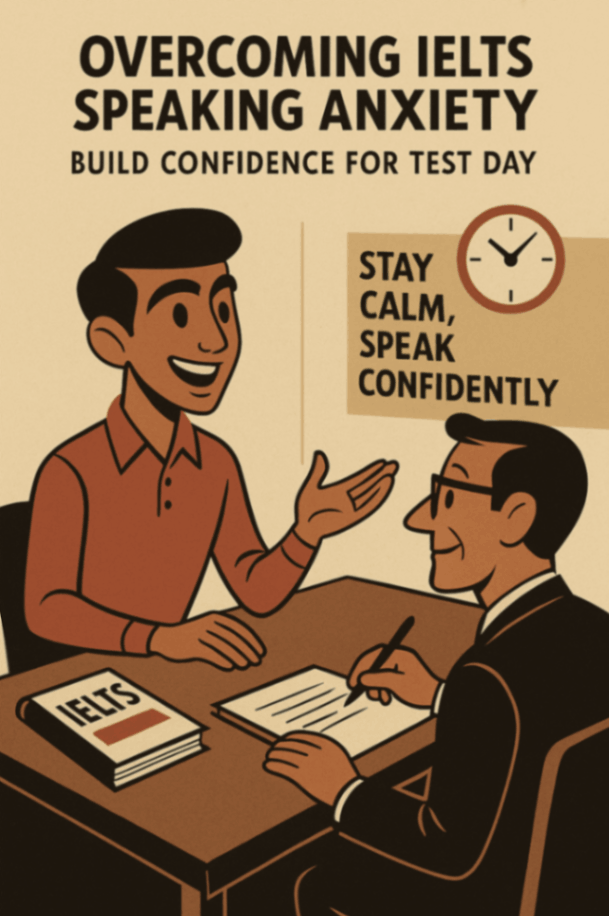
Overcoming IELTS Speaking Anxiety: Build Confidence for Test Day
Many test-takers find overcoming anxiety in the IELTS speaking test essential, as anxiety can negatively affect performance. By understanding the test format, practicing a broad variety of topics, and applying psychological techniques, you can enhance confidence and achieve better results on test day. Key Takeaways Experiencing anxiety in the IELTS speaking test often results in lower scores due to unfamiliar subjects and fear of negative evaluation. Familiarizing yourself with diverse topics and the test setup can help reduce anxiety and improve performance. Practice speaking in encouraging environments and make use of resources like official IELTS materials to strengthen self-confidence. Apply psychological techniques such as positive self-talk and visualization to ease anxiety symptoms. During the test, focus on natural communication and manage your time effectively across all parts to fully showcase your communicative skills. Understanding IELTS Speaking Anxiety and Its Effects Scores often dip as anxiety levels rise, reflecting a well-known relationship. Between 40% and 60% of those taking the IELTS report significant anxiety during the speaking test according to research from Cambridge English Language Assessment. This tension can manifest as Foreign Language Anxiety (FLA) and speaking-specific anxiety, both of which have been shown to correlate negatively with test outcomes. Higher anxiety typically results in poorer performance, a trend exacerbated by several anxiety triggers. Unfamiliar topics frequently spring to mind first, as test-takers often doubt their ability to discuss subjects outside their comfort zone. Alongside this, perceived gaps in language proficiency can inflate concerns about inadequacy, leaving candidates feeling underprepared. The fear of negative evaluation adds another layer, making it hard to focus on showcasing language skills. This anxiety stems from worrying about judgment from examiners or peers, contributing to a cycle of self-doubt and nervousness. Finding ways to manage these anxiety sources can significantly impact your test experience and scores. Practical approaches include: Familiarizing yourself with diverse topics Improving specific language skills Practicing speaking in supportive environments Resources such as the IELTS official site offer valuable practice materials and guidance to help bolster your confidence. The Consequences of Anxiety on Speaking Performance Anxiety impacts speaking performance by affecting fluency, vocabulary recall, and coherence. This often leads to diminished confidence and frequent hesitation. Many speakers, myself included, give shorter responses, pause longer than needed, and make numerous self-corrections under pressure. Even those typically at ease become anxious, especially with unpredictable topics or new examiners. To handle these challenges, practice breathing techniques and engage with varied speaking prompts. You can find a range of speaking exercises on BBC Learning English. Taking frequent mock tests with peers or tutors can also help build adaptability and confidence in unfamiliar situations. Decoding the IELTS Speaking Test Structure Understanding the IELTS Speaking Test structure can significantly boost your confidence. The test spans across 11 to 14 minutes and unfolds face-to-face with an examiner. It is methodically divided into three sections, each designed to assess different speaking skills. The test kicks off with the Introduction and Interview, lasting 4 to 5 minutes. Expect the examiner to introduce themselves and verify your identity. They’ll ask general questions about familiar topics. This part sets the stage and allows you to ease into the conversation. Next is the Long Turn, which lasts 3 to 4 minutes. You’ll receive a topic card with a subject you must discuss. An important nuance here is the 1-minute preparation period given to jot down notes and organize your thoughts before speaking for up to 2 minutes about the topic. This ensures your response is coherent and complete. Finally, the Discussion section, again lasting 4 to 5 minutes, dives deeper into the topics covered in the Long Turn. It’s more interactive, where the examiner engages you in a detailed conversation, probing your ability to express and justify opinions. It’s noteworthy that the entire interview is recorded. This guarantees impartiality and quality control. If you seek more insights into the test’s format, consider visiting the official IELTS website for verified details regarding the exam’s structure and expectations. Root Causes of Speaking Anxiety and How to Counter Them Facing abstract Part 3 topics can amplify anxiety, as these topics often seem less familiar. On the other hand, Part 1 generally feels less stressful due to its straightforward nature. Anxiety levels can spike for those who perceive their proficiency as lower. Cultural differences between the test-taker and foreign examiners might also heighten stress. The uncertainty of the test format and high stakes can be difficult as well. To counter these, consider: Engaging in discussions on abstract topics to gain familiarity. Practicing with friends to build confidence in speaking. Listening to various English accents to reduce the impact of cultural differences. A good resource is the BBC Learning English website. Understanding the test format and taking mock tests to lessen uncertainty. These strategies can help you face the IELTS Speaking test with greater confidence. Proven Strategies to Overcome IELTS Speaking Anxiety Being well-prepared significantly reduces test anxiety. Use question banks to practice with real exam questions, simulating test conditions to reduce unfamiliarity. The familiarity grows each time you rehearse under pressure. Embrace this method to make the actual speaking test feel like just another practice session. Psychological tactics can be your ally. Positive self-talk rewires your brain to approach the test with optimism. Visualization involves picturing success vividly. Pair these with breathing exercises that help keep anxiety symptoms at bay. These practices don’t just calm your nerves—they also boost confidence. Dedicate time to building your verbal skills. Engage in conversations on diverse topics, which broadens your speaking repertoire. Mock interviews also prepare you for the test’s interactive nature. Additionally, digital tools like language apps can be beneficial. These resources hone pronunciation and enhance vocabulary, making you feel prepared. Feedback is essential. Share your practice sessions with someone who can offer constructive critique. Focus on addressing any weak areas they identify before test day. By systematically working through these steps, you’re more assured, paving the way for success. If you need further guidance on improving English language skills,

Common IELTS Mistakes and How to Avoid Them
Excelling in the IELTS is all about understanding the usual hurdles candidates face. These often include confusion over the test’s structure, informal writing tendencies, and poor time management. By focusing on specific preparation, mastering formal language, and refining vocabulary and structural skills, candidates can avoid these issues and increase their chances of hitting the desired band score. Key Takeaways Grasping the different test structures of IELTS Academic and General Training is vital for focused preparation. Keeping a formal writing tone by avoiding contractions and slang is key to scoring higher. Practicing regularly under timed conditions sharpens time management and familiarizes candidates with question formats. Expanding vocabulary and using synonyms can significantly enhance lexical resource scores. Planning task structure carefully and sticking to word limits in writing tasks ensure coherence and relevance. Understanding the Test Structure for Success Preparation begins with grasping the difference between the IELTS Academic and General Training modules. These modules cater to varying needs, with Academic focusing on higher education and General Training geared towards work and migration. Key to success is understanding the layout of these tests. A Band Score of 6.5 often opens the door to university admission. Focusing on Writing Task 1 and Writing Task 2 is crucial, as both play a significant role. Task 1 typically involves describing visual information. Task 2 demands an essay response, emphasizing argumentation and coherence. By aligning your study strategy with the specific demands of either module, you’ll enhance your potential for a favorable outcome. For detailed information about each section’s expectations, check the British Council’s IELTS page. Mastering Formal Writing and Language Use Informal writing can detrimentally affect your IELTS essay scores. To maintain a formal tone, avoid contractions and conversational language. Here is how you can refine your writing to meet academic standards: Use complete words instead of contractions, such as “do not” rather than “don’t.” Avoid slang and colloquial expressions that reduce the academic tone. Choose precise vocabulary that enhances clarity and demonstrates comprehension, which might include terms like “significant” rather than “big” or “presently” instead of “now.” Engaging with educational resources, such as those from the British Council, can provide valuable guidance on maintaining formal writing standards. Balancing an academic tone with clear expression is crucial for achieving high scores. Employing these strategies ensures your essays align with expectations of formal written English. Effective Preparation: Practice Makes Perfect Regular practice is essential to mastering the IELTS. Engaging in timed practice tests helps manage time effectively while understanding diverse question types. Astonishingly, only 76% of candidates choose the more challenging Academic module, making preparation all the more crucial. I strongly suggest these approaches: Regularly participate in mock tests to simulate real exam conditions. Analyze feedback to discern error patterns and focus areas for improvement. Prioritize time management to ensure completion of all sections. By following these practices, you can refine your skills and increase your confidence. For additional tips, the British Council’s website, known for its valuable resources on IELTS preparation, can provide further guidance. Consider Time management as your strong ally; it offers the capability to address each question without undue stress. Honing Vocabulary and Paraphrasing Skills Expanding vocabulary and accurate word choice are key to boosting your IELTS scores. A limited range of words and incorrect usage can pull your score down. To enhance your lexical resource: Focus on topic-specific vocabulary relevant to the IELTS themes you’re writing about. Use synonyms to avoid repetition and show depth in your language. Paraphrasing demonstrates your proficiency. It involves rewording sentences without altering their meaning, setting your essay apart. Embrace these strategies with online resources like Merriam-Webster’s Thesaurus or apps for learning synonyms. These tools can significantly improve your word choice confidence. Crucial Task Structure and Focus A solid task structure is central to scoring well on the IELTS writing section. Essays may lose points for missing key elements like an introduction or conclusion. Sticking to the minimum word count is essential. Task 1 requires at least 150 words, while Task 2 demands 250. Falling short can negatively impact your score. Begin by planning your essay’s structure. A clear introduction sets the stage for your argument, while the conclusion wraps it up neatly. In between, ensure body paragraphs are well-organized and address specific points. Each paragraph should have a clear focus, contributing to the essay’s coherence. Adhering to the word limit can be tricky, particularly when under pressure. One might think only about writing more to reach the count without considering relevance. It’s crucial to stay on topic to demonstrate a comprehensive task response. Avoid straying and ensure your points directly address the question. Keywords in the prompt guide this process. For more detailed tips on structuring essays, you might find resources like OWL at Purdue valuable. Lastly, maintain your focus while writing. Short, concise sentences help. Don’t let your argument wander. Each sentence should support your thesis, ensuring your essay remains cohesive and relevant. Grammar and Cohesion: Keys to Clarity Grammatical mistakes and excessive cohesive devices can disrupt writing’s flow. Lower error rates generally boost band scores, which is vital for IELTS success. Proofreading for grammatical accuracy should be a priority. This allows you to spot and correct any careless slip-ups. Using diverse linking words will help maintain a logical sequence. For instance: Instead of constantly using “and,” consider using “furthermore” or “moreover.” Swap “but” with “however” or “on the other hand” to add variety. A variety of cohesive devices contributes to a more engaging and flowing structure, enhancing clarity. By reducing grammatical inaccuracies and diversifying cohesive tools, your writing becomes more effective and persuasive. For a comprehensive guide on cohesive devices, visit the British Council. This approach could tip the scales in achieving that desired band score. Sources: GeeksforGeeks – “Common IELTS Writing Mistakes” Scribd – “IELTS Test Taker Performance Data 2023-2024” IELTS – “IELTS Writing Band Scores 5-5 7-5: Grammatical Error Rates, Stakeholder Perceptions and Risk” IELTS – “IELTS Scores Associated with Early Academic Success for International Students” The

How to Move from Band 6 to Band 7 in IELTS
Improving your IELTS score from Band 6 to Band 7 means moving from being a competent user to a good one in English. You’ll need to work on reducing errors, expanding your vocabulary, and mastering complex sentences. This journey not only boosts your skills but also shows a significant development in language proficiency and test-taking strategies. Key Takeaways: Reduce frequent grammar and organization errors to elevate your writing. Expand your vocabulary to express thoughts clearly and precisely. Use complex sentence structures to add depth and clarity to your answers. Improve skimming and scanning skills for reading, and practice listening with varied accents. Adopt strategic study methods with focused practice and goal-setting to effectively boost overall performance. Mastering the Leap: Understanding the Jump from IELTS Band 6 to Band 7 Shifting from a Band 6 to a Band 7 in IELTS involves evolving from a ‘competent user’ to a ‘good user.’ At Band 6, frequent errors and limited structure are common. In contrast, Band 7 candidates typically generate frequent error-free sentences. They use an extensive vocabulary alongside varied grammatical structures. This shift indicates a significant rise in English proficiency and testing skills. Consider these aspects to make this transition: Error Reduction: Work on minimizing frequent mistakes in grammar and organization. Vocabulary Expansion: Use diverse vocabulary to articulate thoughts clearly and precisely. Complex Sentence Structures: Master complex sentence structures for clarity and depth. The leap to Band 7 is not just about passing a milestone; it’s a notable achievement in language proficiency, as highlighted by the British Council. Brush up on your skills and aim for this rewarding target. Essential Requirements for Achieving Band 7 Enhancing your writing score involves crafting varied complex sentences and thoroughly addressing each part of the questions. This approach aids in forming coherent arguments. For reading, sharpen your skimming and scanning abilities to identify vital information swiftly. In the speaking module, clarity and flexibility are crucial. Practice speaking fluently and incorporating paraphrasing to demonstrate your command of the English language. Listening demands pinpointing critical information quickly. Hone your skills by focusing on keywords like ‘complex sentences’, ‘paraphrasing’, and ‘coherent organization’. It’s noteworthy that only about 25% of candidates reach Band 7 or higher in Writing annually, according to the British Council. This statistic underscores the importance of dedicated preparation. For more strategies, consider exploring expert tips on websites like the British Council’s IELTS page. Smart Strategies for IELTS Band Score Improvement Focusing your study efforts is crucial. Identify where you’re consistently making mistakes instead of practicing randomly. Implement the ’45/15′ strategy. Spend 45 minutes intensely studying, then take a 15-minute break to keep your mind sharp. Ideally, aim for a minimum of 3 hours daily. Set goals that challenge you but remain achievable to maintain motivation. Give extra attention to the Writing and Reading sections, as enhancements here will improve all test areas. Using sample tests frequently will help gauge your progress. These tests allow you to identify weak spots and set smaller, step-by-step goals. Building confidence through incremental success is key. For additional learning resources, consider exploring the IELTS Preparation Tips from a reputable educational provider. Elevate Your Writing: From Band 6 to Band 7 Concentrate on expressing one clear idea per paragraph while maintaining logical organization. This approach makes your essays more coherent and focused. Vary your vocabulary but practice caution, as overreliance on complicated words often muddles the message. Instead, paraphrase efficiently to demonstrate language flexibility. Implement a consistent review process for your essays. Allocate about 30 minutes after completing each essay for critical evaluation and correction. This habit has helped many students ascend by a full band. Regular practice sessions are crucial. Set a routine where you refine your skills consistently. For further insights into effective writing practices, you might find the Purdue Online Writing Lab a helpful resource. Consistency and a strategic approach in evaluating your work can lead to substantial improvements. Boost Your Reading and Listening Skills Improving reading abilities for the IELTS requires a few strategic techniques. Skimming and scanning are essential to speed up and comprehend text more effectively. Skimming lets you grasp the main idea quickly, whereas scanning focuses on locating specific information. It’s essential to practice these techniques often by engaging with a wide range of reading materials, including newspapers, scientific journals, and literature. With reading in place, multitasking is crucial for listening. Try reading the questions before the audio starts and actively listen for answers during the audio play. This practice trains your mind to connect the dots and boosts your ability to pinpoint information rapidly. For listening, diversify your practice with different accents like British, American, or Australian. This variety prepares you for the range of accents heard during the test. For more refined practice, listen to real-life topics through podcasts, news, or interviews, which often feature multiple accents and informal language. The BBC or NPR offer excellent resources for authentic listening practice. This dual effort of refining both reading and listening skills won’t just help increase your IELTS score; it will also build your confidence. You’ll manage the common stressors of test day more effectively. For further reading on effective strategies, consider checking the British Council’s resources to enhance your preparation. Avoiding Common Pitfalls and Cultivating the Right Mindset Improving your IELTS score from Band 6 to Band 7 isn’t just about working harder, but smarter. Focus on quality over quantity by seeking concentrated feedback on your written work. This crucial step makes it easier to identify patterns and areas in need of specific improvements. Steer clear of heavily relying on memorized vocabulary. Authenticity and relevance in language use are vital, as examiners can easily spot rehearsed phrases. Instead, aim for a natural and contextually accurate vocabulary. It’s important to ensure all task requirements are fulfilled in each module. Frequently, test takers overlook small but vital tasks, resulting in lost points. Before moving on, double-check you’ve responded fully to each task’s demands, whether it’s writing, speaking, listening, or reading. Structuring your study plan

Mastering IELTS Writing Task 2 for Band 7+
Mastering IELTS Writing Task 2 for a Band 7+ involves refining specific skills to meet the exam’s demanding criteria, essential since this task significantly impacts your final score. Achieving this level means understanding the assessment metrics, crafting a structured and coherent response, and managing your time efficiently to polish the essay to meet academic standards. Key Takeaways Address each part of the question directly to meet the Task Response criteria. Organize your essay logically with clear paragraphing and transitions to improve Coherence and Cohesion. Use varied vocabulary and complex sentence structures to demonstrate lexical variety and grammatical accuracy. Allocate time for essay planning and review to improve clarity and avoid errors. Develop arguments with clear positions, supported by specific evidence, and consider counterarguments to enhance your stance. Mastering the Basics: Understanding IELTS Writing Task 2 and Band 7+ Standards IELTS Writing Task 2 demands a formal essay of at least 250 words, but aiming for 270–280 words is often wise to fully develop your arguments. You have 40 minutes to complete it, so time management is crucial. It’s worth noting that this task carries twice as much weight as Task 1 in your final score. The assessment hinges on four key criteria, each equally important: Task Response: Ensuring your essay fully addresses the question. Coherence and Cohesion: Organizing your essay logically with smooth transitions. Lexical Resource: Showcasing a wide range of vocabulary aptly. Grammatical Range & Accuracy: Using complex sentence structures correctly. Reaching a Band 7 suggests being a ‘good user.’ You’ll need to craft effective arguments, maintain clear organization, and embrace complex ideas even with occasional errors. For official guidelines, check the IELTS website. Decoding Examiner Marking Criteria for a Band 7+ Understanding the IELTS Writing Task 2 criteria is key for scoring a Band 7 or above. Start by focusing on Task Response. Ensure you fully answer the question and expand on main ideas. Writing less than 250 words can lead to a penalty, so keep that in mind. For Coherence and Cohesion, logically organize your thoughts. Structure your paragraphs effectively and use linking devices to connect ideas smoothly. This ensures your essay flows naturally. Diverse vocabulary is necessary for Lexical Resource. Employ precise word choices, collocations, and idiomatic expressions to showcase your language skills. Grammatical Range & Accuracy demands varied sentence structures. Aim for error-free sentences and maintain control over grammatical rules, enhancing your clarity. Resources like the British Council can offer further guidance on these aspects. To step up your preparation, consider advice from the IELTS official website. Time Management and Planning: Crafting Your Essay for Success Efficient time management is crucial for achieving a high score in IELTS Writing Task 2. Allocate 5–10 minutes upfront to plan your essay structure. This planning phase can significantly enhance organization and coherence. Dedicate 30–32 minutes to writing your essay, ensuring each paragraph develops a single point supported by examples. Concise introductions with direct answers are vital to set the right tone. In the final 3–5 minutes, focus on reviewing grammar, spelling, and vocabulary. This step is essential to polish your writing and correct any errors that might impact your score. The University of Cambridge suggests that dedicated review time can improve clarity and readability. Efficient time allocation and detailed planning will make a substantial difference in your essay quality. For additional writing advice, you can visit the BBC’s Learning English page. Achieving Band 7+: Meeting Common Requirements To achieve a Band 7+ in IELTS Writing Task 2, it’s crucial to maintain a clear position throughout your essay. Clearly state your stance in the introduction and ensure that all subsequent paragraphs consistently align with this viewpoint. Address all parts of the prompt comprehensively. It ensures the response resonates with each element of the question posed. Argument development is vital. Each paragraph should focus on a single central idea, supported by relevant examples. This not only solidifies your arguments but also offers tangible context. Always consider counterarguments. Addressing opposing views can strengthen your position, showcasing an ability to engage with differing perspectives. Avoid overgeneralizations. Instead of sweeping statements, use specific evidence. For example, referencing global studies or statistics from well-known organizations like the United Nations or World Bank can add weight to your points. Craft your essay in a formal academic style. This means avoiding colloquial expressions and ensuring grammatical accuracy. Employing sophisticated vocabulary can demonstrate linguistic prowess, yet clarity shouldn’t be sacrificed for complexity. Finally, pay attention to coherence and cohesion. Your essay should naturally flow from one point to the next, with effective use of linking words. This approach not only makes your argument more convincing but also ensures that the essay remains engaging and easy to read. For more insights on academic writing, consider resources at Purdue OWL which offer extensive guidelines and strategies. Avoiding Pitfalls: Common Causes for Scores Below Band 7 Incomplete task responses often lead to scores falling short of Band 7. To avoid this, ensure your essay addresses all parts of the question. Disjointed organization can confuse the reader, so structure your essay into clear, cohesive paragraphs with strong topic sentences. Using repetitive vocabulary weakens your essay’s impact. Expand your word choice to convey ideas more effectively. Equally important is controlling essay structure with precision. A well-organized essay aids in delivering your arguments clearly. Spelling errors might seem minor, but they can tarnish your communication’s effectiveness. Regular practice and tools like Grammarly help refine your writing skills. For a more comprehensive understanding, the British Council’s IELTS guide offers further insights into common pitfalls. By identifying these issues, you can proactively improve your IELTS performance. Practical Tips and Strategies for Band 7+ Success Harness the power of sample essays and official band descriptors to self-assess and compare your work. Sample essays provide context on structure and language, while band descriptors highlight the expectations for each score level. Aim for clarity and relevance by trimming repetitive content through careful editing. This process creates sharper, more focused essays. Engage in regular practice with mock tasks