
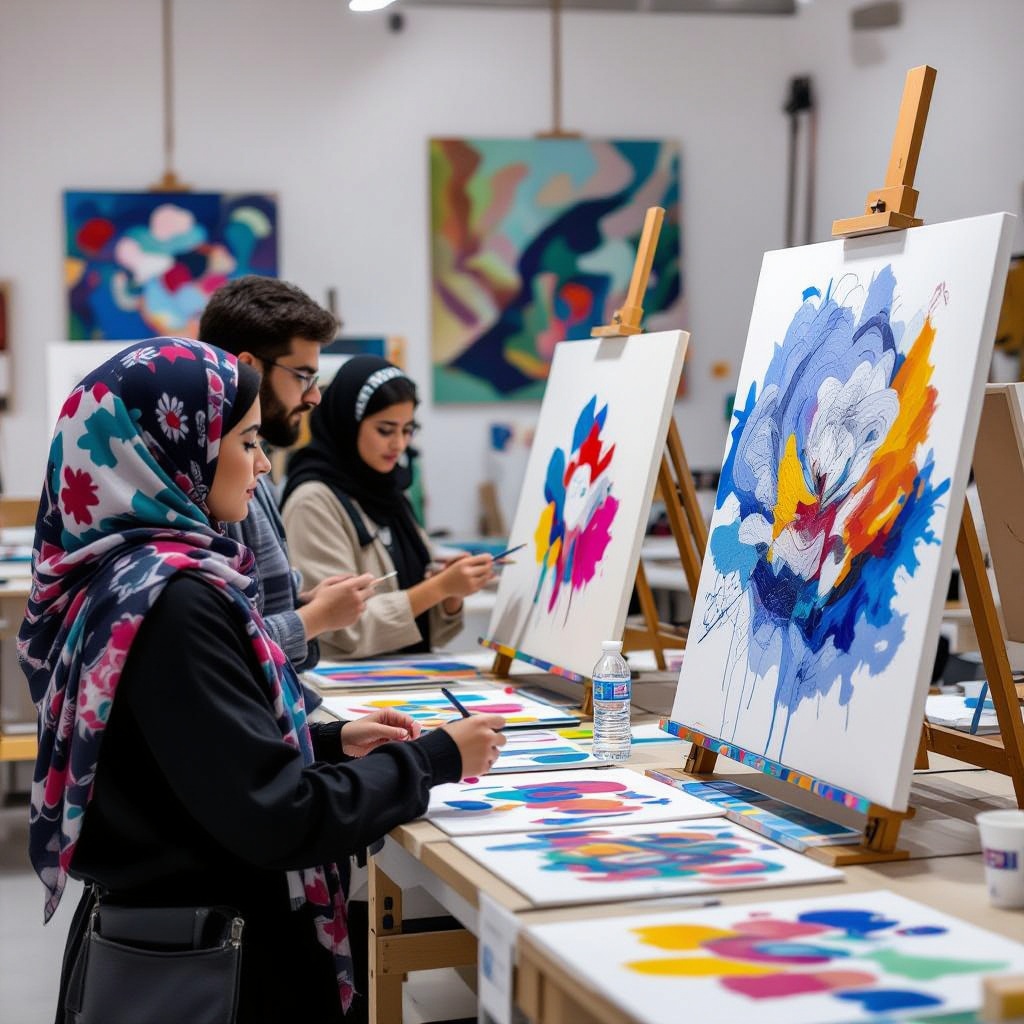
Arts and culture education in the Gulf is experiencing a dynamic shift. Innovative programs and initiatives are driving this change, boosting national identity and economic growth alike. Significant investments, including Saudi Arabia’s “Season of Culture” and the UAE’s integration of art into education, empower youth and local artists. These efforts are placing the region on the global stage as a vibrant arts hub. Key Takeaways Gulf countries, especially the UAE and Saudi Arabia, are actively investing in arts and culture to enrich national identity and drive economic growth. The arts and culture sector significantly boosts GDP, with aims to align with the global benchmark of contributing 5% to GDP. Noteworthy investments in cultural infrastructure, like the Louvre Abu Dhabi and Dubai Opera, are elevating the Gulf’s status as a global cultural hub. Innovative educational programs and emerging cultural districts are reshaping how arts education fits into mainstream schooling across the region. Digital advancements in arts education are making learning more accessible. Platforms now offer interactive and engaging art studies. Creative Arts & Culture Education: A Catalyst for Transformation in the Gulf The Gulf countries are placing growing importance on arts and culture, enriching national identities and invigorating economies. Initiatives like the UAE’s “Year of Cultural Authenticity and Heritage” and Saudi Arabia’s “Season of Culture” emphasize this trend. These campaigns boost cultural authenticity and spotlight national heritage. Economically, the arts and culture sector is making notable contributions. In the UAE, it accounts for 2.6% of GDP, while in Saudi Arabia, it contributes 1.7%. Both countries aim to increase these numbers close to the global potential of 5%. Efforts by the Abu Dhabi Cultural Office highlight the ambition to establish the Gulf as a vibrant arts center. If you’re curious about how culture can drive economic growth, check out this article from the World Economic Forum. Additionally, the push for cultural tourism helps position the Gulf globally as an arts hub, attracting creatives and enthusiasts from all corners of the globe. Building a Strong Cultural Infrastructure: The Gulf’s New Frontier The Gulf is truly making waves with its investment in cultural infrastructure. Iconic sites like the Louvre Abu Dhabi and Dubai Opera aren’t just attracting art enthusiasts—they’re turning heads globally and boosting tourism. They’re doing more than just filling seats; they’re transforming how we view the Gulf as a cultural center. These museums, galleries, and theaters are not just about showcasing art; they’re catalysts for a broader cultural revolution. Now, let’s chat about the United Arab Emirates’ ambitious plans for arts and culture education. By 2025, 15.3% of the federal budget is set to support education, breathing new life into creative studies. They’re not just splashing money around; they’re sparking a glow in the creative industry that’s undeniable. This commitment to funding demonstrates a desire to nurture a new generation that not only appreciates but also contributes to the global arts scene. But the spotlight isn’t just on education. These investments are carving out cultural districts that position the Gulf as a competitive player in the arts. The long-term effect of these projects is a testament to how infrastructure can redefine a region. Curious to explore these renowned sites yourself? Consider exploring the Louvre Abu Dhabi’s official site or even planning a night at the Dubai Opera to experience the buzz firsthand. The Gulf is not just watching but shaping the art and culture narrative. Educational Revolution: Nurturing Talent Through Specialized Arts Education The Gulf is witnessing a transformation, thanks to new arts academies and innovative curricula that bring the arts into K-12 and higher education. Once overlooked, arts education now plays a key role in developing local talent across the GCC. Saudi Arabia stands out with its burgeoning cultural academies, reshaping how the country’s youth engage with the arts. These shifts aren’t just about promoting creativity in classrooms. They’re cultivating future artists who can build sustainable careers in a rapidly growing industry. By incorporating arts into mainstream education, the region is laying the groundwork for a vibrant cultural future. One excellent example is the Royal Commission for AlUla, setting the stage for cultural education. Such initiatives could see young creatives thrive in various roles, from aspiring musicians to accomplished filmmakers, contributing positively to the Gulf’s artistic landscape UNESCO. Empowering Artists: Support Systems for Unleashing Creativity Artist grants, residencies, and exhibitions in the Gulf are setting a new standard for creative support by building a nurturing environment. Many innovative programs are really making a difference. These initiatives offer artists the chance to receive funding, gain valuable exposure, and foster their creative drive. Consider the public-private partnerships boosting this movement. Governments and private companies are working together to create a solid foundation for the arts. This collaboration ensures a broad range of support, benefiting both budding and seasoned artists. By pooling resources, they provide grants and host prestigious exhibitions and competitive residencies. When I look back a decade, the resources for artists were almost non-existent. Today, there’s been significant progress. The growth in available support systems highlights an exciting path for future self-sufficiency in the arts sector. More artists are thriving without needing to leave the region for opportunities. For those eager to explore contemporary art support systems further, examining the development of artist grants and residencies can offer revealing insights into how the landscape has changed over time. Websites like Artsy or The Art Newspaper can provide deeper information about current and past initiatives. These resources underscore the possibilities that lie ahead. The Gulf region is emerging as a powerful arts hub. Its programs are helping to shape creative futures and solidify the region’s importance on the global art scene. Digital Innovation in Arts Education: Embracing the Future Digital learning and gamification are completely changing arts education. The UAE’s edtech sector is a prime example of this transformation. It’s making arts education more interactive and accessible. With exciting tools like virtual reality and interactive storytelling, students engage like never before. Online courses are no longer just supplementary. They’re becoming a

5 Startup Opportunities Saudi Students Are Grabbing Under Vision 2030
Saudi students are diving into growing startup opportunities amid the transformative Vision 2030 initiative. This ambitious plan seeks to diversify the economy and boost sectors like technology, renewable energy, and e-commerce. With significant government backing and an emphasis on innovation and entrepreneurship, students find themselves in a prime position to fuel growth in these dynamic areas. Key Takeaways Vision 2030 propels startup growth across sectors such as technology, tourism, and renewable energy, thanks to strong governmental support. The National Renewable Energy Program opens promising avenues for entrepreneurs interested in solar, wind, and green hydrogen projects. The e-commerce surge, expected to surpass $20 billion by 2025, alongside fintech advancements, offers substantial entrepreneurial opportunities. Innovations in education tech, including online tutoring and STEM boot camps, are reshaping learning and creating fresh business prospects. Real estate and property tech growth, driven by significant urban development projects like NEOM, present fertile ground for tech entrepreneurship. The Breakthrough of Vision 2030: Transforming Saudi Arabia’s Economic Landscape Vision 2030 is shaking things up in Saudi Arabia. Crown Prince Mohammed bin Salman introduced this transformative agenda back in 2016. Its focus is on economic diversification, fostering social progress, and nurturing cultural growth. It’s all based on three pillars: a vibrant society, a thriving economy, and an ambitious nation. This bold move is creating exciting opportunities for startups. With hefty backing from the government, sectors like technology, tourism, and renewable energy are prime for innovation. The supportive policies and incentives make it a fertile ground for entrepreneurship and bold ideas. Startups now have a stage to play on, and the spotlight is on them. To understand more about the broader impact of Vision 2030, you can check out information provided by trusted sources like the World Bank. Harnessing the Power of Clean Energy: Opportunities in Renewable Sectors The National Renewable Energy Program (NREP) in Saudi Arabia has set an ambitious goal: achieving 50% renewable electricity by 2030. The initiative backs a variety of projects, with the Public Investment Fund spearheading advancements in solar, wind, and green hydrogen technologies. This presents a golden opportunity for entrepreneurs and investors. From solar panel manufacturing to wind solutions and green hydrogen technology, there are numerous business opportunities fueled by Vision 2030’s focus on renewables. The boom in solar energy is driven by plenty of sunlight and decreasing costs of solar technology. Entrepreneurs can dive into manufacturing or even developing advanced solar solutions. Meanwhile, the country’s vast desert landscapes are ideal for wind power projects, encouraging innovation and investment in wind solutions. Green hydrogen projects, tapping into the potential of hydrogen as a clean energy source, are another key area. There’s growing collaboration with international players to push these technologies forward. Companies can actively seek partnerships with researchers or existing firms that specialize in hydrogen technology to carve out a niche in this emerging market. Saudi Arabia’s commitment to reducing carbon emissions also extends to carbon capture technologies. This includes capturing and reusing carbon emissions, a field buzzing with potential due to private investment and technological advancement. You can be part of this thriving sector by exploring viable carbon capture solutions. Organizations looking to make the most of these opportunities can explore resources such as IEA for insights into renewable energy developments. Digital Revolution: E-Commerce and Fintech Boom The e-commerce sector in Saudi Arabia is on a meteoric rise, expected to reach more than $20 billion by 2025. This is not surprising, given the country’s digital transformation initiatives. On top of that, the fintech sector’s goal of 70% cashless transactions is already reshaping how people handle money. Government platforms like Maroof provide a significant boost to e-commerce, while SAMA’s support fuels fintech startups. Aspiring entrepreneurs should eye opportunities in niche e-commerce platforms that cater to specific markets. Innovations in digital banking and development of advanced payment solutions are also ripe for exploration. Consider how digital marketing strategies can amplify a startup’s reach, leveraging trends like online shopping and mobile banking. For inspiration, you might want to check out how successful platforms like Shopify expand their offerings to meet evolving needs. Innovating Education Through Technology Education is changing fast, with a growing focus on digital skills becoming crucial, especially after the COVID-19 pandemic. Virtual learning platforms and educational tech have become increasingly popular, reshaping how students learn. Here’s a quick glance at some flourishing entrepreneurial ventures in this space: Online Tutoring: Many startups are diving into tutoring platforms, capitalizing on the rising demand for personalized learning experiences. Educational Apps: Developers are creating apps geared towards learning, tapping into subjects as varied as language acquisition and coding. STEM Boot Camps: These intensive training programs target Saudi Arabia’s up-and-coming talents, offering hands-on experience in science, technology, engineering, and math. For students in Saudi Arabia, these tech-driven educational innovations are not just business ideas but opportunities to engage and inspire their peers. If you’re eager to learn more about the impact of tech in education globally, check out insights shared by the World Economic Forum to stay informed on emerging trends. Technology and Innovation in Real Estate Vision 2030 has turbocharged real estate projects in Saudi Arabia, sparking a surge in demand for innovative tech solutions. With transformative initiatives like NEOM on the horizon, the stage is set for a wave of property tech advancements and smart infrastructure developments. The government has been channeling substantial investments into urban development, setting the foundation for smarter cities. Startups have a fantastic opportunity to dive into construction technology and property management services, capitalizing on these massive real estate initiatives. With an emphasis on smarter infrastructures, property tech advancements focus on enhancing construction processes, facility management, and everything in between. Emerging areas ripe with possibilities include: Construction tech: Leveraging technologies like AI and IoT to streamline construction processes, from planning to execution. Facility management: Developing solutions that optimize the operational efficiency of properties, integrating automation and smart technologies. Property tech is reshaping how real estate is built, sold, and managed. Innovations such as smart home integrations and intelligent urban

7 Shocking Skills Gulf Employers Demand That Students Rarely Learn in University
Gulf employers demand practical and modern skills that often fall short in university curriculums, creating a divide between academics and industry requirements. As the Gulf region, particularly Saudi Arabia, experiences transformation and economic boom, skills like practical AI applications, advanced data analytics, and cross-disciplinary teamwork are in demand yet seldom taught. Key Takeaways A substantial gap exists between university education and the practical skills Gulf employers need, notably in AI and data analytics. Opportunities in AI, cloud computing, and cybersecurity are growing, but academic programs often lack hands-on experience and practical certifications. Soft skills such as critical thinking and problem-solving are valued as they prepare students for modern work challenges. Digital marketing skills, especially in SEO and social media management, are crucial due to the increasing importance of digital presence for Gulf businesses. Continuous learning and adaptability are vital, urging students to acquire new skills through online courses and internships to remain competitive. The Unmet Demand: Gulf Employers Seek Skills Beyond the University Curriculum As industries in the Gulf, especially areas like Saudi Arabia, shift gears, the gap between what universities teach and what employers need keeps widening. Educational institutions tend to emphasize theories instead of hands-on experience. For instance, in Saudi Arabia, AI job postings surged by 30%, yet academic focus remains largely theoretical. This disconnect means that students often miss out on essential skills employers in the UAE and other Gulf states prize. Skills like: Practical AI applications Advanced data analytics Innovative problem-solving Cross-disciplinary teamwork These skills are highly prized as companies in the region push for transformation. It’s crucial for students to acquire them to boost their employability. Testing new abilities through internships or courses could be beneficial. For further insights into AI-related careers, you might explore resources on AI career opportunities for a comprehensive overview. Artificial Intelligence and Machine Learning: Bridging Theoretical Knowledge and Practical Application The demand for AI professionals in the Gulf skyrockets, buoyed by government initiatives and investments surpassing $100 billion. Vision 2030 is fueling this AI boom, projecting GDP growth from 1% to 5% through AI advancements. With AI jobs expected to grow by 30%, this sector offers financial incentives hard to ignore, including salaries shooting past $180,000. Yet, there’s a gap in hands-on learning, notably in computer vision and AI-driven automation, which aren’t typically covered in traditional university programs. Students can benefit from online resources like Coursera or edX, where they can gain practical skills. Closing this gap could transform theoretical understanding into marketable skills, aligning graduates with industry needs and enhancing career prospects in this rapidly expanding field. Transformative Potential of Cloud Computing and the Skills Gap Cloud computing is reshaping career landscapes with its expansive opportunities. There’s a projected 40% growth in cloud-related jobs, significantly driven by Saudi Arabia’s digital transformation efforts. It’s clear that this burgeoning field is brimming with potential, but university curriculums aren’t keeping pace. While institutions prioritize foundational knowledge, many don’t equip students with the cutting-edge, industry-specific certifications being demanded. Many employers are seeking professionals who not only understand cloud technologies but can deploy them efficiently within a business context. This means students need to build capabilities that university courses often overlook. Here are some key skills and certifications in high demand: Certified Cloud Security Professional (CCSP): Enhances security skills essential for protecting cloud data. AWS Certified Solutions Architect: Provides expertise in designing and deploying scalable systems. Azure Administrator Associate: Focuses on managing and monitoring cloud environments effectively. Staying updated with these and other industry-specific qualifications can bridge the gap between traditional academics and practical expertise. Students should be proactive and consider complementing their studies with relevant certification courses. Reputable platforms like Microsoft Learn or AWS Training offer resources that can boost your capabilities and make you stand out in the job market. It’s all about aligning oneself with the market’s current demands. Cybersecurity: Rising Demand and the Skills Deficit Cybersecurity has surged as an urgent need today. With job growth expected to hit 35%, it’s attracting attention thanks to some impressive salaries—up to SAR 32,000 per month for the skillful. Yet, students might be a bit surprised to find that universities often skip over some crucial aspects when training for these roles. One area that gets overlooked is risk assessment. Schools should help students understand how to identify and fine-tune security protocols to shield data effectively. However, without a strong foundation in assessing risks, you might find yourself unprepared in pressing industry situations. Another critical, yet often ignored, area is penetration testing. This sophisticated skill allows teams to find vulnerabilities before attackers do—an essential proficiency in any security toolkit. I recommend focusing on these specialized skills through online courses or industry certifications, which can greatly enhance your employability. For those wanting to explore further, sites like Cybersecurity Ventures offer insights into job trends. You’ll find market demand and skill requirements that are pivotal for staying ahead in this fast-growing field. The Shift to Digital Marketing: A New Frontier for Career Development in the UAE Every business in the Gulf recognizes the critical role of having a strong online presence. This surge in digital need has led to a booming demand for digital marketing specialists. These professionals are responsible for optimizing a company’s reach and engagement online, with competitive salaries ranging from SAR 9,500 to SAR 35,000 per month. Employers are on the lookout for those who excel in key areas like SEO and social media management. Unfortunately, these specific skills are rarely taught in traditional university settings. Digital marketing isn’t just about posting on social platforms. It also involves understanding campaign analytics to measure success and adjust strategies. Resources like Moz offer insights into SEO that can greatly enhance one’s proficiency. By gaining these skills, students can tap into lucrative opportunities in the UAE’s flourishing market for digital expertise. Continuous Learning, Critical Thinking, and Problem Solving: The Soft Skills Employers Crave Gulf employers are putting a spotlight on soft skills like critical thinking and problem solving, which are increasingly valued

7 Shocking Facts About Medical & Healthcare Education Every Gulf Student Must Know
Medical and healthcare education in the Gulf Cooperation Council (GCC) region is undergoing rapid transformation. The number of medical colleges in the Gulf has surged, with Saudi Arabia leading this expansion. While increased access offers more opportunities for aspiring doctors, it also raises concerns about quality education, curriculum standards, and student outcomes. Key Takeaways: The GCC has seen substantial growth in medical colleges, with Saudi Arabia alone hosting 13 institutions—reflecting a strong commitment to meeting healthcare demands. Gender imbalance has been a concern, with men historically dominating enrollments. However, rising female participation is shifting this trend. Nearly 60% of Gulf medical colleges have implemented problem-based learning (PBL), emphasizing critical thinking over rote memorization. The language barrier, particularly limited English proficiency, remains a key obstacle, contributing to higher dropout rates despite strict selection processes. Strategic planning and strong faculty support are essential to ensure expanding institutions maintain high educational standards Explosive Growth of Medical Colleges in the Gulf The Gulf Cooperation Council (GCC) countries have experienced a remarkable boom in medical colleges, now reaching a total of 30 institutions. Saudi Arabia leads this growth with an impressive 13 medical colleges, reflecting its commitment to addressing healthcare needs. Following closely is the UAE, home to 3 of these colleges, while Oman contributes with 2. Yemen, despite its challenges, adds a notable number with 9 medical colleges. This expansion is driven by the urgent need to cater to the rising healthcare demands in the region. However, this rapid growth raises some important questions about the quality of education provided. With this expansion, it’s crucial to ensure that educational standards are not compromised. Students and stakeholders alike should be mindful of the balance between quantity and quality in medical education. Let’s break down this growth: Saudi Arabia: 13 colleges, predominantly government-run. UAE: 3 colleges, a mix of government and private. Oman: 2 colleges, mainly government-operated. Yemen: 9 colleges, significant despite ongoing issues. Across the GCC, government-run institutions make up about 70% of the total, while private ones account for the remaining 30%. Each type offers unique advantages and challenges, and prospective students should consider these factors. If you’re interested in exploring how healthcare education aligns with regional needs, the World Health Organization provides valuable insights into global health education trends. Persistent Gender Imbalance in Medical Education In 2005, a staggering 64.15% of students enrolled in GCC medical colleges were male. Male graduates made up 62.7% of the total, which sheds light on a marked gender gap. It’s crucial to explore the cultural, social, or institutional factors contributing to this disparity. Many believe traditional roles and expectations have historically kept women from pursuing medical careers. Family obligations and societal perceptions might play a role too. A pie chart could vividly show this gender imbalance, making it easier to understand. Are there changes on the horizon? Recent trends hint at progress, with more women entering medical fields, though the pace can vary across regions. For more on this topic, and how it compares globally, check out relevant studies on renowned educational resources like the World Health Organization’s website. Curriculum Innovations: Traditional vs. Problem-Based Learning A remarkable shift in medical education in the Gulf region took place in 2005. About 60% of GCC medical colleges adopted problem-based learning (PBL) methods. Big names like King Saud bin Abdulaziz University and Qassim University led the charge. So, what makes PBL stand out? Let’s dive into the specifics. Traditional medical curricula usually center around discipline-based learning, focusing on individual subjects like anatomy, physiology, and biochemistry. This method spoon-feeds information, encouraging students to remember details rather than apply knowledge. On the other hand, PBL flips the script. It emphasizes real-world problems, pushing students to think critically and collaborate. While PBL sounds promising, it does come with hurdles. Training faculty for this new approach is no small feat. Teachers, accustomed to traditional methods, need to learn new strategies and techniques. Moreover, students occasionally struggle initially as they adapt to the more self-directed nature of PBL. It demands confidence and proactive participation. There’s also a push for collaboration with international institutions, which enhances the PBL framework. Partnering with global universities introduces new perspectives and heightens learning experiences. It reflects a trend towards more holistic medical training. Harvard Medical School’s resources can offer insights into effective global collaborations in medical education. These changes in curriculum are shaping a new breed of healthcare professionals in the Gulf. The emphasis on problem-solving and international alliances promises a dynamic shift in how medical education is approached. Challenges in Student Selection and High Attrition Rates Gulf medical colleges keep their entry standards high, often requiring a premedical year to ensure readiness. Despite these precautions, dropout rates remain significant. A key reason is the challenge of studying medicine in English, which can prove difficult for many students in the region. The selection process predominantly relies on high school performance. Marks and grades become pivotal in determining a student’s eligibility, but they don’t always paint the full picture of a student’s potential to succeed in medical school where proficiency in English is crucial. The impact of English proficiency can’t be overstated. Those with limited English skills often struggle, leading to higher dropout rates. It’s a significant hurdle, and improving language skills is essential not only to understand course material but also to communicate effectively with patients in the future. Improving retention and success involves ushering in some proactive strategies. Support services should become more robust, providing students with the resources they need to thrive. Language preparation programs, targeted at enhancing English proficiency, should be a key offering at these institutions. A great example of similar initiatives can be seen on Cambridge English where they provide support for English learners to help them achieve proficiency. This could ease the transition into studying complex medical courses in a second language, ultimately reducing dropout rates and fostering a more successful learning environment. Many colleges are struggling to maintain the ideal faculty-to-student ratio of 1:7. A major reason for this shortfall

5 Dangerous Campus Life Mistakes UAE Students Make (And How to Avoid Them)
University life in the UAE feels like a rollercoaster—fast, unpredictable, and full of both opportunities and potential pitfalls. For students, it’s not just about acing exams. It’s about balancing academics, mental health, safety, and embracing the UAE’s multicultural environment. Let’s break down the key aspects that shape a student’s journey here. Overcoming Academic Overconfidence and Poor Time Management Many students enter university confident they can handle the workload. But the sudden shift from the structured school system to self-directed university life often backfires. Missed deadlines, mounting stress, and declining performance are common. 📊 Research shows that fourth-year students report the highest levels of depression, anxiety, and stress, while students aged 18–20 are especially vulnerable. The link between poor time management and mental health is clear. 👉 Practical fix: Use calendars and to-do lists. Study in short, focused sessions. Prioritize tasks instead of multitasking. Getting this right not only reduces stress but also boosts academic performance. For deeper insights, you can check out this detailed guide on time management. Prioritizing Mental Health and Well-Being Mental health is one of the biggest challenges faced by university students in the UAE. Despite access to counseling and support services, stigma often prevents students from seeking help. 💡 Why it matters: Female students and those in their final years are disproportionately affected. Young students are almost five times more likely to experience depression than older peers. 🌱 Ways to cope: Build peer support networks. Use university counseling services. Try stress-relief practices like yoga, mindfulness, or regular study breaks. Even small steps can make a huge difference in emotional resilience. For extra resources, the Mental Health Foundation provides practical tips and guides. Staying Safe in the Digital Age Students are digital natives, but many underestimate cyber risks. With cybersecurity education becoming mandatory across UAE schools by 2025, awareness will improve. But for now, digital safety is an urgent personal responsibility. 🔑 Essential practices: Enable two-factor authentication (2FA). Keep your software updated. Learn to spot phishing emails and scams. Resources like Krebs on Security are excellent for staying updated on cyber threats. Remember, good digital hygiene protects not just your data but also your peace of mind. Avoiding Complacency About Personal Safety The UAE ranks among the safest countries in the world, with Abu Dhabi and Dubai topping global safety lists. But overconfidence can make students careless. 👀 Smart safety tips: Travel in groups, especially at night. Keep emergency contacts handy. Stay alert in public spaces, even if they feel secure. Personal safety is about vigilance, not fear—and it contributes to a safer campus community overall. Embracing the UAE’s Multicultural Environment With over 200 nationalities represented, the UAE is a cultural melting pot. Missing out on cultural integration is like skipping half of your education here. 🌍 How to engage: Join cultural clubs and societies. Attend multicultural events and global fairs. Try language exchanges via platforms like Tandem. These experiences not only enrich personal growth but also expand professional opportunities in a globalized job market. Frequently Asked Questions ⏰ Why do students struggle with time management in the UAE?Because of the sudden transition from a structured school environment to independent university life, leading to stress and missed deadlines. 🧠 How does poor time management affect mental health?It contributes to higher rates of anxiety, depression, and stress, especially among first- and fourth-year students. 💬 What are practical ways to support mental health?Mindfulness, physical activities, peer networks, and counseling services can help manage stress effectively. 🔐 How can students improve digital safety?Use 2FA, update devices regularly, and learn to recognize phishing scams. 🚨 Is safety really a concern in the UAE?The UAE is safe, but complacency can create risks. Basic vigilance and group travel are recommended. 🌍 What’s the benefit of cultural integration?It builds social networks, broadens perspectives, and boosts career opportunities in a global setting. Final Thoughts University life in the UAE is as rewarding as it is challenging. By managing time effectively, prioritizing mental health, practicing digital safety, staying vigilant, and embracing multicultural opportunities, students can thrive academically, emotionally, and socially. It’s not just about surviving campus life—it’s about making the most of it.
5 Painful Academic Failure Lessons UAE Students Can Turn Into Powerful Comebacks
In the high-stakes academic environment of the UAE, with its demanding exam standards, students often face the balance between striving for excellence and confronting academic failure. While academic pressure can seem overwhelming, stories such as Kavya Shah’s illustrate the power of embracing setbacks, fostering resilience, and staging remarkable comebacks. Key Takeaways Embracing setbacks as a means of growth builds transformative resilience. Seeking guidance from teachers and peers delivers valuable support. Setting achievable goals can break overwhelming tasks into manageable pieces. Adopting an active study habit boosts learning experiences. Cultivating a growth mindset turns challenges into opportunities. High Academic Pressure in UAE: A Double-Edged Sword The educational landscape here in the UAE is a fierce battleground with its demanding standards and prestigious benchmarks like GCSE, IB, and CBSE exams. In 2025, an impressive 26% of students within the Gems network scored top grades (9–8), according to Gems national statistics. Despite this high achievement, stories of academic failure continue to surface. This paradox shows the intense expectations students face. Kavya Shah’s story is an eye-opener for students grappling with failure. Once on the brink of repeating Year 10 due to poor grades, Kavya managed to turn her struggles into a success story. Her transformation demonstrates how academic setbacks can foster resilience and open doors that might’ve seemed sealed shut. High academic pressure, while driving excellence, can sometimes work against students. Those caught in its grip often discover resilience they didn’t know they had. Here’s a quick glance at how students, like Kavya, manage to harness academic failures into valuable learning experiences: Embracing failure as a learning tool rather than a defeat. Seeking mentorship from teachers and peers. Setting realistic goals and breaking down overwhelming tasks. Developing a proactive habit towards studies rather than a reactive one. Cultivating a growth mindset that views challenges as opportunities. Research-backed strategies like these can be a game-changer. Keeping a balance between striving for success and handling setbacks with grace builds a robust foundation for both academic and personal growth. To explore more about educational pressures and strategies to cope, you might find the insights shared by Edutopia quite enlightening. Navigating Cognitive Overload in the Modern Classroom The shift to hybrid and digital learning models has significantly increased cognitive load, causing academic struggles for many students. That extra cognitive burden isn’t just in your head—statistics back it up. From 2020-2025, 33.3% of UAE university students reported a hefty intrinsic cognitive load amid these educational shifts. Let’s dive into how you can turn this challenge into a learning curve with some practical strategies. In a hybrid learning environment, personalized techniques can be a game-changer. Tailoring your study methods to fit your unique learning style does wonders. Perhaps you find that breaking tasks down into smaller, digestible parts helps keep stress low and focus high. Then, there’s the advantage of digital tools. Leveraging platforms like Google Classroom and Zoom can streamline your workflow with their calendar and scheduling functions. Utilizing apps such as Anki or Quizlet can aid in efficient memorization, letting you focus more on understanding key concepts instead of getting lost in a sea of information. Want to explore more about how technology can transform education? Read more on Education Week. Lastly, remember to manage time expertly and not be afraid to ask for help when needed. Collaborative learning platforms can connect you with peers for support, easing the strain of cognitive overload. As you continue to adapt, there’s no doubt you have the tools at your fingertips to transform challenges into powerful academic comebacks. The Impact of Attendance Policies on Academic Performance Attendance policies for the 2025-26 academic year highlight the strong connection between showing up and academic success. Missing too much school can lead to serious consequences, impacting grades and learning outcomes. To counter this, schools have put in place policies like automatic notifications to parents and personalized support plans for students struggling with attendance. Sticking to these guidelines can play a vital role in recovering academically and developing self-discipline. The policies encourage regular attendance by showing students the importance of being present, helping them bounce back from poor attendance. Here’s how these policies could benefit students: Parents are immediately informed of absences, fostering better communication and accountability. Personalized support plans offer customized strategies to improve attendance. Regular attendance nurtures academic improvement, making it a crucial component of any student’s educational journey. For more on attendance and its effects, visit Edutopia. Overcoming Curriculum Transitions and Language Barriers Switching between diverse international curricula can rattle any student’s confidence, affecting their academic performance. This is especially true in Dubai’s vibrant private education sector, where students often face significant curriculum transitions that demand rapid adaptation. These changes can be disorienting and bring with them a slew of fresh challenges, including the need to grasp new teaching methods and content that may differ substantially from what a student is used to. But fear not. Cultivating success amidst these shifts involves integrating language proficiency programs and seeking out curriculum-specific tutoring. Here are some strategies to help students thrive: Enroll in language proficiency programs: Whether you’re transitioning from a curriculum taught in Arabic to one in English, or vice versa, bolstering your language skills can make a world of difference. Sites like BBC’s Language Learning Hub offer free resources to improve your communication skills. Apply curriculum-specific tutoring: Specialized tutors familiar with the differences between curricula can offer personalized guidance to ease transitions. They can help pinpoint problem areas and provide targeted assistance to boost academic performance. By embracing these strategies, students can discover advantages that propel them toward academic success. They transform what seems like overwhelming changes into stepping stones for powerful comebacks. Adapting doesn’t just entail surviving these shifts; it’s about turning them into opportunities for growth and excellence. Maximizing Support Systems for Academic Recovery Tapping into support networks can make all the difference in overcoming academic setbacks. Conversations with teachers, counselors, and peers can serve as lifelines during tough times. Students in UAE schools have a multitude of

5 Powerful Reasons Why Studying Business in the UAE Can Transform Your Career
Studying business in the UAE provides a transformative career opportunity due to its strategic location, dynamic educational offerings, and strong industry connections. The thriving, innovation-driven atmospheres of cities like Dubai and Abu Dhabi, along with the cutting-edge curricula at UAE business schools, prepare students for impactful careers both locally and internationally. Key Takeaways Studying in the UAE grants significant global exposure through international business networks and multicultural interactions. The strategic location and booming economy open exceptional career paths for business graduates. Business curricula, aligned with international trends, ensure graduates from the UAE stay relevant on both global and local fronts. Government initiatives and significant investments in digital and leadership skills boost employability and career growth. Programs aligned with industry demands and international partnerships increase employability by offering practical experience and global recognition. Career Transformation through Business Studies in the UAE Studying business in the UAE is a game-changer for anyone looking to drive career growth and gain international exposure. Business schools in the UAE offer transformative career opportunities that are hard to match. With campuses often set in vibrant cities like Dubai and Abu Dhabi, students are positioned right at the crossroads of global commerce. It’s not just the geographical advantage; the unique mix of cultures and perspectives enhances learning and networking opportunities. UAE business schools, like the renowned American University of Sharjah, boast cutting-edge curricula that align with international business trends. This guarantees that students receive an education that not only meets local but also international standards. Graduates emerge with a solid foundation, armed for professional growth in various sectors. Here’s a look at some of the key benefits: Global Exposure: Studying in the UAE opens doors to numerous international business networks and contacts, providing a worldwide perspective. Transformative Career Opportunities: The strategic location and booming economy of the UAE afford graduates incredible career prospects. Professional Growth: There’s an emphasis on practical experiences through internships and projects with leading global companies. For those seeking to make a significant leap in their careers, the UAE offers programs that are crafted to mold future leaders capable of impacting both local markets and worldwide industries. By choosing to study here, you’re not just opting for academic excellence but a gateway to impressive career transformation. Strategic Location Connecting Global Business Hubs The UAE’s strategic location makes it a dynamic global business hub, bridging Asia, Europe, and Africa. Its position seamlessly links prominent trade networks and serves as a pivotal gateway for international companies. With over 163 multinational company headquarters, the UAE boasts a thriving business landscape that’s second to none in the region. This country ranks among the top 16 globally for international talent competitiveness, highlighting its appeal for career advancement. When compared to other regional hubs, the UAE leads with a substantial number of multinational HQs and robust foreign direct investments. The Dubai International Financial Centre alone houses over 2,900 registered companies as of 2025. This bustling environment offers unparalleled opportunities for growth and exposure. For more insights on global trade networks, the World Trade Organization offers comprehensive resources. And if you’re curious about international careers, consider checking out LinkedIn’s Global Talent Hub. Accelerating Market Growth in Business Education The UAE’s higher education market is on a fast track, projected to skyrocket from USD 141.8 million in 2024 to a whopping USD 872.15 million by 2033. That’s a major leap in business education. It’s a magnet for investments in the corporate e-learning market and demonstrates leadership in adopting e-learning and spending on executive education. Universities are smartly aligning their business curricula with the UAE’s regional interests. They’re putting a strong focus on the digital economy, leadership with vision, and innovation in entrepreneurship. These priorities ensure that the education you receive isn’t just theoretical—it’s set to revolutionize your career. For more insights into higher education growth, check out World Economic Forum and see how this booming sector connects with global education trends. Now’s the time to be part of this exciting digital transformation journey. Government Investment & Innovation in Talent Development The UAE is putting strong emphasis on fostering digital talent through significant investments and forward-thinking strategies. The government has committed to creating an impressive 1.5 million digital jobs by 2025. This ambitious target aligns perfectly with their $100 million investment in the National Digital Talent Strategy. This plan focuses not only on job creation but also aims to upskill the current workforce to meet the demands of future jobs. In line with these goals, the UAE Digital Skills Academy plays a crucial role in advancing the region’s innovation strategy. The academy offers training initiatives that equip students and professionals with vital skills in emerging technology fields. By partnering with international organizations like the World Economic Forum, they ensure the training is globally competitive and forward-focused. You can look at more of the World Economic Forum’s work to understand these partnerships here. Students in the UAE have access to various opportunities that enrich their learning experience. Scholarships and internships provide practical exposure, while leadership programs cultivate the skills required to navigate a rapidly changing job market. Such initiatives not only prepare students for immediate employment but also equip them with skills that will serve them throughout their careers. Leveraging government investment in upskilling and innovation is a clear pathway to securing a future-ready career. If you’re interested in learning more, consider exploring what UAE Digital Skills Academy offers to boost your prospects in this dynamic environment. Industry-Aligned Programs and International Partnerships Studying business in the UAE gives you an edge with programs crafted to fit industry requirements. These courses don’t just stay in the classroom. They provide students with on-the-job training and internships, ensuring they’re ready to hit the ground running. Developing soft skills is a priority, too. You’ll find specific modules that help refine your communication, teamwork, and leadership abilities—skills employers crave. The UAE boasts collaborations with prestigious international universities. These partnerships bring joint degrees that boost your global credibility and employability. Imagine holding a degree that’s recognized not just

5 Critical Mistakes Students Make When Choosing a University Program in the UAE
Choosing a university program in the UAE can feel overwhelming, and students often make mistakes that might impact their careers long-term. By valuing accreditation, considering program costs, and focusing on career outcomes, prospective students can make informed choices. Key Takeaways Accreditation is vital for ensuring your degree’s quality and recognition, as non-accredited programs might hinder career growth. Understanding admission criteria, school selectivity, and needed test scores helps ensure you’re eligible and can improve your application. Exploring career support, job placement rates, and industry partnerships can significantly boost employment prospects after graduation. Managing education costs and seeking scholarships can reduce financial strain and maximize your educational investment. Considering program content, teaching methods, and campus demographics helps you select a program that matches your personal and academic goals. Ignoring Accreditation and Quality Assurance Don’t underestimate the importance of accreditation when picking a university program in the UAE. Choose programs that the UAE Ministry of Education and the Commission for Academic Accreditation (CAA) formally recognize. This ensures your degree will be respected by employers and professional entities. Think of accreditation as your degree’s badge of quality and authenticity. Why’s accreditation vital? It’s all about quality assurance. Accredited programs meet specific educational standards, making your degree more valuable in the employment market. Employers often equate accreditation with competency, thus preferring candidates from these programs. The lack of such credentials can spell trouble for your career prospects. Compare this with non-accredited programs. You might save a few bucks, but graduates often face hurdles in securing jobs. Employers might question the program’s credibility, making it harder for you to climb the career ladder. You might even encounter difficulties with professional licensure or further education opportunities. Quality assurance isn’t just a buzzword; it’s your ticket to a successful career. So before you commit, make sure your program is vetted not just by the Ministry of Education but also by the CAA. For further reading, you might explore resources on UAE Ministry of Education to get firsthand information about accreditation processes and recognized institutions. Choose wisely, and ensure your educational investment is worthwhile. Overlooking Admission Criteria and Selectivity Evaluating acceptance rates is crucial, especially if you’re eyeing top institutions. For instance, Mohamed bin Zayed University of Artificial Intelligence’s selectivity is evident with only 5% of applicants being admitted for the 2025-26 academic year. This highlights how competitive some programs can be. Digging into specific entry requirements is also key. You’ll want to check the minimum grades needed and any subjects you must have studied prior. Don’t forget about English proficiency scores like IELTS or TOEFL. Some programs might also require SAT or ACT scores, so make sure you have these sorted out in time. To stay on top of it, make a checklist of what each university requires. Here’s a quick primer on things to consider: Minimum GPA or grade requirements Required standardized test scores (e.g., SAT, ACT) English proficiency scores (IELTS, TOEFL) Special subject prerequisites Additionally, research published acceptance rates and admission statistics. Websites like QS World University Rankings can provide further insight into what you’ll need to aim for to get into the top tier schools. Ignoring these factors can mean you’re not eligible even if your application is otherwise stellar. Remember, being informed helps make your application stronger. Neglecting Career Outcomes and Industry Connections Students often overlook the importance of evaluating career support and job placement rates when choosing a university program in the UAE. It’s crucial to assess how universities link their programs with industry to boost employability. You’ll want to examine their partnerships in key sectors. Universities that have strong ties with industry leaders can open doors to internships and job placements that significantly influence your career path. Internship opportunities play a pivotal role here. Programs that offer solid internships can provide real-world experiences and help you build valuable industry relationships. They give you a taste of what working in your chosen field is like while enhancing your resume. Moreover, employer partnerships can offer insights into potential employment pathways, connecting you with the resources needed for success. Here’s what to consider: Career Support: Look for universities offering robust career centers and services to guide you through the transition from student to professional. Job Placement Rates: Statistics on job placements can give you a clear picture of how well a program prepares its graduates for employment. Industry Partnerships: Universities with strong industry ties often offer more opportunities for networking and internships. Checking resources like Times Higher Education can provide greater insights into which universities have a reputation for strong industry connections and job placement rates. Don’t underestimate the value of employability; it could make all the difference in building a successful career post-graduation. Misjudging Costs and Scholarship Opportunities Misunderstanding the overall cost of education can catch many students off guard. In the UAE, students might expect to pay between ₹20–30 lakhs, which can be more budget-friendly than options in the UK or USA. However, it’s important to factor in all costs, including tuition fees and living expenses, for accurate budget planning. Scholarship opportunities can significantly offset these costs, offering between 10–30% coverage of tuition fees. Scholarships often reward academic excellence or timeliness in application submissions. This makes eligibility criteria an essential aspect to explore early on in your planning process. Furthermore, checking reputable sources like the Khalifa University scholarship page or similar institutions will provide valuable information about scholarship options and financial aid. Remember, informed planning now can save both time and money later. Misunderstanding Program Content and Teaching Methods Choosing a university program means more than just the reputation of the place. Pay attention to what the courses actually offer. Evaluate the curriculum, the specializations available, and the teaching methods involved. You might be surprised at how differently programs can be structured, even within the same field. Take a closer look at new programs like the Master’s in Statistics & Data Science. They often bring up-to-date industry relevance with them. These programs might align more with current industry demands, providing hands-on learning

5 Urgent Facts About UAE’s New AI Curriculum That Students Can’t Ignore
The UAE is making a significant move by rolling out a mandatory AI curriculum in all government schools from the 2025–2026 academic year. This change will affect over a million students from Kindergarten through Grade 12. It’s a strategic plan to prepare young minds with the vital skills needed to excel in an AI-focused future, emphasizing innovative learning techniques and empowered teachers. Key Takeaways AI will be a compulsory subject in UAE government schools for all students from Kindergarten to Grade 12 starting in the 2025–2026 academic year. The curriculum focuses on equipping students with essential skills for succeeding in an AI-focused future, emphasizing innovation and ethical AI use. Over 1,000 teachers have been trained to deliver AI education effectively, ensuring high teaching standards and consistent educational quality. The program highlights hands-on, project-based learning, moving away from traditional exams to nurture a deeper understanding and practical skills. This initiative aims to create a significant economic impact, projecting an increase of AED 335 billion by 2031, positioning the UAE as a global leader in AI education integration. UAE’s Bold Leap: Mandatory AI Curriculum for All Students Starting the 2025–2026 academic year, artificial intelligence will be a compulsory subject for all students in UAE government schools, beginning in Kindergarten and extending through Grade 12. This initiative marks a significant transformation in education, impacting over one million students as they dive into future skills and technological advancements. This educational reform isn’t just about learning tech; it’s about equipping students with tools for innovation. The curriculum will develop critical skills essential in an AI-driven world, preparing students for a future where technology and innovation play pivotal roles. For more insights on global education trends, the World Economic Forum offers excellent resources World Economic Forum AI Education. Transforming Education: 1,000+ AI-Trained Teachers Set to Inspire The UAE Ministry of Education has taken significant steps to reshape its educational landscape by investing in its educators’ development. Over 1,000 teachers have graduated from specialized summer programs designed to empower them with cutting-edge AI pedagogy and lesson planning skills. These programs aim to equip educators with the right tools to engage students in AI and prepare them for future challenges. The focus isn’t just on training; there’s an infrastructure to maintain high education standards. A dedicated monitoring committee diligently oversees this initiative. They’re tasked with ensuring continual educational quality and making sure teaching methods evolve alongside AI advancements. This guarantees that educators aren’t just competent but excel in bringing AI concepts into the classroom effectively. For those interested in the broader implications of such advancements, a deeper insight into AI in education can be found through the World Economic Forum’s take on AI in education. This ensures you stay informed about how these innovations are aligning with global standards. These AI-trained teachers are set to inspire a new generation of thinkers and innovators, sparking an interest not just in AI but fostering a wider appreciation for technology’s role in society. By shaping a curriculum that meets modern demands, the UAE’s educational strategy is paving the way for a forward-thinking, technology-driven future. Curriculum Innovation: Ethics, Real-World Applications, and More The UAE’s new AI curriculum is shaking things up by concentrating on innovative aspects like data science, ethical AI, and real-world applications. It’s crafted to equip students not just with technical skills but also a strong moral compass. There’s a significant push to focus on ethical AI usage and its impact on society, nurturing both cognitive and practical proficiencies. When diving into ethical AI, students will learn to consider the broader implications of AI technology. They’ll explore the importance of developing algorithms that respect human rights and privacy. This understanding is critical in creating applications that are both innovative and ethical. For instance, recognizing bias in data algorithms and learning how to mitigate it is a crucial skill. Real-world applications are at the forefront of this curriculum, bridging the gap between theory and practice. These modules offer hands-on experience in software applications and policy-making, empowering students to apply what they’ve learned in real situations. By engaging with community projects, students will see firsthand the societal impacts of AI technologies. Participating in these initiatives fosters a better understanding of how AI can affect various sectors like healthcare, education, and transport. By preparing students with this comprehensive knowledge, they’re set to become responsible leaders in AI. They’ll be ready to tackle future challenges and drive innovation responsibly. If you’re curious about how AI ethics are being approached globally, the AI Ethics Lab is a great resource. Additionally, exploring Data & Society can provide further insights into the societal impacts of AI. Revolutionizing Assessments: Project-Based Learning Takes Center Stage In the UAE’s fresh approach to AI education, traditional exams are phasing out, making way for school-based assessments that prioritize experiential learning through tangible projects. This shift ensures students engage in real-world AI challenges, fostering a deeper understanding of concepts rather than just memorizing facts. Instead of the usual test-centric methods, students now embark on projects that mimic actual AI applications, encouraging students to apply their knowledge practically. The only time they face standardized exams is during the first and third terms. This innovative approach allows for personalized learning, honing skills that align with modern industry demands. This new assessment method doesn’t just evaluate a student’s grasp of AI topics. It cultivates creativity, collaboration, and problem-solving skills, which are essential in today’s AI-driven landscape. By focusing on hands-on projects, learners have the chance to explore AI technologies actively, making education more engaging and effective. Besides offering practical skills, project-based assessments prepare students for the tech job market, where such capabilities are highly valued. For educators and students eager to explore further, checking resources like Edutopia’s insights into project-based learning here could be incredibly beneficial. Embracing these changes means students will graduate with a toolkit full of skills ready for the next AI frontier. UAE Sets a Global Benchmark with Nationwide AI Curriculum The UAE has positioned itself as a pioneer by rolling

Critical Thinking & Creativity: The 2 Skills Gulf Schools Finally Prioritize
Gulf schools are changing by emphasizing critical thinking and creativity. These skills are crucial for thriving in innovation-driven economies. This shift to skill-based learning aligns with international educational standards. Schools now integrate advanced technologies to create engaging and impactful learning experiences. Key Takeaways Gulf schools give critical thinking and creativity the spotlight, alongside traditional subjects, to ready students for future hurdles. They focus more on active learning strategies with interactive, skill-enhancing activities replacing traditional lectures. Technology, including AI and digital platforms, is woven into curricula to enhance personalized and creative learning experiences. Teacher training emphasizes modern teaching methods to nurture critical and creative skills effectively. Curricular innovations, like problem-solving projects and cross-disciplinary work, encourage applying learned skills to real-world scenarios. Gulf Schools Shift Focus: Critical Thinking and Creativity at the Forefront Critical thinking and creativity are now taking center stage in Gulf education systems. Education leaders recognize these abilities are essential for thriving in our innovation-driven economies. This shift places them alongside traditional subjects, reflecting their international importance. Tools like the California Critical Thinking Skills Test (CCTST) assess proficiency, shining a light on areas needing improvement, such as evaluation and numeracy. Teaching methods are evolving, moving away from pure lectures. Instead, schools are embracing active learning strategies. Digital platforms play a crucial role, encouraging decision-making and higher-order thinking. What does this mean for students? Enhanced decision-making skills. Improved problem-solving techniques. Greater engagement through interactive learning. Such changes ensure students are better equipped for the challenges of the 21st century. For more on creative learning approaches, check out resources from reputable organizations like the World Economic Forum. Redefining Creativity in UAE Classrooms Creativity is finally getting the attention it deserves in UAE schools, where it’s seen as essential for future career landscapes and individual development. Schools are embracing international guidelines, such as those from the OECD, to shape how creativity is taught and evaluated. Events like the OECD Creativity in Education Summit help spread the word about effective global practices. Integrating cutting-edge technologies like artificial intelligence enables students to express themselves creatively while boosting engagement and wellbeing. These innovations are tailored to make learning both exciting and impactful. To bring this into practice, educators employ rubrics to methodically assess and track creativity levels. This structured approach not only enhances educational outcomes but ensures students’ creative progression is on the right track. For more insights into AI’s role in education, check out resources from authoritative sources like EdTech Digest. A Comparative Lens: Trends Shaping Gulf Education Critical thinking and creativity are making waves as ‘durable skills‘ in Gulf schools, recognized as essential for shaping well-rounded students. These skills aren’t just nice to have—they’re pivotal for academic success and adaptability in a rapidly changing world. By focusing on these areas, Gulf schools are setting students up for a future where flexibility and problem-solving are key. One significant way Gulf education systems are emphasizing these skills is through frameworks like ‘Portrait of a Graduate.’ This approach doesn’t just look at test scores but evaluates a student’s diverse achievements. It provides a broader picture of student development, placing value on multidimensional success indicators. Additionally, the influence of technology in education cannot be ignored. Edtech tools and artificial intelligence are becoming integral parts of the classroom. These technologies foster both creativity and critical thinking by providing interactive and personalized learning experiences. Gulf states are pouring resources into these tech areas, ensuring that their education systems remain competitive on the global stage. Recent investments reflect a commitment to maintaining a strong presence in international educational rankings. By equipping schools with cutting-edge tools, Gulf states aim to deliver superior education. The blend of creative and critical thinking skills with advanced technologies can lead to enhanced learning outcomes. If you’re curious about how global trends are impacting education, check out this detailed insight on education transformation. Instructional Innovations: Professional Development and Assessment Teacher professional growth takes center stage in Gulf schools, focusing on equipping educators with global rubrics and cutting-edge teaching strategies like problem-based learning and media literacy. They’re not just adding tools—they’re changing how we teach. You’ve got these comprehensive assessments now, blending both qualitative and quantitative insights. They make the whole improvement process way more insightful. Professional development syncs closely with enhancements in teaching quality and student skills. Here’s what’s happening: Educators learn international rubrics for effective evaluation. New strategies like problem-based learning encourage critical thinking. Media literacy training helps integrate real-world skills. All this provides a strong base for implementing fresh teaching methodologies. These changes are shifting perspectives on how education should adapt. If you’re curious about how media literacy transforms teaching, check out the Media Literacy Project for more info. Building a Future-Ready Educational Environment in the Gulf Gulf schools are making waves with a clear shift to skills-based learning. They’re moving away from rote memorization strategies. This focus is paying off. We’re already seeing improved academic results and students who are more adaptable. To keep this positive trend going, pouring resources into teacher training, implementing new technologies, and refreshing the curriculum is vital. I see Gulf schools gearing up to lead in education reform. They’re set on nurturing talent that can compete on a global stage. Here’s what they’re emphasizing: Teacher Training: Equipping educators with skills to teach creativity and critical thinking. Technology Integration: Using digital tools to boost interactive and engaging learning. Curriculum Innovation: Crafting course content that stimulates critical thinking and practical problem-solving. For more about educational strategies and global trends, you might find UNESCO’s resources on education enlightening. Key Takeaways: Actionable Strategies for Gulf Education Gulf schools are shifting gears by prioritizing critical thinking and creativity, which is quite refreshing. This change is essential to ready students not just for local challenges but global leadership roles too. To achieve this, they’re adopting several practical strategies. One of the most significant steps is curriculum innovation. Schools are reviewing and updating their programs to include more problem-solving projects and interactive lessons that challenge students to think differently. Cross-disciplinary projects