

To excel in the IELTS Reading section, time management and efficient answer finding are essential. You’re required to answer 40 questions in just 60 minutes. By using strategies like skimming and scanning, along with understanding various question types, you can move through challenging texts quickly and accurately. Key Takeaways Allocate roughly 20 minutes per passage, aiming to wrap up in 50 minutes. This approach leaves you time to review your answers. Use skimming to capture main ideas and scanning to pinpoint specific information quickly. Prioritize easier questions first, revisiting harder ones later for better time management. Build a strong vocabulary by recognizing synonyms and using context clues. This will assist in locating correct answers. Engage in regular timed practice under exam-like conditions to boost your pace and minimize test-day anxiety. Overview of the IELTS Reading Section The IELTS Reading section gives you just 60 minutes to tackle 40 questions spread across three passages, each growing more challenging than the last. You should aim to spend around 20 minutes per passage: ideally, spend 16–17 minutes on reading and answering questions, leaving 3–4 minutes to transfer answers and do a quick check. By targeting completion within 50 minutes, you’ll secure a valuable 10-minute window for review. Time management is key here. With about 90 seconds per question, adjusting your reading speed based on the passage’s difficulty becomes crucial. It’s essential to balance rapid understanding with precise answering. Embrace this pacing strategy to navigate the reading section efficiently, ensuring accuracy without the usual last-minute rush. For additional tips on reading strategies, you might want to visit the British Council’s IELTS practice resources. Skimming and Scanning: Quick Reads, Fast Answers Mastering skimming lets you quickly grasp the main ideas by focusing on headings, subheadings, and introductory sentences. This technique helps save time and discern the general meaning of the text without needing to read every word. Next, scanning comes into play to locate specific information swiftly. Spot keywords, synonyms, and context-related terms from the questions to zero in on the answers. It’s not just about finding the information—context around the found answers is instrumental. This ensures that information is verified and you extract all necessary details accurately. Skimming helps you gather overarching ideas, while scanning drives you directly to precise details. Together, these methods can streamline your IELTS reading practice. For further reading on effective reading techniques, consider resources from educational platforms like BBC Learning English and others that provide structured guides. Strategies for Tackling Tough Questions Navigating IELTS reading can be challenging, especially with tricky questions. It’s crucial to prioritize time over aiming for perfect answers initially. Begin by quickly assessing questions and, if one seems time-consuming, skip it and move on. This strategy allows you to cover more ground and ensures that easier points are not missed. As you progress, you’ll have a clearer picture of the passages, making it easier to return and tackle those hard questions with a fresh perspective. Keeping calm under pressure significantly aids concentration. Stress can cloud your thinking, so employing stress management techniques can help maintain focus. Simple practices like deep breathing can reset your mind and reduce any anxiety that arises. By training yourself to use these methods, you’ll be in a better position to effectively control timing during the test. Here’s a simple approach to handle stress and boost your timing: Deep Breathing: Close your eyes briefly, take a deep breath, hold it for a moment, then exhale slowly. Repeat a couple of times. Understanding how to manage your time and stress will set you up for success in handling tough questions. This not only improves your timing but also your overall performance. For additional information on effective strategies, check out resources on IELTS Official. Enhancing Vocabulary and Synonyms in Context Recognizing synonyms in questions and answers is key to IELTS Reading success. Use paraphrasing to match word meanings even when exact matches aren’t available. Context clues can help decipher unfamiliar words. Ignore them if unnecessary. To enhance your vocabulary skills, focus on: Identifying common synonyms in practice tests. Practicing paraphrasing often. Relying on context clues for understanding. By relying on these strategies, you streamline the process of identifying correct answers. When you spot synonyms or paraphrased information, confirm their alignment with the question asked. This approach refines your ability to quickly pinpoint solutions without getting stuck on challenging vocabulary. While preparing, consider exploring resources like the Cambridge Dictionary to expand your understanding and vocabulary effectively. Navigating Different Question Types Understanding various question formats in the IELTS Reading section can significantly improve your performance. Common types include multiple-choice, true/false/not given, and matching headings. Each format requires a specific reading strategy. For multiple-choice questions, scan the passage first to grasp the context. Then, read the questions and underlying options. Use logical elimination to remove choices that clearly don’t fit. Focus on keywords in the question and passage to find the right answers. This targeted approach helps you manage time more efficiently. True/false/not given questions can be tricky. They require you to determine if the passage explicitly confirms, denies, or doesn’t mention the statement provided. To tackle this, look for clues in the text. If the statement is directly addressed, decide whether it’s true or false. If not, the answer is likely “not given.” When dealing with matching headings, glance through each paragraph to capture its main idea. Then, match it with the correct heading. Keywords and synonyms will guide you through this process. Practicing these strategies will enhance your ability to quickly identify the structure and intent of the text. IELTS is about interpreting information accurately and swiftly. Logical reasoning and strategic reading are your allies. For further details on how question types influence test results, consider checking reputable resources like IELTS.org. Practicing and Perfecting Under Exam Conditions Regular timed practice using full-length tests can dramatically improve pacing and alleviate anxiety on test day. I recommend setting a strict time limit similar to the actual IELTS reading section while practicing. This experience can

Emergency Academic Writing: Last-Minute Help for UAE Students (24/7)
Emergency academic writing services in the UAE play a crucial role, offering 24/7 support to students dealing with tight deadlines. This stands out from the limited options available in Western markets. These services help students manage multiple obligations and shifting schedules, allowing them to meet academic standards without stressing over deadlines. Key Takeaways Students in the UAE have round-the-clock access to emergency academic writing services, crucial for meeting deadlines in essays and research papers. The availability of these services aligns with the unique academic demands and rigorous expectations within UAE institutions. Emergency writing services provide expert guidance across various fields, ensuring reliability and quality in academic submissions. Writers in these services are highly qualified, often from esteemed institutions, giving them a thorough understanding of academic needs. The growing use of AI tools in the UAE enhances quick academic writing support, boosting service efficiency and responsiveness. The Urgency and Round-the-Clock Necessity of Academic Writing Emergency academic writing provides rapid assistance with tasks like essays, research papers, and dissertations, especially crucial under tight deadlines of 24-48 hours. In the UAE, the 24/7 availability of these services offers a substantial advantage, supporting students facing overlapping deadlines and varying time zones. With last-minute essay help available in Dubai, students no longer need to stress over missed deadlines, ensuring they meet their academic standards efficiently. Contrasting this with Western markets, where access to such services may be limited to traditional working hours, students in the UAE enjoy a significant benefit. The urgent assignment help available round-the-clock reflects an understanding of contemporary academic demands. Students often juggle multiple responsibilities and changing schedules. Instant academic writing services in Dubai cater precisely to those needs, exemplifying responsiveness and adaptability. Here’s what 24/7 academic support typically offers: Assistance with tight deadlines, making missed timelines easier to manage. Expert guidance across various domains, ensuring quality and reliability. Flexibility to accommodate the fluctuating schedules of students. With the assurance of reliable and immediate support, students can focus on their studies without the added pressure of looming deadlines. Always available to provide urgent assignment help, the services in the UAE offer peace of mind, allowing students to thrive academically, regardless of time constraints or external commitments. Rising Demand: Why UAE Students Seek Last-Minute Writing Help Competition in UAE’s academic circles is fierce. International students, alongside locals, face high expectations at prestigious institutions. With these pressures, there’s been a noticeable rise in students seeking essay help and research paper services in Dubai. The global essay writing services market stood at USD 1.97 billion in 2023 and is anticipated to hit USD 4.35 billion by 2032, expanding at a CAGR of 9.2%. The UAE stands out with rapid growth, driven by tech integration. Students from varied backgrounds—undergraduates, postgraduates, and even working professionals—share this need. Common reasons include tight deadlines and language barriers. Undergraduates: Often struggle with time constraints. Postgraduates: Seek support for complex research. Working professionals: Juggle jobs and academic commitments. Keywords like “academic competition UAE” and “urgent academic assistance UAE” capture the essence of this growing demand. Features and Benefits of Emergency Academic Writing Services Emergency academic writing services offer a host of features designed to support UAE students in achieving their academic goals, even at the last minute. One standout feature is the 24/7 access with real-time chat capabilities. This constant availability ensures you can connect with an expert anytime, receiving timely assistance exactly when you need it. These services provide custom, plagiarism-free work. Each assignment is crafted to meet your specific requirements, guaranteeing originality and adherence to academic standards. They cover a wide range of subjects, catering to fields like business, engineering, and IT. This broad expertise ensures that no matter your field of study, there’s a knowledgeable writer ready to assist. Affordability is another crucial benefit. These services offer competitive pricing, making high-quality academic help accessible to students on a budget. The cost-effective nature of these services doesn’t compromise the quality of work delivered. The writers involved are highly qualified, often holding advanced degrees from prestigious institutions in the UK, Australia, or UAE. Their academic backgrounds provide a deep understanding of your coursework and the standards expected by your institutions. With such comprehensive support, students can confidently seek help knowing they have access to custom academic writing and plagiarism-free essays specifically tailored for UAE students. The combination of expert UAE writers and 24/7 support ensures a valuable resource for all your academic writing needs. AI and Technology in Academic Writing: The UAE Edge The UAE is at the forefront of AI-assisted writing tool adoption, with a notable 35.4% of students and professionals leveraging these platforms. AI tools revolutionize academic writing by enabling rapid drafting and editing, perfect for tight deadlines. Delivery times can be as swift as 6 to 12 hours, catering directly to last-minute needs. In a global context, seven companies dominate 76% of the AI writing platform market, with high utilization rates in the UAE. This trend highlights the country’s appeal for AI essay writers and automated academic writing solutions. For those seeking AI adoption in UAE education, here’s why it’s beneficial: Quick turnaround: Efficient preparation and revision of academic papers. High availability: Access AI tools anytime, much-needed for urgent assignments. Competitive edge: Stay ahead with cutting-edge technology and solutions. Ethics and Integrity in Academic Writing Services Ensuring students maintain academic integrity is crucial in UAE institutions. Universities use various measures to prevent plagiarism, such as advanced software like Turnitin and Grammarly to detect copied content. Proper citation practices are emphasized, aligning with standards in Dubai to guide ethical essay writing. Students must adhere to these guidelines to ensure their work remains original and credible. Globally, the rise of AI-generated essays has brought new challenges. Many UAE institutions enhance traditional plagiarism checks with AI detection to counter this trend, ensuring compliance with academic guidelines. It’s essential for students to remember: Always cite sources accurately. Use paraphrasing responsibly. Adopt ethical practices in essay writing. Following these practices helps students align with UAE’s academic integrity standards, ensuring their work

Ace the OET for Healthcare Professionals in the Gulf: Preparation Tips
The Occupational English Test (OET) plays a vital role for healthcare professionals aiming to work in the Gulf. It assesses English communication skills essential in real clinical settings. Countries like the UAE and Saudi Arabia have recognized its importance, incorporating it into healthcare career pathways. Key Takeaways The OET is crafted specifically for healthcare professionals, focusing on practical clinical scenarios. It’s more relevant than general English exams. This test is acknowledged in over 20 countries, making it essential for healthcare licensing in the Gulf. The UAE and Saudi Arabia, in particular, have integrated it into professional standards. Consisting of four subtests—Listening, Reading, Writing, and Speaking—the OET is adapted to healthcare settings, with scores ranging from 0 to 500. Test scheduling is flexible, offering both paper-based and computer-based formats to suit various preferences and timelines. Courses, practice tests, and scenario-based preparation are crucial for mastering medical vocabulary and effective patient communication for the OET. Mastering the OET: A Gateway to Healthcare Roles in the Gulf The Occupational English Test (OET) has become a preferred assessment for healthcare professionals pursuing careers in the Gulf and other English-speaking areas. It evaluates essential English communication skills required in healthcare—for example, discussing patient care or documenting medical notes. Unlike general English tests, the OET focuses on real clinical scenarios relevant to medical professionals, making it a better choice for those in the field. This test’s popularity is growing. In 2022/23, nearly 14,000 international nurses used the OET for UK registration, illustrating its increased adoption over alternatives like the IELTS. Recognized in 20 countries, it stands as a crucial requirement for healthcare roles across the Gulf. Jurisdictions like the UAE and Saudi Arabia have integrated it into their healthcare licensing processes. Why Choose OET Over Other Tests? OET’s design specifically caters to healthcare professionals. If you’re wondering why it’s the go-to test, here are some key reasons: Real clinical content, aligning with daily healthcare tasks. Better preparation for professional environments. Widely recognized in prominent healthcare systems, making it valuable for international careers. For anyone preparing for international healthcare roles, consider OET a vital stepping stone. With its domain-specific approach, it not only assesses language but also prepares you for effective workplace communication. For more about its advantages, check out the official OET website. OET: Format and Scoring Essentials The OET integrates four distinct subtests tailored for healthcare scenarios. The Listening test spans 40 minutes and simulates typical auditory tasks you face, including consultations and patient presentations. The Reading segment, clocking in at 60 minutes, tests comprehension with relevant healthcare texts. Writing, limited to 45 minutes, involves crafting a letter or document reflecting common professional communications. You’ll engage in role-plays during the 20-minute Speaking section, where your conversational skills are put to the test. Scores range from 0 to 500 per subtest, with letter grades A to E. For places like the UK, a minimum B in Listening, Reading, and Speaking, along with a C+ in Writing, is necessary. Excitingly, from January 29, 2025, an overall score will accompany individual sections for better assessment. For official information and resources, the Occupational English Test official site OET offers guidance. Unlocking Test Access and Preparing Effectively Flexible scheduling is a key feature of the OET, offering multiple test days throughout the week. It accommodates various formats such as paper-based, computer-based, and even the convenience of a home-based exam. This flexibility allows candidates to choose an option that best fits their time constraints and personal preferences. For those opting for the computer-based exam, the results are swift, coming through in just 10 days. This quick turnaround can help in planning the next steps in your professional journey without long waits. Preparation is crucial for success. Engaging in preparation courses and taking practice tests forms a strong foundation. These tools help in mastering medical vocabulary and handling patient interactions adeptly. It’s important to engage with scenario-based practice as well, which simulates real-life clinical scenarios. This not only builds confidence but also ensures you’re well-prepared for the nuances of patient communication. Another pivotal aspect of preparation is managing your time efficiently and tapping into networks of resources. Joining peer groups can offer support and access to shared materials and insights. This community-driven approach can enhance your study experience and ensure you’re using your time wisely while staying motivated. For more guidance on preparation strategies, resources like Cambridge English or official OET websites can provide additional insights into maximizing your readiness. OET in the Gulf: Meeting Country-Specific Standards The OET is your gateway to securing healthcare licenses across the Gulf. Different countries such as the UAE, Saudi Arabia, and Oman recognize the importance of this exam, tailoring its requirements for each profession within their regulations. Generally, they expect a grade B in each subtest, but specifics can vary. Professionals should familiarize themselves with the distinct benchmark set by the region they’re aiming for. This means contacting the licensing body in each nation to get the most accurate and current guidelines. For instance: UAE: Predominantly requires a B-grade across subtests. However, each emirate might have specific nuances. Check the Dubai Health Authority or other relevant bodies. Saudi Arabia: The Saudi Commission for Health Specialties places similar demands, but they periodically adjust standards. Stay updated through their official channels. Oman: Known for aligning closely with UAE requirements, yet slight variations might exist. Before diving into the registration process, it’s crucial to verify the licensing requirements specific to your profession and targeted geographic area. You wouldn’t want to miss important details that could influence your success. Check out OET’s official website for more detailed information on linguistic benchmarks and application processes. Being well-prepared and informed assures you of a smoother journey in your healthcare career in the Gulf. Why Choose OET over Other English Tests? Opting for the Occupational English Test (OET) can lead to swifter success in achieving your desired results, especially for healthcare professionals. The test’s content is specifically tailored to the healthcare sector, making it more relevant and practical than other general

Academic Writing Services in UAE: Complete Student Guide (2025)
Academic writing services in the UAE are growing rapidly, with the industry valued at USD 3.5 billion in 2024 and expected to expand as demand rises for convenient, tech-driven educational support. Students manage academic pressures alongside part-time work and internships. These services offer essential flexibility and specialized help, significantly enhancing the educational landscape in the region. Key Takeaways Exploring the Booming Market of Academic Writing Services in UAE The academic writing industry is on a remarkable rise, valued at USD 3.5 billion in 2024. It’s projected to soar to USD 7.2 billion by 2033, maintaining a 8.5% growth rate. The Middle East, and particularly the UAE, is a significant contributor to this surge, thanks in large part to the demand for online and tech-focused education solutions. Academic pressures often challenge students, leading them to seek out academic writing services in the UAE. These services provide much-needed relief and specialized support. The adoption of e-learning plays a crucial role here. As students juggle part-time jobs and internships, digital platforms offer unparalleled convenience. Here’s how digital platforms are reshaping academic assistance: Students in the UAE demand more than just traditional educational methods. They embrace technology-driven solutions that align with their fast-paced lifestyles. As the market continues to grow, academic writing services in the UAE will remain pivotal in supporting students on their educational journeys. Comprehensive Types of Academic Writing Services Available In the UAE, students can choose from a range of academic writing services to suit their needs and budgets. The services span various areas, providing diverse options. These popular services generally include custom essays, term papers, dissertation and thesis assistance, and general assignment help. Prices for these services fluctuate between AED 50 to AED 700, depending on the complexity and urgency of the task. For those needing specific expertise, specialized services are available. Medical writing stands out, with the market in the UAE estimated at USD 10.1 million in 2023. This service supports students in health and medical fields, ensuring precision and clarity in their academic work. There’s also a focus on value-added services like academic editing and citation formatting. These ensure the refined presentation of students’ work, adhering to strict academic standards. Many providers employ subject-matter experts, offering insights and knowledge that enrich the writing. For quick reference, here are key areas covered: Each service is strategically designed to aid students in achieving their academic goals with confidence and proficiency. Selecting the Right Academic Writing Service in UAE Several notable companies provide academic writing services in the UAE. Among them are Academized, EssayService, and local agencies that focus on UAE students. These providers differ in price, service range, and quality guarantees. Use this checklist to choose wisely: UAE-specific expertise is crucial. Make sure the service understands local citation styles and curriculum requirements. Professional academic writers with this knowledge offer university assignment guidance that stands out. Always choose a trusted academic writing service in the UAE to ensure high-quality work tailored to your educational needs. Why ExamHelp.ae Stands Out in the UAE Academic Writing Landscape When it comes to reliable, high-quality academic support in the UAE, ExamHelp.ae has become the trusted choice for students across universities and colleges. We combine local expertise with global academic standards, ensuring that every project meets both UAE curriculum requirements and international best practices. Here’s why students choose us: Whether you’re balancing studies with part-time work or facing language barriers, ExamHelp.ae offers flexible, personalized, and ethical academic assistance to help you succeed. 🌐 Visit us today at www.examhelp.ae – Take the stress out of academic deadlines and focus on achieving your goals. Understanding the Ethics and Implications of Use Academic integrity stands as a cornerstone in UAE universities, highlighting the significance of genuine student effort. Many institutions enforce strict policies on academic honesty to maintain this standard. Students must familiarize themselves with university policies. Violations here can lead to severe consequences, including expulsion. UAE universities actively use advanced plagiarism detection systems to ensure originality in student submissions. These systems, robustly integrated across academic platforms, can quickly spot copied content. They act as a reminder of the importance of originality in academic work. However, using writing services ethically is entirely possible. If you need help with structuring essays or understanding expectations, consider services that offer tutoring and editing. These provide guidance and correction without crossing ethical lines. Always ensure any feedback you receive contributes to developing your own ideas rather than substituting them. Misuse of writing services, like submitting someone else’s work as your own, is an ethical violation. Such actions can lead to severe disciplinary actions. Remember, permissible services align with educational goals without compromising integrity. Use academic support to enhance understanding, not replace it. A clear distinction between seeking guidance and breaching trust ensures that your engagement with such services remains above board and beneficial for your academic journey. Trends and Future Directions in Academic Writing Services Market trends in academic writing services are shifting. AI-driven tools are reshaping quality standards by offering advanced editing and writing enhancements. These tools empower students to refine their work more efficiently. Simultaneously, there’s a rising demand for niche writing, reflecting specific subject matter expertise. This trend shows students’ desire for specialized content. Regulatory oversight is growing, with a stronger focus on educational campaigns reinforcing academic integrity. These initiatives emphasize the importance of originality and ethical writing practices, influencing service standards. Many students face challenges with time management and language barriers, escalating the demand for assistance. By understanding these difficulties, academic writing services can better address supportive needs. Analyzing Data and Crafting Informed Decisions I present key insights using structured data and compelling visuals. Tables or infographics effectively illustrate the price ranges of academic writing services, highlighting different tiers based on complexity and urgency. For example, basic essay assistance might range from AED 50 to AED 100 per page, whereas a comprehensive dissertation service could go upwards of AED 500 per page. Displaying this clearly aids in making informed financial decisions. Market growth projections can be visualized

TOEFL iBT vs TOEFL Home Edition: Which is Best for UAE Test Takers?
Deciding between the TOEFL iBT at a test center or the Home Edition hinges on factors like convenience, preferences, and technical needs, especially for those in the UAE. Both formats keep the content and scoring consistent, yet each offers distinct advantages and challenges. Considering these is crucial for an optimal testing experience. Key Takeaways Both TOEFL iBT and Home Edition have the same test content and scoring, with results accepted by over 11,500 universities worldwide. The Home Edition offers more flexibility with scheduling and convenience but requires a reliable tech setup and a quiet space. Test centers provide a setting that may reduce potential distractions for test-takers in the UAE. Both testing formats cost USD 200–250 and feature a score range from 0 to 120 based on consistent standards. The choice between formats hinges on personal preferences for convenience, available infrastructure, and the acceptance criteria of chosen institutions. Overview of Test Structure and Content Both the TOEFL iBT and the Home Edition evaluate four crucial English skills: Reading, Listening, Speaking, and Writing. These assessments are structured to ensure consistency across both formats. In the Reading section, there are 20 questions to answer within 35 minutes. Listening includes 28 questions, allocated 36 minutes. The Speaking segment has 4 tasks, taking 16 minutes, while Writing consists of 2 tasks over 29 minutes. The Home Edition faithfully replicates the test center version in every aspect, such as content and timing. Both follow a scoring system ranging from 0 to 120, with each skill category contributing a maximum of 30 points. This alignment ensures that results are comparable, offering peace of mind irrespective of whether test-takers choose the iBT option from home or at a dedicated center. For more information on test formats, you can refer to the Official TOEFL Website. Convenience and Test Delivery: Home Comfort vs. Test Center Choosing between the TOEFL iBT Home Edition and the in-center version hinges on personal preferences for convenience and the specifics of test delivery. With the Home Edition, you can book your exam any time, 24/7. This flexibility is ideal if you’re balancing work, studies, or other commitments. No need to worry about travel logistics or test center schedules. Instead, it requires creating a controlled test environment at home. Setting up involves ensuring you have a computer with specific OS requirements, a stable internet connection, a microphone, and a camera. Be aware, though, headphones are not allowed. On the flip side, the in-center TOEFL iBT demands travel to a designated location, following health and safety protocols, which could include wearing masks or presenting vaccination proof. Although less flexible regarding scheduling, taking the test at a center might suit those who favor a formal exam setting to mitigate potential home distractions. Accessing reliable health guidelines ensures you’re prepared for these requirements. Consider your personal circumstances and preferences when deciding. The at-home TOEFL might be appealing if convenience takes precedence, whereas the traditional center might suit those desiring a structured environment. Technical and Environmental Requirements Taking the TOEFL Home Edition demands specific technology requirements and a conducive environment. On the tech side, you’ll need a PC running Windows 10/8 or a Mac with OS X 10.5 or higher. A stable internet connection is crucial to avoid disruptions during the test. Remember, headphones are a no-go. Instead, rely on speakers and ensure your camera is functioning, as it’s used for remote proctoring. Your test setting should be private and free from interruptions. This means no roommates barging in or pets seeking attention. Before you start, your system must pass two important checks: the ETS Secure Test Browser and the ProctorU Equipment Check. Both ensure your setup is ready to handle the demands of this digital test environment. For more on secure testing environments, check out ETS’s guidelines. Recognition and Acceptance in the UAE and Worldwide TOEFL scores open doors at over 11,500 universities across more than 160 countries. Major U.S. institutions accept the Home Edition, offering great flexibility. Yet, UAE test-takers need to ensure their chosen universities accept these scores, as certain institutions may have limitations. It’s important to verify each program’s acceptance policies directly: Contact the university’s admissions office. Review the university’s official website. Reach out to current students or alumni for insights. This proactive approach ensures all criteria are met, paving the way for successful admission. To stay updated, you might find resources like ETS beneficial. Navigating university admissions in the UAE can be challenging, but with the right strategy, you’ll make informed decisions. Security, Fairness, and Integrity Security and integrity are vital in both TOEFL iBT and TOEFL Home Edition exams. ETS ensures this through stringent measures, whether you’re at a test center or at home. The Home Edition employs live proctors who monitor you through your webcam. This real-time supervision is bolstered by secure browsers and thorough identity checks before the test starts. Make sure your environment is free from distractions to aid this process. At physical test centers, trained staff are present to oversee the exam. They enforce strict rules and regulations, making sure everyone follows the guidelines. This ensures a consistent and fair testing experience for all. To maintain fairness: Eliminate background noise. Minimize interruptions by informing others around you about your exam. Avoid using any unauthorized materials or devices during the test. Live online monitoring in the Home Edition involves verifying your identity and monitoring your actions during the test. It ensures equal exam conditions, no matter where you take it. ETS’s measures underscore a commitment to fairness and security. For more information on exam protocols, visit the official ETS TOEFL guidelines for comprehensive details. Cost and Comparative Conclusions for UAE Test Takers Both the TOEFL iBT and the Home Edition come at a price range of USD 200–250, with no variation based on the format or location within the UAE. The Home Edition offers a comfortable alternative at home, provided you have a solid internet connection and a quiet space. This option is especially handy if you

SAT Prep in Dubai: Top Strategies to Boost Your Score
Dubai has taken notable steps to thrive in the new digital SAT environment, honing in on approaches such as adaptive testing, time management, and personalized learning tools. By emphasizing individual improvement and leveraging innovative digital resources, students here can notably boost their SAT scores and enhance their chances of gaining admission to universities in the U.S. and Canada. Key Takeaways The 2025 digital SAT format incorporates adaptive testing, which enhances accuracy by adjusting question difficulty based on student responses. Managing time effectively is crucial in the new test setup, encouraging strategic pacing and prioritizing easier questions to efficiently boost scores. Preparing with a focus on weaker areas and using digital tools that adapt to the learner can help bridge gaps in Math and Evidence-Based Reading and Writing scores. Completing at least 10 full practice exams, along with interactive learning sessions, is vital for spotting and addressing specific weaknesses. A range of personalized SAT prep courses in Dubai, taught by seasoned instructors, can significantly elevate individual learning results. Navigating the Digital SAT in 2025 The 2025 SAT has transitioned to a digital format, consisting of four sections: Reading, Writing and Language, Math (split into Calculator and No Calculator parts), and an optional Essay. Reading tests your ability to interpret and understand complex texts, while Writing and Language focuses on grammar and effective language use. The Math section assesses problem-solving skills, with Calculator and No Calculator components catering to different math proficiencies. This updated format incorporates adaptive testing, where the difficulty of questions adjusts based on your answers. This approach offers a unique advantage for Dubai students aiming for universities in the U.S. and Canada. By tailoring difficulties to individual abilities, adaptive testing can help ease test anxiety, providing a more comfortable testing experience and potentially improving accuracy. For more details on adaptive testing, check out The College Board, the official SAT provider. Mastering the Clock: Time Management Strategies Effective time management is crucial for the new digital SAT, which lasts around 2 hours and 14 minutes. This shorter format may seem like a relief, but it requires smart planning. Dive into full-length practice tests regularly. They not only help gauge your understanding but also improve your timing skills. It’s wise to tackle easier questions first. This boosts your scoring potential by securing points without delay. This adaptive digital test structure demands you to pace yourself efficiently. Mastering pacing isn’t just useful; it’s essential. You’ll adapt your strategy based on the difficulty level as questions adjust in response to your performance. Check out resources like Khan Academy for additional practice materials to enhance time management skills. Keeping these strategies in mind will help you walk into the SAT with confidence and a plan. Enhancing Skills with Targeted Preparations Focusing first on weaker areas can make a big difference in your SAT performance. I advise you to identify if Math, Reading, or Writing poses the most challenges early on. This focused approach allows for targeted improvements, helping to advance your skills where needed the most. Recent trends indicate balanced preparation is indeed making headway in helping Dubai students bridge the Math-EBRW (Evidence-Based Reading and Writing) score gap. It’s crucial to consider how you prepare. Data shows students using adaptive digital prep tools often outperform their peers. Such tools personalize study regimens based on your performance, optimizing your learning experience. This tailored approach ensures you allocate time and resources efficiently, ultimately improving your weaker areas through measured progression. To get started, you might focus on the following strategies: Use adaptive digital tools that adjust as you learn Schedule regular practice sessions focused on identified weaknesses Aim for a balance between Math and EBRW preparations This focus on personalized study can greatly help to streamline your SAT prep and produce impressive results. For more strategies and insights, consider checking reliable educational resources like College Board’s official SAT prep website. The Power of Practice: Tests and Feedback Incorporating a minimum of 10 full digital practice exams proves crucial according to prominent SAT prep centers in Dubai. This routine isn’t just about testing; it’s about analyzing performance. Feedback from these tests offers vital insights into specific weaknesses. Addressing these areas can significantly boost scores. Dubai’s top prep centers use interactive learning techniques like adaptive learning platforms and gamified quizzes. These methods actively engage students, offering a blend of fun and education. The College Board, for example, has resources that many centers recommend checking out. This combination ensures students not only practice effectively but also enjoy the learning process. Embracing these approaches blends traditional study with innovative tactics for tangible results. Drawing on Expertise: Coaching and Resources in Dubai Dubai offers an impressive variety of SAT prep courses that can significantly boost your scores. Many feature small class sizes, allowing instructors to provide personalized attention and customized study plans. These focused environments ensure that individual learning needs are met, making preparation both effective and efficient. Classes are led by highly qualified instructors, many of whom have years of experience helping students succeed on the SAT. A significant 30% increase in registration rates has been noted, thanks to the establishment of new test centers and educational reforms. This growth underscores the importance and accessibility of test preparation in Dubai. For more insights into Dubai’s initiatives in fostering educational excellence, you can explore the U.A.E. Ministry of Education’s website. Harnessing Digital Tools and Custom Study Plans AI-driven tutoring and adaptive online resources can significantly boost SAT scores. These tools personalize learning, adjusting to each student’s strengths and gaps. Embracing online materials and interactive platforms enriches studying. They offer instant feedback, crucial for continuous improvement. For students with busy schedules, these resources present a flexible solution. Diagnostic tests identify specific areas to improve, allowing for efficient study sessions. Custom study plans can seamlessly integrate with ongoing commitments, ensuring goal alignment. To enhance preparation, I’d suggest: Utilizing AI-driven tutoring platforms such as Khan Academy, which offer personalized lesson suggestions. Engaging with interactive resources like PrepScholar for a comprehensive understanding. Scheduling

One-Month IELTS Study Plan to Reach Your Target Band
Achieving a high band score on the IELTS within a month requires a well-structured and disciplined approach. This One-Month IELTS Study Plan plan focuses on the most important areas of the exam, using high-quality study materials and smart practice strategies. With the right preparation, you can open doors to international education and career success. Key Takeaways A strategic one-month study plan targets the essential IELTS sections to improve scores efficiently. Understanding the IELTS format and setting clear, achievable goals are crucial for effective preparation. The first two weeks focus on building core skills in listening, reading, and writing. The final two weeks emphasize taking practice tests, applying feedback, and refining test-taking strategies. Regular practice with top-tier resources, such as those from the British Council, and joining supportive online groups strengthen exam readiness. Kickstart to Your IELTS Success: Reaching Your Target Band in One Month Achieving a high band score on the IELTS in just four weeks is no small feat, but it’s a challenge with rewarding outcomes. Fast-track IELTS preparation can open doors to study and work opportunities abroad, making the effort truly worthwhile. As the demand for international qualifications and job placements rises, improving your IELTS quickly becomes an essential goal. Using an efficient 1-month study plan can transform your IELTS journey. This rapid approach focuses on targeted areas, ensuring that you maximize your progress in each test component. By dedicating consistent time daily and utilizing high-quality resources, many participants find themselves exceeding their expectations. For a structured plan, take a look at IELTS.org where you can access authoritative guidance on the test format and preparation tips. Understanding IELTS: Structure, Scoring, and Requirements The IELTS exam is divided into four parts: Listening, Reading, Writing, and Speaking. Each section has distinct time allocations. Listening lasts 30 minutes, Reading 60 minutes, Writing 60 minutes, and Speaking between 11 to 14 minutes. Band scores assess language proficiency on a scale from 0 to 9. Each level is defined by specific descriptors, and the final score represents the average of the four sections. Most universities look for a score between 6.5 to 7.5. For the UK, a minimum of 6.5 is common for universities. In Canada, the score varies based on the province, though at least 6 is often required. Australia and New Zealand typically aim for a 6.5 band. Check specific country and institution requirements on IDP IELTS. Keep these standards in mind while crafting your study plan for IELTS, especially if considering opportunities in the UAE. Starting Strong: Assessment and Goal Setting Jump-starting your IELTS preparation begins with evaluating your current skills. Taking a baseline assessment through mock tests is crucial. This helps pinpoint where you stand and which areas need your attention. Mock tests give you a clear idea of what needs improvement, paving the way to reach that target band. Once you’ve assessed your capabilities, setting SMART goals becomes your next step. SMART goals are Specific, Measurable, Achievable, Relevant, and Time-bound. By aligning these goals with your desired scores and existing performance, you’ll stay focused and motivated. For example, emphasize daily tasks like: Vocabulary building by learning 10 new words daily. Practicing essay writing to develop coherent arguments and structure. Regularly working on smaller tasks ensures steady advancement each day. Addressing weaker skill areas should take priority. By concentrating efforts on these, your preparation remains focused and effective. For instance, if listening is a weak point, dedicate extra time to listening exercises from reliable sources like the British Council. Remember, consistent practice and knowing your strengths make the journey less overwhelming. Maintaining a balanced approach will go a long way. Utilize the resources available, and soon, you’ll be closer to achieving your target band. If you’re looking for additional tools, websites like IELTS.org provide helpful resources. Weeks 1 & 2: Building Foundations and Intensifying Focus Getting acquainted with the IELTS test format is your priority for the first week. Dive into various question types and polish foundational skills, including essential grammar and vocabulary. This groundwork prepares you for more focused practice in the following week. In week two, turn your attention to skill-specific exercises, complemented by feedback. You’ll want to hone listening strategies to better catch key points and reading techniques to improve comprehension speed. Essay writing becomes more structured as you learn to craft coherent arguments. Don’t forget to pay attention to pronunciation, an often overlooked aspect of speaking. Keep each skill in regular rotation, as consistent practice is key. Utilize feedback to identify and address errors, ensuring continual improvement. For more on IELTS preparation, consider checking out IELTS.org for additional resources and tips. Weeks 3 & 4: Simulated Exams and Exam Readiness In Week 3, focus on timed practice and simulated exams. These activities help develop pacing and pinpoint areas of difficulty. Set aside several days for full-length mock tests. Use these to familiarize yourself with the test format and manage time efficiently. As you work through these tests, take note of any recurring mistakes or challenges, which will form the basis for targeted practice. Consider resources like Road to IELTS, known for offering authentic practice tests, to support your preparation. Week 4 is all about intensive review and refining your strategies. Spend this time revisiting problem areas identified during Week 3. Prioritize understanding why errors occurred and how to avoid them in the future. Adjusting techniques for different sections can significantly impact your performance. Create a checklist to ensure you cover all test aspects, from writing structures to listening for key details. As the test day approaches, focus on logistics to ensure you’re ready. Confirm test location, required documents, and arrival time. On top of this, maintain mental well-being by continuing practice without overexerting yourself. Keep taking full-length tests to consolidate what you’ve learned and boost confidence. Keeping stress manageable is crucial, as it affects concentration and recall. For more insights into managing exam stress effectively, consider visiting resources like Mind.org.uk. By fine-tuning strategies and managing time well, you’ll walk into your IELTS exam with

IELTS Listening Strategies: Improve Focus and Accuracy
Mastering the IELTS Listening test means strategic preparation that boosts both focus and accuracy. By using active listening techniques and practicing with a mix of English accents, you’ll improve your attention to detail and overall comprehension. This approach is sure to enhance your test performance. Key Takeaways The IELTS Listening test features four distinct recordings with various question types, which require keen attention. Being familiar with different English accents significantly improves comprehension and performance. Correct spelling in the paper-based IELTS Listening test is vital, as errors can affect scores. Using active listening strategies and preparing mentally helps in managing distractions, keeping focus on essential information. Practicing in environments that mimic test conditions, with a variety of audio materials, strengthens listening endurance and precision. Mastering IELTS Listening: The Essentials The IELTS Listening test is a crucial component that assesses how well you catch information in both social and academic scenarios. You’ll encounter four recordings including discussions and solo speeches. Each recording is played once, so a singular opportunity exists to grasp the necessary details. The full test runs about 30 minutes, with an added 10 minutes for transferring answers if you’re taking the paper-based version. You’ll face 40 questions throughout the test. These aren’t just about what you hear but also how well you hear it. Questions are diverse, covering multiple question types like form completion, multiple-choice, and map labeling, which require accurate attention. English accents from various regions might be featured, enhancing your exposure to different dialects and pronunciations. Becoming familiar with accents from countries like Australia, Canada, and the UK will undoubtedly boost your comprehension. Don’t overlook the importance of spelling in this test. Your ability to spell correctly affects your scores significantly. Practicing with English spellings, rather than American, is crucial, given IELTS is recognized globally. For some tips and a practical approach to mastering accents, check out resources available on BBC Learning English. Staying sharp and practicing regularly with sample tests can markedly improve your accuracy and focus during the real test. Engage with English audio materials daily, such as podcasts and news, to build up your listening endurance. Enhancing Focus: Strategies for Success Boosting focus during IELTS Listening involves using active listening techniques that go beyond just hearing words. Predict information based on context and pay attention to tone, emphasis, and contextual clues. These help decipher the speaker’s intent. Practicing under test-like conditions can enhance your focus. Listen to audio clips just once and expose yourself to various accents to mimic real exam scenarios. This approach prepares your ears for the accent diversity in exams, which can be found in resources like the BBC’s learning English page. Mental preparation is crucial to manage distractors effectively. Train your mind to ignore speaker corrections or irrelevant details that don’t contribute to solving the questions. This will strengthen your ability to concentrate on important points and increase your accuracy in capturing correct answers. These methods refine your listening skills and bolster test performance. Boosting Accuracy: Techniques for Transferring Answers Improving accuracy involves hastily jotting down crucial details like names, dates, and numbers during the listening. These notes don’t need to be flawless, just readable for later review. In paper-based tests, the 10-minute transfer period is a great chance to refine your answers. Here’s what you can do: Review your notes to ensure you caught all significant details. Double-check spelling and grammar to prevent losing easy marks. After practice sessions, comparing your answers with transcripts can help you spot errors and gaps in comprehension. This method not only highlights missed elements but also bridges understanding gaps. For further tips on note-taking strategies, you might check resources on educational websites like British Council. Decoding Question Types: Strategies for Different Formats It’s important to listen for key facts and synonyms instead of expecting identical wording in multiple-choice questions. This approach allows you to better understand the nuances in what’s being asked. For matching and table completion questions, pay attention to cues and synonyms. These elements help pinpoint the correct information swiftly. Analyzing the context before the audio begins will also enable you to anticipate the word types required for gap-fill and sentence completion tasks. This preparation ensures you know what to listen for in advance. Regular practice across various question types is crucial. It enhances your transcription accuracy and information recognition skills. Utilizing resources like the British Council’s IELTS preparation materials can provide structured practice that immensely aids improvement. Always aim to mimic test conditions during practice sessions for the best results. Strengthening Listening Skills: Practice and Exposure To boost your listening skills for the IELTS, engage with a variety of audio formats. This includes lectures, interviews, informal dialogues, TED Talks, and news videos, which enrich your exposure to diverse formats and accents. Incorporate reading while listening. This dual approach enhances word recognition, pronunciation, as well as stress and intonation comprehension. Pinpoint and address your specific weak points. This could be in grasping certain accents, understanding particular question types, or unraveling complex recording logic. For TED Talks, exploring their wide range of topics on ted.com can provide both practice and valuable insights into complex subjects. Consistent practice helps in eventually overcoming these challenges and mastering the required skills. Benchmarks and Beyond: Understanding IELTS Listening Scores The IELTS Listening section scores candidates on a band scale, granting one mark for each correct answer. Don’t worry about penalties for incorrect responses; they carry none. It’s crucial to aim for a strong performance, as more than 12,000 institutions worldwide recognize these scores. To enhance your prospects for competitive university admissions and immigration, aim to achieve a band score of 7.0 or higher. Universities and immigration bodies often set this as a benchmark for preferred candidates. For detailed information on how scores correlate to proficiency levels, you might check the official IELTS website, which offers comprehensive insights. Understanding these benchmarks can significantly guide your prep strategy, ensuring you’re aligned with your academic or professional objectives. Sources: GeeksforGeeks – “IELTS Listening 2024” IELTS IDP Canada –
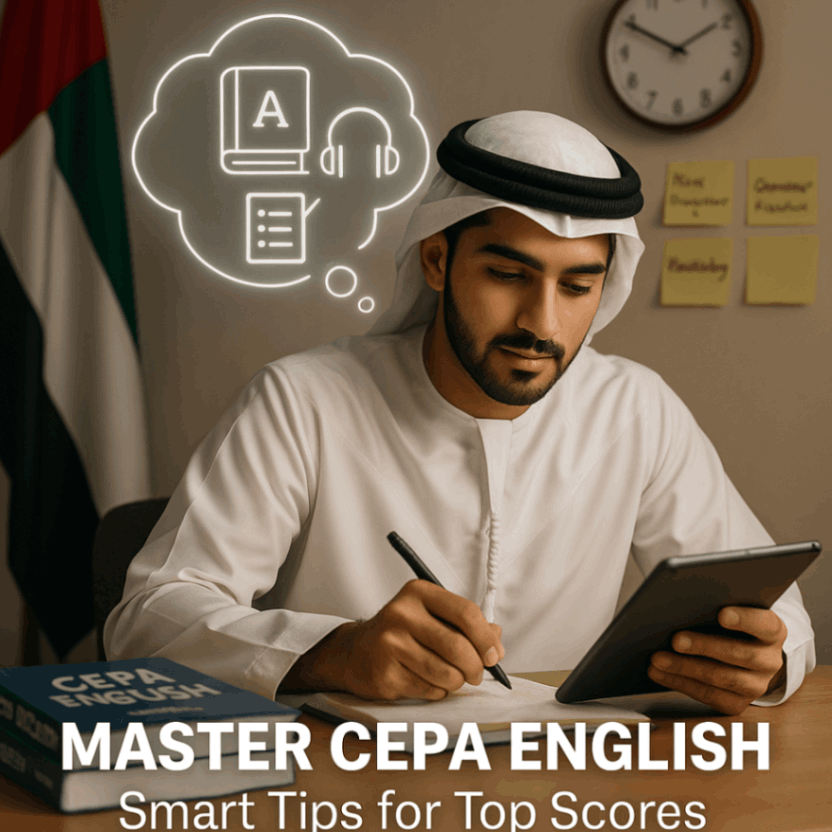
Cracking the CEPA-English Exam: Essential Tips for UAE University Admissions
Understanding the CEPA-English Exam plays a vital role for students aiming to enter the UAE’s esteemed universities like UAE University and Zayed University. This article offers essential insights and strategies to boost English proficiency and maximize exam scores. It’s critical to grasp the CEPA format, registration steps, and admission strategies. Key Takeaways The CEPA-English exam evaluates English skills in reading, grammar, vocabulary, and writing in line with CEFR levels A2 to C1+ for university placement. To register for CEPA, use the NAPO student portal. You’ll need a valid ID, academic transcripts, and other documents as NAPO specifies. A CEPA score of 150 is needed for foundation program entry, while higher scores can lead directly into degree courses. Exams like TOEFL and IELTS might help enhance your university applications, given the competitive admission environment. The EmSAT English test has taken over as the primary standard, making familiarization with the CEFR-aligned format crucial. Understanding the CEPA-English Exam The Common Educational Proficiency Assessment (CEPA), introduced in 2002, is pivotal for those aspiring to join UAE’s federally funded universities like UAE University, Zayed University, and Higher Colleges of Technology. As a standardized measure, it evaluates English proficiency, shaping the pathway students take during their academic journey. CEPA-English plays a dual role: it helps place students in fitting English courses and grants direct entry into degree programs based on language skills. This ensures each student meets the linguistic demands of English-medium institutions, providing a solid foundation for success. For anyone preparing, focusing on language skills and familiarizing oneself with the test format is crucial. The CEPA is one of several tests universities may consider; exploring ETS’s overview for similar exams can offer broader insights. The CEPA-English Registration Process and Eligibility Understanding the eligibility for the CEPA-English exam is crucial for prospective students. Specifically, NAPO (National Admissions and Placement Office) applicants targeting federal university admissions in the UAE need to take this test. These institutions include UAE University, Zayed University, and the Higher Colleges of Technology. The exam is scheduled twice annually, offering candidates flexibility in their preparation and application timing. You can register for the CEPA-English exam directly through the user-friendly NAPO student portal. Here’s a quick guide to streamline your registration process: To register, ensure you have: A valid UAE ID or passport. Academic transcripts from your current or previous institution. Any other specific documents requested by NAPO for registration. Each step in the registration is carried out online, making it an efficient process. It’s essential to double-check that all your documentation is in order, as incomplete submissions may delay your ability to sit for the exam. For more details on the registration process, you can consult resources on educational platforms like Study In UAE, which can be a great starting point for those unfamiliar with federal education requirements. Remember to regularly check the NAPO portal for updates or any changes in deadlines to stay ahead in your preparation. Exam Format and Skill Assessment Understanding the CEPA-English test format is crucial for boosting your university admission chances. This exam evaluates your English abilities across key areas, aligning with CEFR levels from A2 to C1+. The CEPA-English test consists of sections focusing on reading, grammar, vocabulary, and writing. Each segment serves a specific purpose, ultimately ensuring you’re prepared for academic challenges. The reading section tests your ability to comprehend and interpret texts. You’ll face questions that investigate your understanding and analytical skills. Competency in grammar and vocabulary is vital, as these areas build the foundation of your language skills. Here, you’re assessed on your knowledge of sentence structures and word usage. Writing is another pillar of this test. This section examines your ability to articulate thoughts clearly and cohesively. It’s essential for drafting essays and research papers at university. Each part of the CEPA-English exam ties back to functional English usage, preparing you for academic success. Achieving a high score requires honing these English skills, as they reflect broader proficiency and readiness for university education. For more on how these levels correlate to daily use, check out the CEFR’s official guidelines. Understanding this helps place the exam’s content into context within academic and real-world settings. Ensure you’re familiar with the CEPA-English format and its alignment with CEFR levels to enhance your preparation strategy. Decoding Score Requirements and Equivalencies The CEPA-English exam scores play a critical role in determining your eligibility for foundation or direct entry into UAE universities. For those eyeing entry into UAE University (UAEU), Zayed University, or the Higher Colleges of Technology, understanding the score thresholds is vital. If you’re aiming for a foundation program, the cut-off is set at 150. Achieving a score above this threshold can enable direct entry into your chosen program, bypassing the foundation year entirely. The CEFR (Common European Framework of Reference for Languages) equivalencies further shed light on your proficiency. These equivalencies guide universities in placing students accordingly: Scores between 150 and 179 generally correlate with CEFR level B1. A score above 180 might push you into the B2 level, often seen as qualifying for direct program entry. Understanding your placement through these equivalencies can streamline your academic path. It shows your readiness for tackling university-level English, making you more adaptable to academic challenges. Institutions not only assess your current proficiency but also predict your potential success in academic settings. For an in-depth look at how the CEFR standards apply globally, you might want to check the Council of Europe’s official website. Crafting a strategy around these cut-off scores and equivalencies can provide a clearer vision for your educational journey. With a high score, you can leap into your desired program, fully prepared to excel. Admission Strategies and Competitive Insights UAE university admissions are fiercely competitive. Emphasizing both CEPA scores and academic credentials, such as the General Secondary School Certificate (GSC), is crucial. It’s not just about having good scores, but achieving the best you can to stand out. Considering alternative tests like TOEFL and IELTS can benefit students. These scores can complement CEPA results,

Duolingo English Test Preparation: Top 5 Tips for UAE Students
UAE test-takers aiming to excel in the Duolingo English Test (DET) should focus on strategic preparation to make the most of the test’s unique adaptive format and widespread acceptance. These standout tips can help UAE examinees enhance their performance and achieve scores that meet academic and professional standards. Key Takeaways The DET provides a personalized experience with its adaptive format, adjusting the difficulty based on real-time performance. Preparation should cover vocabulary, grammar, and integrated skills to align with the test’s structure. Utilize tools like Arno to enhance practice by simulating the test environment and offering instant feedback. A DET score of at least 120 is often needed for prestigious universities, matching IELTS and TOEFL requirements. The affordability and quick results of the test make it an appealing option for UAE students, enabling swift applications to over 5,700 institutions globally. Duolingo English Test: An Overview for UAE Test-Takers The Duolingo English Test (DET) offers a flexible, online way to assess your English skills. It evaluates four key areas: reading, writing, listening, and speaking. It takes about an hour to complete. This test is split into two parts: an adaptive test and a video interview. What’s unique is its adaptability. The test modifies its difficulty based on how well you’re doing, providing a personalized assessment experience. This makes it an appealing choice for many in the UAE. Your score will range from 10 to 160, with section scores for Speaking, Writing, Reading, and Listening. Each of these subscores helps give you and any institution you’re applying to a detailed view of your abilities. This can be especially helpful if you’re seeking opportunities that require strong communication skills. If you’re interested in understanding more about the adaptive testing methods, you can explore resources provided by Wikipedia. The entire process, from registration to completion, takes place online. This convenience is a big plus for busy applicants in the UAE, where time and accessibility can significantly impact preparation and planning. The DET’s format and scoring system might seem simple but mastering it could give you a competitive edge in your educational or professional journey. Make sure you’re familiar with the interface and comfortable with the online test-taking environment before diving into it. Practice Techniques for High Scores Using adaptive tools like Arno can transform your preparation experience. Arno offers official-type questions, giving you a feel of the actual test environment. The instant scoring and feedback can significantly enhance your understanding of your strengths and areas for improvement. Focusing your efforts on vocabulary, grammar, and integrated skills questions is crucial. Many top universities often require a DET score of 120, which compares to an IELTS score of 6.5 or TOEFL score between 74-79. This benchmark should guide your preparation strategy. For a well-rounded practice, consider the following techniques: Engage with DET practice platforms that offer adaptive test preparation. Prioritize high-frequency words and phrases to bolster your vocabulary. Consistently practice question sets that assess your integrated skills. Implement these strategies to maximize your chances of securing a high score on the Duolingo English Test. More resources and tips can be found on reputable educational sites, such as educationaltestingservice.org for further test comparisons and requirements. Understanding University Requirements and Accepted Scores The Duolingo English Test (DET) boasts acceptance in over 110 countries and more than 5,700 American universities, including prestigious schools like Harvard and Yale. This makes it a key choice for many aspiring international students. However, grasping the score necessities for each program is crucial. Here’s a breakdown of typical score requirements: Medicine: 115 and above Business/Law: 110 and above Engineering/Arts/Humanities: 105 and above These standards illustrate the importance of aiming for scores that align with the programs you’re interested in. It’s essential to verify the minimum DET requirements of your selected universities. For instance, many institutions, especially in the US and UK, look for a score of at least 120. Staying informed about these prerequisites will greatly enhance your application process. Websites such as Study Portals can offer additional insights into university admissions. Always keep an eye on your target schools’ admissions pages for the latest updates. Benefits of Choosing the DET Opting for the Duolingo English Test (DET) can enhance your test-taking experience in several ways. First off, affordability is a major advantage. Priced at just $70 USD, or about 257 AED, it costs significantly less than other major tests like TOEFL or IELTS. This cost-saving feature makes it accessible for a wider range of test-takers who may be on a budget. Besides being budget-friendly, the DET offers extremely fast results. You can expect your scores within 48 hours, and if you’re in a hurry, there’s even a 12-hour express option available. This means you can quickly apply to schools or programs without delays. One standout feature of the DET is unlimited score sharing. With it, you can send your scores to as many institutions as you like without any extra charges. This eliminates the worry of choosing which schools will receive your results, providing a hassle-free process to broaden your educational opportunities. The DET is a convenient alternative for those who value time, cost, and flexibility. More information about the DET can be found on Duolingo’s official page, a great resource for understanding all test features and benefits. Strategic Tips for UAE-Based Test-Takers Scheduling your test during a calm period ensures you have the focus needed. Opt for times when your internet connection remains uninterrupted for smooth online monitoring. Stay informed about the exam rules: keep notes, headphones, and additional software away, as they’re strictly prohibited. Secure your digital identity; verification might be needed, which could delay the process if overlooked. Remember, your DET scores are valid for two years. Plan your applications accordingly to make the most of this timeframe. Comparing DET with IELTS and TOEFL can be insightful. Consider differences in time, cost, and the adaptive nature of these tests. DET typically requires less time than IELTS. DET is generally more affordable. Adaptive strategies are pivotal for DET, adjusting