

Term papers and reports play a central role in the UAE’s academic journey by building skills vital for research and data analysis. By emphasizing well-organized writing, accurate citations, and advanced data techniques, UAE students gain access to effective tools that drive academic achievement. Key Takeaways Term papers and reports significantly contribute to strengthening research and analytical capabilities within UAE academics. Organizing your work effectively, with a distinct thesis and logical headings, is essential to crafting successful term papers. Maintaining academic integrity requires proficiency in using citation styles like APA, MLA, and Chicago. Data analysis software such as SPSS and R facilitates the effective management of both qualitative and quantitative research data. Thorough proofreading and enhancing writing style are crucial steps in creating polished and professional academic documents. Mastering Term Papers and Reports for UAE Students Term papers and reports are crucial in the UAE academic framework, significantly impacting course grades. These assignments develop core competencies in research methodologies and data analysis, which are essential across various disciplines. Recognizing the importance of these tasks is key to academic success. Students need to familiarize themselves with research methods like statistical modeling and content analysis. Understanding these practices enhances research skills and academic performance. Master Your Term Papers and Reports with ExamHelp.ae. Term papers and reports are a cornerstone of academic success in UAE universities, shaping students’ research, analytical, and writing skills. At ExamHelp.ae, we specialize in guiding students through every stage of the process—ensuring top-quality academic work that meets UAE university standards. Organizing Your Term Papers and Reports Creating an effective outline helps set a strong foundation for your work. Start with a concise thesis statement and a brief abstract to provide clarity. Well-structured headings guide your reader through the content seamlessly. Use subheadings to break down complex ideas. Mastering citations is essential. You should be familiar with APA, MLA, and Chicago styles. Consistency in referencing demonstrates academic integrity. Managing your word count ensures you meet assignment requirements. Pay attention to formatting specifications to maintain professionalism. Crafting a Strong Introduction Writing a clear thesis statement that states your main argument. Developing a brief abstract summarizing your paper’s focus. For Organizing Content Use logical headings to structure your points. Break down sections with meaningful subheadings. Explore resources like Purdue OWL for formatting guidance. Keeping your presentation neat enhances readability and professionalism. You can also contact us through our website. Our experts create a solid outline for your paper, complete with a strong thesis, concise abstract, and logical headings. We ensure: Smooth content flow with subheadings for clarity Word count and formatting specifications aligned with your university’s requirements Consistency in language and tone for a professional presentation Achieving the Right Writing Style and Tone Professional writing involves using a formal tone and steering clear of everyday expressions. This approach ensures your term paper is taken seriously within the academic community. By focusing on clear and concise language, students can convey their arguments effectively. Cutting unnecessary words and sticking to the main point greatly enhances readability. To achieve clarity and precision, consider these strategies: Use active voice to make your sentences direct and vigorous. Vary sentence structure to maintain the reader’s interest. Choose strong, specific words to express your ideas more effectively. Ensuring academic integrity is essential. Avoiding plagiarism through proper paraphrasing and citation is key. By rephrasing ideas in your own words while retaining the original meaning, you adhere to ethical standards in academic writing. Accurately citing sources using the appropriate format further demonstrates your commitment to integrity. To help ensure your writing remains original, make use of tools like Turnitin or Grammarly. These platforms scan your document for similarities to existing sources and highlight any potential issues. By utilizing such tools, you can take proactive steps to maintain academic honesty and strength in your work. Insights into Data Analysis and Statistics Understanding how statistical concepts can elevate academic research is crucial. By applying techniques like regression analysis, students can identify patterns and predict outcomes based on their data sets. Content analysis, on the other hand, helps in assessing qualitative data, giving insights into trends or themes within research. For effective data handling, I recommend using software like SPSS or R. These tools are indispensable for managing complex data sets and performing sophisticated statistical modeling. SPSS offers a user-friendly interface, making it great for beginners, while R provides flexibility for those needing advanced data manipulation capabilities. Incorporating these statistical approaches is essential for anyone looking to boost their academic projects. In particular, those in fields like social sciences or business studies will find these techniques invaluable. A case study writing help service in UAE might guide you through applying regression analysis to interpret research data effectively. I’ve seen real research projects leverage these methods successfully. Students might use SPSS to conduct regression analysis, exploring relationships in survey data to draw meaningful conclusions. Alternatively, R could be used to perform content analysis, revealing patterns in textual data from academic journals. Whether you’re embarking on your first research project or refining a complex study, integrating these tools and techniques isn’t just advantageous—it’s essential for achieving sophisticated and reliable results. Finalizing Your Term Papers and Reports Summarizing your research findings cohesively is critical. Highlight the key insights and propose future research directions to demonstrate your study’s ongoing relevance. Proofreading plays a vital role in ensuring your paper’s polish. Here are some practical tips to enhance grammar and consistency: Read your work aloud to catch errors. Take breaks between edits to spot mistakes more effectively. Use grammar check tools but rely on human judgment too. For students seeking additional support, UAE-based academic writing services like examhelp.ae can be a valuable resource. They offer expert assistance to refine your reports, ensuring they meet university standards. Remember to clearly communicate your requirements, perhaps by simply saying, “Can you write my term paper for university?“
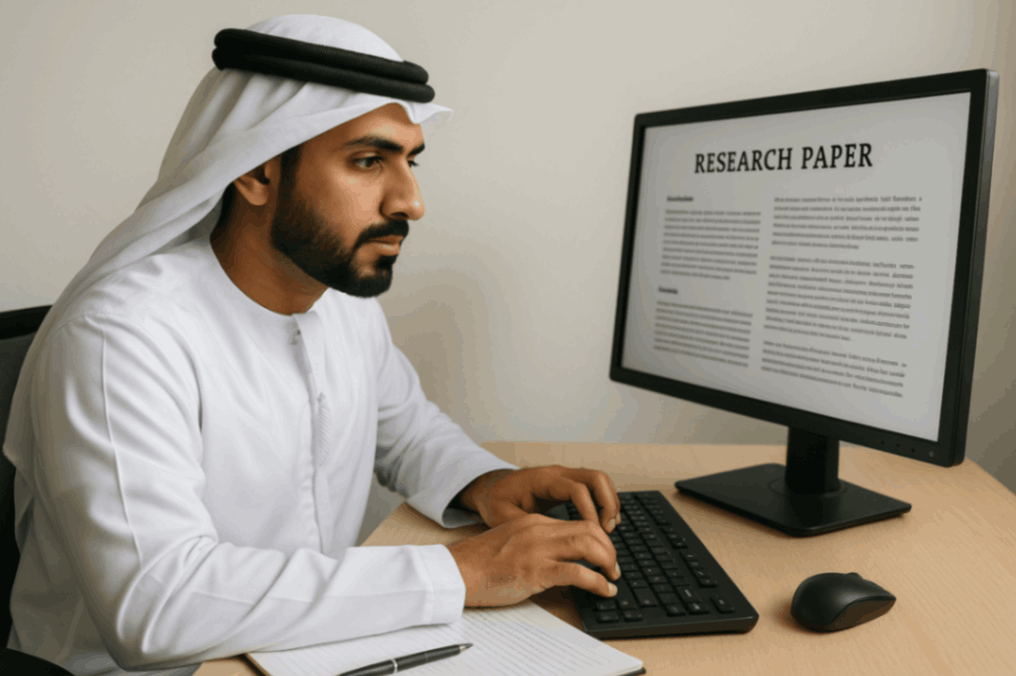
Research Paper Writing Guide: Professional Help and Tips for UAE Students
Understanding the evolving landscape of research paper writing in the UAE is crucial. The growth of higher education institutions and rising student numbers mean students must meet international standards with their research papers. Many opt for professional writing help to thrive in this competitive setting. Key Takeaways The UAE’s burgeoning educational sector requires students to deliver well-researched, quality academic papers. Increased student enrollment has led to more demand for academic writing support in the region. Language barriers and managing multiple responsibilities often challenge UAE students. Professional writing services offer customized support and ensure plagiarism-free work. Strategic planning, adhering to global standards, and using technological tools like AI are essential for research excellence. Understanding the UAE’s Academic Landscape The UAE’s educational sector has expanded significantly, with higher education institutions growing by 25% over the past five years. This development reflects the robust demand for higher education in the country. As institutions multiply, so does the competition, making it essential for students to produce top-tier academic work. The higher education market in the UAE is estimated at an impressive valuation, showcasing the lucrative opportunities present. Student enrollment numbers continue to rise, further emphasizing the surge in demand for academic writing help. With more students entering universities, there’s an increased need for quality research papers and guidance. Adhering to international educational standards is crucial in the UAE. This is not just about maintaining quality; it’s ensuring that students are prepared for global opportunities. As educational institutions in the UAE aim to match renowned universities worldwide, students must focus on delivering research papers that meet these high expectations. For students, understanding these dynamics is vital. Here are some reasons academic writing support is becoming indispensable: An increase in institutions raises the academic bar, demanding well-researched papers. Competitive job markets require outstanding educational achievements. International recognition of degrees necessitates adherence to global standards. Personalized assistance helps students keep up with academic demands. Leveraging these insights, students can confidently approach their academic tasks, benefitting from the myriad of support options available within the UAE. Overcoming Common Research Paper Challenges In the UAE, students often face writing barriers due to language issues, juggling Arabic and English. This multilingual context can lead to difficulties in expression and understanding academic nuances. To tackle this, I suggest leveraging resources like language workshops or online tools that offer guidance on academic writing in both languages. Another challenge is managing multiple responsibilities. Balancing work, study, and research demands a strategic approach. It’s vital to plan ahead and allocate specific time slots for research activities, ensuring consistent progress without feeling overwhelmed. Prioritize tasks and set realistic goals to better manage your time. Data analysis poses a significant hurdle, especially when dealing with complex datasets. Students should consider using statistical software or seeking guidance from faculty or professionals experienced in data analysis. These resources can simplify the process and enhance your understanding of the data you’re working with. Plagiarism remains a critical issue. Upholding academic integrity is paramount. Always credit original ideas and conduct thorough research to provide fresh insights rather than replicating existing ones. Use plagiarism detection tools to double-check your work before submission to avoid unintentional errors that could impact your academic standing. Remember, overcoming these research challenges in the UAE requires dedication and the right approach. By addressing language issues, managing your time effectively, seeking help with data analysis, and ensuring academic honesty, you can excel in your research endeavors. The Role of Professional Writing Help in UAE In the UAE, there’s a growing demand for professional academic help, and ExamHelp.ae is at the forefront of meeting this need. Over 45% of academic projects for major writing services originate from the region, proving just how essential expert support is for students striving for top results. ExamHelp.ae is the trusted partner students turn to when they want assured success in their academic pursuits. Our research paper writing services in the UAE are designed to cater to the unique needs of students in the region. We work with a team of highly qualified PhD writing experts who provide in-depth, personalized guidance. Each paper is meticulously crafted to meet the highest academic standards and tailored to match your specific requirements and university guidelines. At ExamHelp.ae, we take academic integrity seriously. We guarantee 100% plagiarism-free work by using advanced plagiarism detection tools and delivering fully original content every time. This ensures that students never have to worry about issues related to copied or duplicated work. What sets ExamHelp.ae apart is our ability to blend local insights with international academic best practices. This balanced approach ensures your research papers not only meet UAE university expectations but also align with global academic standards. With ExamHelp.ae, you gain a complete, reliable solution for research paper writing and academic success. Professional help includes several offerings for students: Customized writing support for unique research needs In-depth consultations with experts in specific fields Assurance of timely delivery and adherence to deadlines Such dedicated offerings from professional writing services make them indispensable for UAE students striving for academic success. They deliver an effective, reliable way to tackle challenging research paper requirements. Steps to Achieve Research Paper Excellence Selecting a topic is crucial for UAE students. Align your research with the country’s priorities in AI, entrepreneurship, and sustainability. Dive into a comprehensive literature review. This ensures your work is grounded in existing knowledge and identifies gaps. Use tools like SPSS for precise data analysis; it helps process complex data efficiently. Adhere to writing standards and maintain originality. Plagiarism can undermine your efforts. Draft, revise, and seek feedback. This iterative process refines your paper for clarity and argument strength. Remember these key steps to achieve research paper excellence: Choose a topic aligned with UAE’s focus areas like AI or sustainability. Conduct a thorough literature review connecting your study to existing research. Use SPSS or similar tools for accurate data analysis. Maintain strict writing standards and produce original content. Revise repeatedly and incorporate feedback for academic success. Embrace these strategies for quality research outputs.

Case Study Writing Help: Expert Assistance for UAE Business Students
Expert case study writing help benefits business students in the UAE by providing essential support that aligns with the country’s changing educational scene. By focusing on integrating modern learning methods, these assignments prepare students for high-stakes professional environments.ExamHelp.ae offers expert case study writing help that gives business students in the UAE a competitive advantage. Our services are designed to align with the country’s rapidly evolving educational landscape, ensuring every assignment meets modern academic and industry standards. Key Takeaways Case studies boost essential business skills like critical thinking and strategic analysis, vital for UAE students. ExamHelp.ae offers expert case study writing help that gives business students in the UAE a competitive advantage The UAE’s vibrant and diverse educational setting offers valuable insights into both local and international business contexts. National initiatives, such as Education 33 and UAE Centennial 2071, drive the integration of modern learning methods in business education. Increasing demand for expert case study help comes from the rapid growth in international enrollment and online learning. Strategic policies and international collaborations ensure high standards and diverse opportunities for UAE business students. Case Study Writing Help: Essential for UAE Business Students Case study assignments play a crucial role in UAE business education. They’re a staple in both MBA and undergraduate programs. These assignments don’t just present theoretical knowledge but also demand practical application. Students have to analyze real-world scenarios, making them invaluable. Case studies boost skills essential for any budding business professional. They enhance critical thinking, sharpening the ability to assess situations and develop structured approaches. Problem-solving becomes more intuitive, encouraging students to conceive innovative solutions. Additionally, they foster strategic analysis, empowering students to evaluate dynamic business landscapes. By leveraging contemporary learning methods, our (Examhelp.ae) tailored case studies prepare students for high-stakes professional environments. We help learners develop critical skills in strategic analysis, problem-solving, and critical thinking—essential qualities for succeeding in today’s dynamic local and international business settings. The UAE stands as a global education hub. With 35% of international student enrollment in Dubai’s private institutions, the academic environment is vibrant and diverse. Students gain insights into both local and international business contexts, preparing them for a variety of global challenges. This diversity enhances the learning experience, offering a rich tapestry of perspectives. Educational initiatives like Education 33 and UAE Centennial 2071 have further shaped case study assignments. Education 33 aims to integrate modern learning methodologies, while UAE Centennial 2071 focuses on preparing future generations. These initiatives ensure assignments are aligned with forward-thinking goals, emphasizing the development of skills crucial for future leaders. Incorporating these assignments into curricula helps align traditional education with dynamic industry needs, creating a well-rounded educational experience. Through case studies, students not only learn but also evolve into insightful and strategic thinkers. Navigating the UAE Business Education Landscape The UAE’s executive education market is booming. It’s projected to surge from $2.16 billion in 2021 to over $6.6 billion by 2024. This massive growth highlights the rising demand for advanced learning opportunities among business professionals. The expansion isn’t limited to executive education alone. Higher education in the UAE shows significant potential. Forecasts predict an increase to $13.34 billion in 2025, climbing to $24.3 billion by 2030. This impressive upswing demonstrates the country’s commitment to developing a new generation of business leaders. Digital learning is sweeping across the UAE. There’s a remarkable 200% growth in online executive programs since the pandemic hit. This trend reflects the shift towards flexible and accessible learning options. Gone are the days where geographical limitations constrained education. Now, digital platforms play a crucial role in shaping the educational environment, catering to diverse learning preferences. As business students seek case study writing help in this vibrant market, expert guidance becomes invaluable. Understanding UAE’s business education dynamics provides a solid foundation. Building on this knowledge helps tailor writing assistance that meets both academic and professional needs. Addressing Challenges Faced by Business Students The financial strain of rising higher education costs in the UAE often weighs heavily on business students. Tuition fees are climbing, making it tough for many to finance their education without external support. This financial pressure can lead to heightened stress levels, affecting academic performance. Adapting to multinational case studies presents its own set of hurdles in the UAE’s multicultural educational landscape. With English being the primary language of instruction, students who aren’t native speakers may face additional challenges. Language barriers can make it tough to grasp complex business concepts, leading to potential misunderstandings. For those balancing studies with work, the challenge intensifies. About 55% of MBA applicants in the UAE favor flexible study arrangements, reflecting a need for programs that accommodate their professional commitments. Balancing part-time study with a career can be overwhelming without the right strategies. Understanding diverse case analysis frameworks is another area where students might struggle. Each framework requires its own approach and understanding, making it essential for students to adapt quickly. To manage these challenges: Consider seeking help when financial planning feels burdensome. Utilize language support resources to improve business English skills in the UAE. Employ flexible time management strategies to balance work and study. Engage with academic guidance to navigate different case analysis frameworks effectively. Each of these solutions can empower students, making academic challenges in the UAE seem less daunting. The Benefits of Expert Case Study Assistance Professional writing services are invaluable for students. These services help with research, editing, and academic referencing across both local and global standards. By using such services, students can confidently tackle case studies, knowing their work aligns with high academic expectations. Expertise in UAE and Gulf economic contexts ensures the analysis is relevant while still meeting global benchmarks. There’s a growing need for these expert services. With a notable 200% rise in international student numbers and a marked shift to online learning since the pandemic, more students seek help. This trend fuels increased demand for expert case study writers in UAE, particularly for business analysis assistance. Students working on MBA case studies in UAE find this tailored support crucial

Thesis Writing Services Dubai: From Proposal to Final Submission
Thesis writing services in Dubai have become vital allies for students handling academic pressures in undergraduate, MBA, and PhD programs. They offer comprehensive support from proposal crafting to final submission, helping students save time and focus on other responsibilities. Key Takeaways Dubai’s thesis writing scene is growing, fueled by academic pressure and effective SEO strategies. These services offer customized proposal development, ensuring alignment with academic standards and objectives. They provide thorough methodological guidance, including support for quantitative and qualitative analysis with tools like SPSS, STATA, and NVivo. Access to global and regional academic databases helps in crafting well-rounded literature reviews and research synthesis. Final submissions benefit from plagiarism-free content, adherence to style guides, and extensive editing, ensuring top-notch quality. The Dynamic Thesis Writing Market in Dubai The global academic writing service market is on the rise, expected to hit USD 15.5 billion by 2033. Dubai stands as a pivotal player within it. The city’s unique educational landscape fuels this demand. Overwhelming academic pressure on students, whether they’re pursuing undergraduate, MBA, or PhD programs, creates a significant thirst for thesis writing support. In Dubai, students often juggle demanding academic schedules alongside work commitments. As a result, many seek professional help to ensure their theses meet rigorous academic standards. These services don’t just promise well-written documents. They offer peace of mind by relieving stress and allowing students to manage time more effectively. There are several reasons why students prioritize these services: A need for high-quality research and writing. Assistance with structuring and formatting. Guidance in adhering to academic protocols. Time management support. As the market expands, understanding and capitalizing on its drivers can make a significant difference. It’s a competitive field, but firms that master keyword optimization and address student needs will possibly thrive. The future of thesis writing services in Dubai seems promising, fueled by a blend of digital strategy and educational demands. How ExamHelp.ae Empowers Students At ExamHelp.ae, we understand the academic pressures students face at every level—undergraduate, MBA, and PhD. That’s why our thesis writing services in Dubai have become the go-to solution for students who want to balance their studies with work and personal responsibilities, without compromising on academic excellence. Our expert team provides end-to-end support, from proposal development to final submission. We don’t just write theses; we craft well-researched, academically sound, and original work that meets the highest standards set by universities in Dubai and beyond. Why Choose ExamHelp.ae? Custom-Built Proposals: We help you select the right research topic, develop problem statements, and structure a solid research framework aligned with your academic goals. Advanced Research & Analysis: Whether your project needs quantitative analysis with SPSS/STATA or qualitative thematic coding using NVivo, our specialists guide you through every step. Access to Global & Regional Databases: Our writers leverage exclusive academic resources to build comprehensive literature reviews and synthesize information with precision. Plagiarism-Free Guarantee: Every thesis is written from scratch, double-checked with plagiarism software, and polished to perfection. Affordable & Flexible Packages: Choose from editing-only, partial assistance, or full-service thesis writing to match your budget and deadlines. Mastering the Proposal: From Inception to Approval Dubai’s thesis writing services excel at guiding students through crafting personalized proposals and picking relevant research topics. We often emphasize the importance of customizing proposals to reflect distinct academic goals. Essential elements like problem statements, literature frameworks, and methodology stand out in these services. Here’s what you can expect: Tailored research topics that resonate with your field. Precise problem statements clarifying research intentions. Comprehensive literature reviews supporting your study’s foundation. These services make sure proposals are not just prepared but polished for approval. They handle every detail with finesse, ensuring your proposal aligns with schools’ expectations and academic venturers feel supported in their refined journey to approval. Crafting a Strong Methodology and Conducting Thorough Analysis Developing a solid methodology is crucial. Expert consultants offer guidance on both qualitative and quantitative designs. They assist in selecting the right approach based on your research goals. For quantitative analysis, statistical software like SPSS and STATA come highly recommended. These tools streamline complex computations and offer insightful data visuals. NVivo is perfect for qualitative data, providing comprehensive coding and thematic analysis. When collecting data, a structured step-by-step approach ensures accuracy. Support teams advise on sampling techniques, creating a reliable data set. Statistical analysis follows swiftly, interpreting data with precision and clarity. Experts ensure that your findings remain valid, enhancing the overall credibility of your work. To convey your results effectively, graphical presentations are crafted with attention to detail. These visuals not only summarize findings but enrich your thesis with clear, impactful evidence. Synthesizing Literature with Precision and Relevance In crafting a thesis, precision in literature synthesis stands paramount. Delve into an extensive array of scholarly studies to ensure depth in research. This approach bridges any existing gaps in current literature, integrating theoretical models crucial for addressing the specific nuances of the UAE context. With access to both global and regional academic databases, you meet the particular demands of universities in Dubai and worldwide. This access ensures your thesis aligns with both international standards and local academic requirements. By incorporating diverse perspectives and comprehensive research, you craft a well-rounded argument that stands out. This isn’t just about gathering data; it’s about demonstrating a keen understanding of the subject matter. Aim for a balance that showcases meticulous research and region-specific insights, crucial for impressive academic work. Ensuring Excellence: Writing, Editing, and Submission Perfection In providing thesis writing services, we’ve made a commitment to deliver quality work that’s free from plagiarism. This involves a diligent writing process followed by multiple rounds of editing. Adhering to specific style guides like APA, Harvard, or Chicago ensures your thesis meets academic standards. Fast turnaround options, ranging from 24 to 72 hours, are essential for meeting tight deadlines. They’re designed to help you meet submission schedules without compromising quality. Here’s what you can expect: Plagiarism-free content: Originality is key in every thesis. Quality-driven writing: Attention to every detail ensures excellence. Multiple editing rounds: Polished and

Improving English Writing Skills for Non-Native Gulf Students
Improving English writing skills for non-native Gulf students involves overcoming unique challenges and employing various strategies for better proficiency. By engaging in consistent practice, interacting with native speakers, and integrating technology with structured writing tasks, students can significantly boost their writing clarity, coherence, and confidence. These approaches are essential for achieving fluency and for the development of strong writing capabilities in a language that is not native to them. Key Takeaways: Regular writing activities and a variety of exercises are crucial for boosting fluency and skill level. Collaborating with peers and interacting with native speakers offers genuine feedback and cultural insight. Digital tools and media can expand vocabulary, enhance grammar understanding, and inspire creative expression. Instructional techniques focused on genre can improve performance and ease anxiety. Receiving personalized feedback from teachers and reflecting on critiques are vital for ongoing growth. Enhancing English Writing Proficiency in Gulf Students Many Gulf students reach ‘above average’ writing proficiency, as shown by a weighted mean rating of 2.07. This reflects both competence and potential for growth. The broad language skills these students possess form a strong base for honing specific writing abilities. I recommend consistent practice to elevate English writing skills further. Engaging in diverse writing exercises, such as essays, reports, or creative writing, helps. Receiving feedback is crucial. Peers, teachers, or language experts can provide valuable insights for improvement. Additionally, utilizing online resources and tools designed to enhance grammar and vocabulary is beneficial. These strategies help Gulf students refine their writing and boost their English proficiency. Overcoming Writing Challenges and Skill Gaps Many Gulf students might believe they’re proficient in English. However, they often struggle with key skills like analyzing, synthesizing, and effectively responding to texts in formal writing situations. This difficulty isn’t just in the Gulf. For instance, only 27% of Grade 12 students in the U.S. achieve a proficient level in writing, according to the National Center for Education Statistics. Addressing these challenges involves understanding and bridging writing skills gaps. Here’s how students can improve: Engage with Diverse Texts: Reading a variety of texts helps in understanding different writing styles and structures. Regular Practice: Consistent writing practice improves clarity and coherence. Students should focus on drafting, revising, and editing their work. Feedback and Reflection: Seeking constructive feedback from teachers and peers guides improvement. It’s crucial to reflect on critiques to avoid repeating mistakes. Workshops and Writing Centers: Participating in writing workshops or visiting writing centers can provide additional support. These resources often offer guidance on grammar, style, and structure. Focusing on these strategies can alleviate common problems and enhance writing abilities. Students should focus on these aspects to develop their writing proficiency, enabling them to effectively express their ideas and succeed academically. The Impact of Instructional Techniques on Writing Motivation Genre-based instruction shines as a highly effective method for Saudi university students. It’s famous for boosting writing performance, motivation, and self-efficacy. By focusing on specific genres, students understand the structure and style better. This method significantly lowers writing anxiety and enhances receptiveness to feedback. As a result, students feel more at ease with academic writing. Key benefits include: Improved understanding of different writing styles Greater confidence in writing ability due to familiar structures Reduced anxiety, leading to a smoother writing process Enhanced acceptance of constructive criticism and feedback These strategies offer ESL writing tips that truly resonate. They equip students with tools to confidently tackle academic challenges. In turn, students not only meet academic standards but exceed them with newfound motivation. Role of Peer Collaboration and Native Speaker Interaction Teaming up with native English speakers significantly benefits non-native Gulf students. Collaboration is popular, with 40.2% of Emirati and 36.9% of Saudi students preferring this method. They find it boosts confidence and offers real-world language exposure. Peer interaction goes beyond casual chit-chat; it’s key to understanding language nuances. In writing projects, partnering with others can sharpen skills. Here are some reasons: Authentic Feedback: Native speakers provide genuine feedback, which helps refine writing techniques. Cultural Insights: Understanding context and cultural elements aids in writing authentically in English. Language Practice: Regular conversations improve fluency and comprehension. Whether through study groups or language exchanges, interacting with peers and native speakers enhances writing skills by offering a practical bridge between theory and real-life application. Leveraging Technology and Media for Writing Practice A large number of Gulf students, 64.2%, engage with digital media, which boosts communication skills significantly. Mobile apps can transform writing style and vocabulary. A study showed improvements in 18 out of 28 media students. Incorporating technology daily into writing routines offers concrete benefits. Using platforms like blogs and online portfolios encourages regular practice. These tools not only enhance writing skills but also nurture creativity and self-expression. When aiming for grammar improvement, various resources come in handy: Mobile applications that focus on grammar drills and exercises. Online platforms with interactive writing challenges. Blogging tools offering feedback on writing quality. By embracing these technological advancements, students can improve proficiency in English writing while making the learning process engaging and dynamic. This approach not only builds skills but also fosters a passion for writing. Strategies to Elevate Writing Skills Focusing on structured writing tasks gives students the chance to develop fluency and confidence. Collaboration with native speakers further sharpens these skills through authentic discourse. Regular teacher feedback plays a critical role in lowering anxiety, reinforcing strengths, and identifying areas for improvement. Using technology in learning introduces interactive tools and resources that make writing practice engaging. Individualized instruction meets each student’s unique needs, boosting their self-efficacy. Incorporating English Medium Instruction (EMI) environments encourages students to engage with English more regularly, significantly enhancing their skills and academic performance. These strategies are complemented by the following methods: Peer reviews offer constructive criticism from fellow learners. Embracing online platforms and apps increases access to varied writing exercises. Setting personal writing goals ensures continued progress. These techniques collectively nurture a supportive and dynamic learning atmosphere for Gulf students striving to improve their English writing skills. Sources: IOSR Journals –

Citing Sources Correctly: APA vs MLA vs Harvard Referencing Explained
Correctly citing sources in academic writing is crucial for maintaining academic integrity. APA, MLA, and Harvard are the main styles used across various disciplines. This article explains these citation styles, showcasing their distinct rules and applications in fields like psychology, humanities, and multidisciplinary research. Key Takeaways APA style is popular in psychology and social sciences, focusing on author-date citations. MLA style, often used in humanities, highlights author-page citations and includes a detailed ‘Works Cited’ page. Harvard referencing is adaptable across disciplines, especially in the UK, though it lacks a universal style guide. Grasping the particularities of each style boosts scholarly consistency and credibility. Updating citation practices to match the latest edition of each style’s manual ensures accuracy in academic work. Understanding Citation Styles: The Essentials for Academic Writing Citing sources is crucial for upholding academic integrity and avoiding plagiarism. Correct citation gives credit to original authors and lets readers follow your research trail. There are three main citation styles to master. First is APA, primarily used in psychology and social sciences. It’s known for requiring the use of author-date citations in the text. Next, there’s MLA, favored in humanities, especially literature. MLA uses author-page number for citations, enhancing the focus on the source’s context within the text. Lastly, Harvard style, commonly applied in natural and social sciences, is similar to APA but has subtle format differences like punctuation. Always choose the style aligning with your discipline’s requirements. Each style’s importance lies in ensuring consistency and credibility in scholarly writing, aiding both writers and readers. Diving Into APA Style: Streamlined for the Social Sciences APA style, favored in the social sciences, offers a structured approach to referencing. In-text citations typically follow the format: (Smith, 2023, p. 45). It’s crucial to alphabetize the reference list by the authors’ last names. In formatting, give authors’ initials after their last names. Titles of books, articles, and websites utilize title case. An integral part of APA is the inclusion of DOIs for articles to ensure direct access. For example: Author: Smith, J. Citation: (Smith, 2023, p. 45) Title Case: “Understanding Psychology” DOI Usage: “doi:10.1000/xyz123” By adhering to these conventions, your citations become both precise and insightful, enhancing the credibility of your work. APA style’s diligent framework not only maintains consistency but also bolsters the accuracy of scholarly reporting. Exploring MLA Style: The Preferred Choice for the Humanities MLA, short for Modern Language Association, reigns supreme in arts and humanities. It’s an essential tool for anyone in these fields. The style focuses on simplicity and clarity. It mainly revolves around author-page in-text citations, which look like this: (Smith 25). This format helps readers seamlessly track sources. One standout feature of MLA is its ‘Works Cited’ page. This is a comprehensive list at the end of the paper, giving full credit to every source referenced. It includes full author names to ensure clarity. Major words in the titles are capitalized according to MLA rules. This differs from styles like APA or Harvard, which have different capitalization conventions. The MLA format emphasizes a clear presentation. Each entry on the ‘Works Cited’ page should have: Full names of authors Titles of works in italics for books and in quotes for articles Publication details like the publisher and year Utilizing MLA correctly ensures your work is credible and consistent. It keeps your citations straightforward and easy to understand, helping preserve the flow of your paper. So, referring to MLA guides can be immensely helpful in mastering this referencing style. Harvard Referencing: The Universal Style for Multidisciplinary Research Harvard referencing is widely accepted across humanities, natural sciences, and social sciences, especially in the UK. This flexibility makes it ideal for multidisciplinary research. In-text citations are straightforward, typically presented as (Smith 2023). Harvard’s reference list format is consistent and ensures easy retrieval of sources. Even though it’s commonly used, Harvard referencing doesn’t have a single universal manual. Instead, guidelines can vary between institutions, so it’s crucial to follow those specific directives. This method facilitates clear communication and minimizes potential errors in academic work. Consistency and attention to detail will make your referencing effective and reliable, enhancing the credibility of your research. Comparing APA, MLA, and Harvard: A Visual Guide A visual comparison often makes it easier to distinguish between APA, MLA, and Harvard referencing styles. Here’s a succinct table to illustrate their differences: Usage: APA: Primarily used in social sciences. MLA: Common in humanities, especially literature and language. Harvard: Preferred in UK universities, especially in business and author-date fields. In-text citation format: APA: (Author, Year, p. X) MLA: (Author X) Harvard: (Author Year, p. X) Reference list title: APA: References MLA: Works Cited Harvard: Reference List or Bibliography Author formatting: APA: Last name, Initials MLA: Last name, First name Harvard: Last name, Initials Capitalization: APA: Sentence case for titles MLA: Title case for major words Harvard: Sentence case for titles Both APA and Harvard rely on an author-date system, showing their effectiveness in keeping citations clear and concise. However, all three use parenthetical citations which make cross-referencing straightforward. A surprising 70% of UK universities advocate for Harvard or a similar style, showcasing its dominance in academic settings. Practical Tips and Considerations for Accurate Referencing Always check which citation style you need to use by consulting official manuals or institutional guides. This prevents errors and ensures compliance with academic standards. Harvard style, unlike APA or MLA, varies significantly by institution. Relying solely on automated citation tools can lead to inaccuracies. Verify each entry manually to avoid pitfalls. Stay informed about new editions of style manuals. Currently, MLA is in its 9th edition, while APA has reached the 7th. Updates may include changes in formatting, the inclusion of digital sources, or alterations in citation structures. Keeping current allows you to maintain accuracy and integrity in your work. Whether novice or seasoned, consistently updating your practices ensures professionalism in your referencing. Make use of official resources to refine your skills and produce reliable citations. Sources: Assignment Ace – “Differences Between Harvard, APA,

Mastering Academic Writing: Tips for ESL Students in the Gulf
Mastering academic writing presents a unique set of challenges for ESL students in the Gulf region. The obstacles often include frequent grammar errors, wordiness, and misused punctuation, which hinder these students’ efforts to achieve clarity and precision in their writing. Effectively addressing these issues requires the implementation of specific strategies, such as enhancing grammar skills, the effective use of connecting words, and creating a supportive learning environment that acknowledges and respects students’ cultural and educational backgrounds. Key Takeaways: ESL students in the Gulf frequently struggle with spelling, grammar, and sentence structure in their academic writing. Cultural factors, such as collectivism and high power distance, can shape writing styles and affect communication with instructors. Bilingual literacy in Arabic and English can enhance writing skills through cognitive transfer. Tools like Grammarly and Hemingway, along with structured writing workshops, assist in overcoming language barriers and writing apprehension. Using self-regulation techniques and the Socratic method can improve critical thinking and foster independent problem-solving in writing tasks. Mastering Academic Writing: Overcoming Challenges for ESL Students in the Gulf ESL students in the Gulf often encounter several obstacles. Frequent spelling mistakes and grammar errors top the list. Many find sentence structure and paragraph organization equally daunting. They grapple with crafting clear topic sentences and ensuring they are supported by adequate details. The use of connectives further complicates their writing tasks. Saudi and Arab students also struggle with wordiness and faulty mechanics. Despite efforts to trim down their writing, sentences can become unnecessarily complex. Issues with punctuation might muddle the meaning of their work, leading to confusion. Statistical insights reveal more about these challenges. Over 50% of Arab postgraduate students rate their English proficiency as ‘good.’ However, expert evaluations continue to highlight persistent errors, underscoring the gap between self-perception and actual skill levels. To tackle these writing challenges, focus on the following: Improve Spelling and Grammar: Utilize tools like Grammarly or Hemingway for real-time feedback. Enhance Sentence Structure: Practice constructing simple, compound, and complex sentences in English. Master Paragraph Organization: Start with a strong topic sentence, followed by supporting details, and conclude with a summary sentence. Utilize Connectives Effectively: Familiarize yourself with words that link ideas, such as “however,” “moreover,” and “therefore.” These practical steps can reduce common writing hurdles for ESL students in the Gulf, helping them express their ideas with greater clarity and precision. Understanding the Influence of Cultural and Educational Backgrounds Adaptation to Western academic writing can feel challenging for ESL students in the Gulf. Cultural factors such as collectivism, high power distance, and high uncertainty avoidance often shape learning experiences. Collectivist cultures emphasize group harmony, which may lead students to prioritize group consensus over individual expression in their writing. This contrasts with the Western emphasis on individualistic expression and critical analysis. High power distance can also influence how students interact with instructors, perhaps leading to less questioning or challenging of authority. A classroom culture where students feel empowered to share opinions and critique can foster better academic writing skills. Conversely, high uncertainty avoidance might make students less inclined to take risks with new writing styles or argumentation, which are essential practices in Western academia. Bilingual literacy plays a crucial role in writing competence. There’s a significant correlation between proficiency in a student’s first language (Arabic) and their success in writing in a second language (English). Strong skills in Arabic can translate into better English writing due to shared cognitive and linguistic skills. Here are a few ways bilingual proficiency helps: Cognitive transfer: Skills in L1 can aid development in L2. Enhanced understanding of grammar and syntax. Improved vocabulary range. Encouraging students to develop literacy in both languages not only aids academic writing but also strengthens overall communication skills. This interconnectedness between the two languages reinforces competence and confidence, making transition and adaptation smoother in meeting Western academic writing expectations. Fostering Positive Attitudes and Reducing Writing Anxiety Writing apprehension often affects ESL students’ performance and participation significantly. According to a study of 109 Saudi university students, many faced challenges crossing language barriers and cultural differences, leading to increased anxiety. Addressing these concerns can improve both the quality and enthusiasm in their academic writing. Creating supportive environments serves as an effective intervention to ease writing anxiety. By offering constructive feedback and encouragement, educators can build students’ confidence, turning writing from a stressful task into a rewarding experience. Moreover, integrating writing workshops focused on practical skills reinforces a positive learning atmosphere. These workshops can provide: Step-by-step guidance on developing thesis statements and organizing ideas cohesively. Sessions on grammar, punctuation, and syntax tailored to ESL needs. Opportunities for peer reviews, encouraging collaborative learning. Additionally, some may benefit greatly from personalized consultation sessions with instructors. These individualized sessions allow for focused attention on specific anxiety triggers, helping students overcome particular hurdles. This approach nurtures a self-assured attitude, enabling them to tackle future assignments with greater ease. Ultimately, fostering positive attitudes starts with understanding what elements contribute to their anxiety. It requires continuous support and practical interventions that address individual concerns. Embracing these strategies can transform students’ perspectives, leading to improved outcomes in academic writing endeavors. Strategies for Academic Writing Improvement Focused instruction and custom curricula can significantly boost academic writing skills. Diagnostic assessments are invaluable for pinpointing areas like grammar, sentence structure, and academic vocabulary that need refinement. They help identify specific error patterns students commonly struggle with. For grammar and sentence structure, implementing targeted lessons based on assessment results leads to noticeable improvement. Academic vocabulary can be expanded through specialized exercises that encourage the use of new words in various contexts. Custom learning plans ensure students receive help where they need it most, resulting in better communication skills. Feedback plays a critical role in enhancing writing quality. Peer reviews, when paired with teacher insights, create a rich environment for learning. This combination encourages students to analyze their own work and that of others critically, fostering a deeper understanding of effective writing. Here’s the process for effective feedback: Peer Feedback: Encourages collaboration and critical assessment. Students

Balancing Coursework and Exam Prep: A Guide for University Students
University students often deal with too much academic pressure. Nearly 84.4% feel anxious because of their academic workloads, and 88.4% experience heightened stress during exams. This guide delves into smart strategies for balancing coursework and exam prep, focusing on essential time management, mental wellness, and tapping into campus resources to tackle these challenges successfully. Key Takeaways: Academic workload and exam stress significantly contribute to student anxiety and burnout. Time management and a focus on mental well-being are essential for handling academic demands. Spaced revision and active recall can boost study effectiveness and cut down exam stress. Financial pressures introduce an additional layer of stress, affecting students’ concentration and academic results. Making use of university resources and building supportive networks can help ease stress and boost academic achievement. Understanding the Academic Pressure: Scope and Statistics Academic stress is widespread, impacting the majority of university students. A significant 84.4% of students report anxiety due to overwhelming academic workloads, while 88.4% feel heightened stress around exam times. This pressure often triggers burnout, with about 50% of students experiencing it. Burnout drastically hurts motivation and has severe consequences, pushing up to 25% to consider quitting their studies. A closer look reveals that academic workload isn’t just stressful; it’s the leading cause of burnout for 46% of those affected. This intense strain progressively affects students’ mental health, creating a challenging environment to thrive in. Understanding and addressing these pressures is crucial, as the balance between coursework and exams requires not just strategic planning but active mental health support. The Dual Impact of Burnout and Stress on Academic Performance Burnout can drastically affect academic performance. A significant 40% of students identify with this, while 48% notice a drop in grades due to exhaustion. Burnout isn’t just about feeling tired; it often leads to chronic fatigue and reduced motivation. About 45% of students struggle with fatigue, and 65% experience waning motivation. Stress significantly impacts students’ mental health, increasing anxiety, depression, and even suicidal thoughts. Balancing coursework and exam prep feels overwhelming for many. Consider a student sharing their experience: “Stress made it hard to find motivation. My grades suffered, and I felt trapped in a cycle of fatigue.” This resonates with many who lose motivation due to the weight of stress. Seeking balance helps. Implementing techniques focusing on mental well-being can counter these effects. Remember, managing stress effectively requires ongoing effort and awareness. Balancing Academic Life: Effective Study and Lifestyle Habits Striking a balance between coursework and exams demands sharp time management skills. While the average student clocks around 17.3 hours of study per week according to Peterson’s, a significant 25% squeeze in less than 5 hours. On top of that, many deal with sleep deprivation, only managing between 6 and 6.9 hours of sleep nightly. Juggling coursework, exams, part-time work, and extracurriculars can become a nightmare without effective strategies. Understanding the stark contrast between recommended and actual habits can motivate change: Category Recommended Hours Actual Average Study Hours/Week 20-25 17.3 Sleep Hours/Night 7-9 6-6.9 Balancing study time with sufficient rest boosts academic success. Smart time management and prioritizing wellness are key. Focus on efficient study and maintaining a healthy sleep schedule to overcome these challenges. Exam Preparation: Strategies to Mitigate Stress Exam season stress is a common challenge, with a notable 88.4% of students experiencing increased anxiety. Effective strategies can make a significant difference in how you manage this. Early revision, consistent review, and active recall are much more successful than cramming. Let me break down the methods and why they’re effective. First, using spaced revision involves distributing your study sessions over time rather than cramming everything in just before the exam. This approach enhances long-term retention and understanding. By revisiting the material several times, you reinforce your knowledge, making retrieval easier under exam pressure. It’s like planting seeds and watering them regularly, allowing them to flourish over time. Active recall, on the other hand, involves testing yourself on the material instead of passively rereading it. This method strengthens memory by forcing your brain to retrieve information actively. It’s akin to training your muscles to build strength, not just reading about the exercises. Research consistently shows the benefits of these methods. Cramming might give a temporary sense of confidence, but it’s less effective for long-term retention. Spaced revision and active recall optimize learning efficiency and reduce stress. Consider these strategies: Break study sessions into smaller, manageable chunks. Use flashcards or apps for active recall. Schedule regular study times to build a routine. By integrating these strategies into your study plan, you might find that exam preparation becomes a bit less stressful and much more effective. Handling Financial Pressures and Academic Stress Managing finances while juggling coursework and exams isn’t a simple task for university students. Financial burdens weigh heavily, with 75% of graduates needing parental support to make ends meet. Add to this the fact that 23% of students work over 20 hours a week, and it’s no surprise that stress levels soar. Financial strain can directly affect academic performance. The anxiety of looming debts hinders focus, making it harder to excel in studies. Consider that 25% of students carry more than $1,000 in credit card debt, a situation that only exacerbates their stress. Jane, a final-year business student, exemplifies the financial crunch many face. She works 25 hours a week, balancing her job with her academic responsibilities. Her part-time role is crucial for covering basic living expenses, yet it often leaves her struggling to find time for study. Jane’s story isn’t unique, and it highlights the financial stress many confront, emphasizing the need for effective coping strategies. Balancing this dual pressure of financial and academic demands requires smart planning. Prioritizing tasks and seeking academic support can help mitigate stress. Some find relief in breaking down expenses and creating a strict budget. I always suggest exploring university resources, like financial aid offices, which can offer guidance tailored to each student’s needs. Building a Supportive Academic Environment: Tips and Call to Action Creating

5 Benefits of Online Tutoring for Gulf Students
The surge in online learning throughout the Gulf, particularly in the UAE, signifies a major shift in education. This change entwines technology with national objectives like Saudi Arabia’s Vision 2030. Online tutoring stands out as a crucial element in this digital transformation. It provides Gulf students with the flexibility, accessibility, and personalized education essential for thriving in a fast-moving market expected to hit $24.2 billion by 2033. Key Takeaways: Online tutoring drives educational advancement, key for achieving national goals such as Saudi Arabia’s Vision 2030. Students enjoy personalized learning experiences that address their specific needs and learning styles. Flexibility and accessibility enable students to fit learning into their personal schedules despite geographic constraints. With diverse subjects and global expertise, students connect with resources and specialists worldwide. Online platforms foster educational equity by bridging geographic, socioeconomic, and gender gaps in the Gulf. Exploring the Benefits of Online Tutoring for Gulf Students Online learning is gaining significant traction in the Gulf region, with more students in the UAE opting for digital platforms than ever before. The online education market in the GCC and Middle East is expected to reach $24.2 billion by 2033, growing at a compound annual growth rate of 14.4%. The broader Middle East market is projected to hit $175 billion by 2027. These numbers highlight a trend of embracing technology for education. Online tutoring plays a pivotal role in this digital shift, offering unique opportunities for Gulf students. It contributes significantly to the digital transformation and modernization of education, aligning with national goals like Saudi Arabia’s Vision 2030. This initiative aims to elevate education through technology, making online tutoring a key player in these advancements. For students, online tutoring means access to diverse resources and expertise. They get flexibility in scheduling sessions that fit their agendas and the freedom to learn in their own environments. Educational institutions benefit too. They can expand their reach, enhance course offerings, and meet the needs of a diverse student body. Embracing this digital wave, students and educators in the Gulf are positioning themselves at the forefront of educational innovation. Online tutoring doesn’t just supplement traditional methods but serves as a cornerstone of modern learning strategies. Personalized Learning: Tailoring Education to Individual Needs Online tutoring in the UAE offers a personalized learning experience that truly caters to individual educational needs. By focusing on data-driven progress tracking and providing individual attention, tutors can craft lessons that suit each student’s unique learning style. In a study conducted in 2021, it was found that students attending three or more weekly online tutoring sessions showed notable improvements. Using advanced data analytics tools, tutors can offer real-time feedback. This enables lesson plans to be customized on the fly, ensuring students remain engaged and challenges are addressed promptly. Whether it’s adjusting the pace or accommodating various learning preferences, these online tools offer an adaptable approach. Digital platforms add flexibility that traditional group classroom settings often lack. Unlike in a crowded classroom where teachers may struggle to give individual attention, online tutoring services emphasize personalized learning. This model supports pacing lessons at the speed that best suits each student, fostering an environment where they don’t feel pressured by peers or left behind. By focusing on the student’s specific needs, online tutoring delivers a teaching experience that aligns with personal goals. This individualized approach encourages students to take charge of their learning journey, promoting greater retention and understanding. Whether it’s through homework help or preparing for exams, students benefit from a tailored educational experience that paves the way for academic success. Flexibility and Accessibility: Learning Anytime, Anywhere Online tutoring opens up incredible opportunities for Gulf students, offering unmatched flexibility and accessibility. Students can schedule sessions at times that fit their busy lives, combining learning with other commitments. The ability to learn from any location eliminates travel issues, making education more convenient and less stressful. With expectations that by 2029, 50% of Middle East students will engage in online courses, this trend clearly indicates a shift in educational methods. The Gulf Cooperation Council (GCC) countries aren’t lagging behind. High internet penetration levels mean students can access various online platforms effortlessly. This connectivity coupled with a tech-savvy youth population enhances the accessibility and success of remote learning in the region. Online learning doesn’t just provide ease of access; it empowers students to take charge of their education. Here’s how it benefits them: Study at any hour that suits them, promoting a better life-study balance. Eliminate the stress of commuting, saving time and energy. Access a broad range of resources and expert tutors from around the world. Stay engaged with interactive and updated content that keeps learning fresh. Customize pace and style of learning, leading to more effective understanding. The presence of advanced technology makes remote learning not just accessible but also incredibly appealing. Students find themselves in an environment that promotes both academic progress and personal growth. Wide Range of Subjects and Global Expertise Online tutoring platforms give Gulf students an incredible array of subjects to choose from, connecting them with expert tutors globally. This diversity breaks free from the local constraints of traditional education, offering learners a wealth of opportunities in both academic and career-driven fields. Skill-based courses like AI, renewable energy, and e-commerce are booming with a 15% annual growth in the Middle East, making them easily accessible through online learning. Students can find not just academic mentors but also industry specialists who bring real-world knowledge. This global instruction enhances subject variety, enriching their learning experience. Rather than being limited to local expertise, students benefit from comprehensive guidance tailored to modern career demands. By choosing online learning, Gulf students access a world of possibilities, preparing them for future challenges with confidence. Support for Academic Recovery and Overcoming Learning Gaps Online tutoring has played a transformative role in helping students recover from learning loss post-pandemic. Many have found virtual sessions significantly boost test scores, aiding in academic recovery. Government investments, such as the UAE’s Smart Education and Saudi’s Vision 2030,

Avoiding Plagiarism: Best Practices for Gulf Students
Avoiding plagiarism has become increasingly important for Gulf students due to easy access to technology and misunderstandings about academic integrity. Various types of plagiarism are common in this region. These include copying directly, self-plagiarism, paraphrasing without proper citation, and using AI-generated content. These practices can lead to severe consequences for students. To maintain originality and credibility, students need to adopt effective strategies. Key Takeaways Plagiarism involves several activities, such as direct copying,self-plagiarism, and paraphrasing without proper citation, as well as the use of AI-generated content. Up to 79.5% of undergraduates engage in digital plagiarism, representing a significant challenge in maintaining honest academic practices. Challenges like language barriers and cultural perspectives may inadvertently lead Gulf EFL students to plagiarize. Gulf universities utilize advanced tools like Turnitin and iThenticate to detect and prevent plagiarism efficiently. Workshops and integrating proper citation methods into the curriculum play a crucial role in fostering academic integrity. Recognizing Plagiarism in the Gulf: Definitions and Core Concepts Plagiarism in the Gulf involves using someone else’s work without proper acknowledgment. This can include direct copying, paraphrasing without citation, or even employing AI-generated content without giving credit. Several types exist: Direct Copying: This occurs when students copy someone else’s work word-for-word. Self-Plagiarism: Happens when a student reuses their own previous work without permission or citation. Paraphrasing Plagiarism: Involves rewording someone else’s ideas without proper citation. AI-Assisted Plagiarism: Using AI tools to generate content which is presented as original work. Academic integrity is crucial, yet reports show that up to 79.5% of undergraduates engage in digital plagiarism. This is largely due to the temptation of easily accessible technology. Students must understand these concepts to maintain integrity and avoid potential pitfalls like AI plagiarism and self-plagiarism. Understanding Plagiarism Risks Among Gulf Students Technology, while a great resource for students, often enables easy copy-pasting, leading some to misuse it for digital copying. Information and Communication Technology (ICT) can sometimes blur the lines of content ownership. Additionally, gaps in instruction about proper source usage can contribute to these issues, as students often aren’t guided on how to credit sources effectively. EFL (English as a Foreign Language) learners might struggle with language barriers, making them depend more on external sources and translation tools. This can inadvertently lead to unintended plagiarism. Cultural perspectives on collaboration can also play a part. Some Gulf students might view collaborative work or derivative creations differently, misunderstanding academic integrity guidelines. To mitigate these risks, it’s essential to clarify assignments and promote a deeper understanding of original work values. Consequences of Plagiarism: Academic and Personal Impacts Engaging in plagiarism can lead to serious academic penalties. Academic misconduct may result in failing grades for the specific assignment or even the entire course. In severe cases, students could face suspension or expulsion from their institution. These penalties not only impact the individual’s current academic standing but may also affect future educational opportunities, as academic records are often scrutinized by advanced programs or potential employers. There’s also a significant personal component to the consequences of plagiarism. On a personal level, a student’s reputation can be tarnished both within their academic community and beyond. This loss of trust can have long-lasting effects, damaging relationships with professors and peers. Trust is difficult to rebuild once lost. Plagiarism also deprives students of crucial learning experiences. By copying someone else’s work, students fail to engage in the research, comprehension, and synthesis processes that are essential for developing critical academic skills. This learning loss can hinder personal growth and the ability to address future challenges effectively. To summarize, the repercussions of academic misconduct aren’t limited to immediate penalties. They can ripple through personal and professional realms, affecting reputation, relationships, and essential learning opportunities. Tools and Technology in Plagiarism Detection Plenty of Gulf universities employ tools like Turnitin, iThenticate, and PlagiarismCheck.org to maintain academic honesty. Turnitin, widely recognized for its comprehensive database and advanced AI detection, helps identify unoriginal content by comparing submitted work against a vast array of sources. iThenticate, often used for scholarly publications, offers precise plagiarism scores, assisting students and researchers in verifying their work before submission. PlagiarismCheck.org provides a user-friendly interface and critical insights, catering to both educators and learners. The demand for these tools is rising significantly in Saudi Arabia. A growing market for anti-plagiarism software highlights the increasing commitment to uphold academic integrity. With access to these tools, students can gain a deeper understanding of originality in their work, ensuring credibility and academic success. Effective Strategies for Plagiarism Prevention Ensuring you grasp citation rules is crucial in avoiding plagiarism. Emphasizing proper referencing and paraphrasing strengthens the integrity of your work. Tools like Grammarly don’t just enhance grammar; they also assess originality, guiding you to create unique content. Organizing research notes meticulously can help maintain citation accuracy. I recommend regularly updating these notes to keep references in check. This approach allows seamless referencing and lowers the risk of unintended plagiarism. Participating in academic integrity workshops keeps you informed on new practices. These sessions provide valuable insights and help hone your writing skills. They are essential for those committed to maintaining high academic standards. Enhancing Institutional Policies and Educator Roles in the Gulf Evaluating the current academic policies in the Gulf reveals mixed effectiveness in combating both traditional and AI-generated plagiarism. Many institutions focus on detecting plagiarism using advanced software, yet these often fall short in addressing the nuances of AI-created content. To counter this, integrating educational and technological approaches is key, ensuring they resonate with local cultural contexts. It’s beneficial to promote an understanding of integrity and originality through workshops and training sessions that consider Gulf values and traditions. Faculty members generally prefer an educational response rather than punitive measures against plagiarism. This involves focusing on teaching students about the importance of academic honesty and providing resources to nurture original thought. Effective strategies include: Developing a comprehensive curriculum that incorporates ethics and proper citation methods. Offering seminars that showcase how to identify and resist plagiarism. Encouraging the use of plagiarism detection tools as